Sign up for Chalkbeat Newark’s free newsletter to get the latest news about the city’s public school system delivered to your inbox.
New Jersey Gov. Mikie Sherrill says her first budget will break records for state education spending.
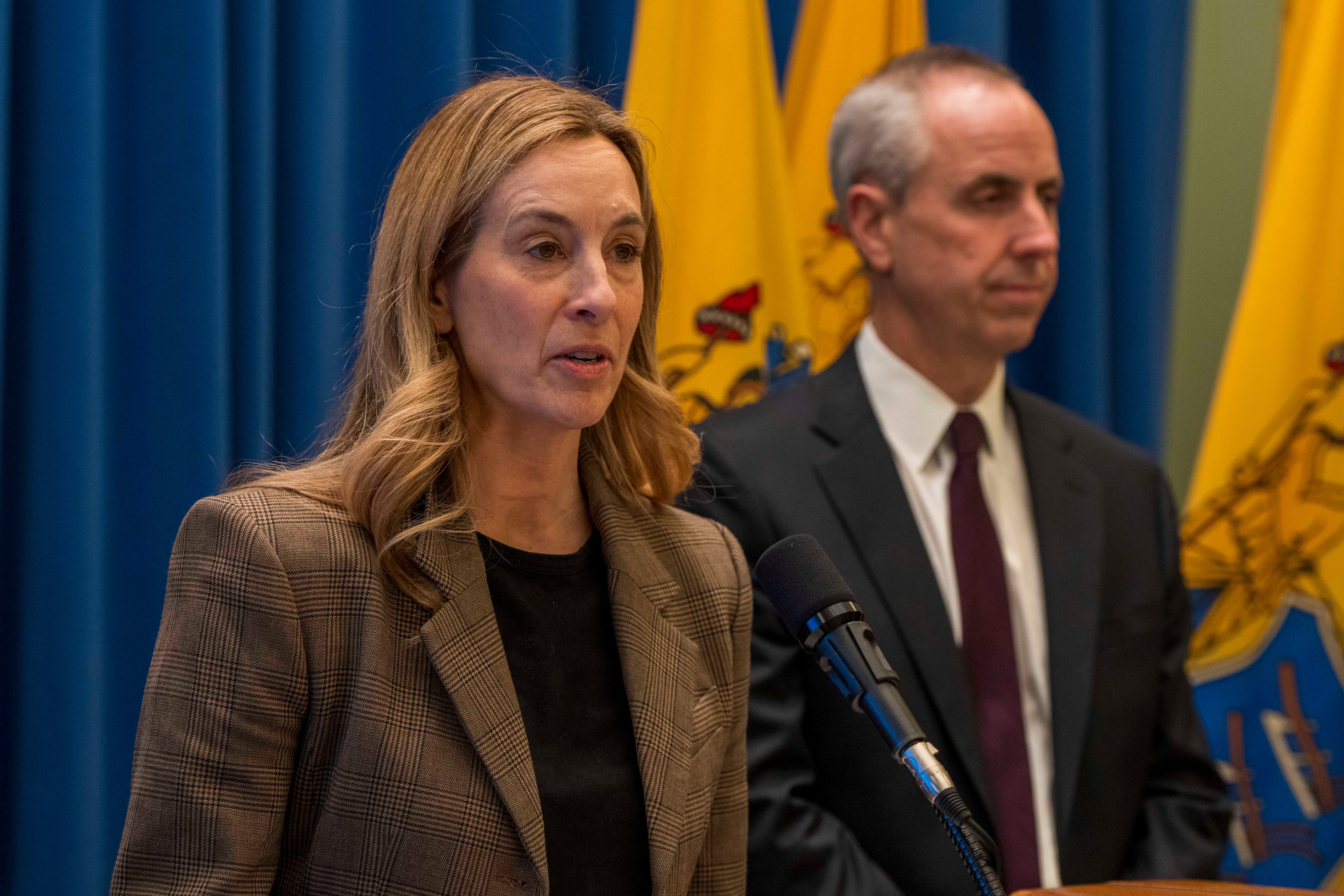
Speaking at the New Jersey Statehouse in Trenton on Tuesday, she proposed more than $13.8 billion in total education spending in her fiscal year 2027 budget, which includes $12.4 billion in K-12 aid, $1.4 billion for preschool, and $15 million to expand high-impact tutoring to more districts.
Sherrill’s budget also includes $33 million to provide new youth mental health services and $625,000 to help support the state’s first cellphone-free school year starting this fall.
But notably, some items were absent. The budget proposal doesn’t include new money for the Schools Development Authority, the state agency responsible for school construction. Instead, the proposed budget will help fund new roles at the Department of Education to help school districts facing budget deficits, according to state leaders.
“This budget invests in and lays the groundwork for consolidating services and curricula,” Sherrill said. “It’s better for students, offering continuity as they move from elementary to middle to high school in one unified system. And it’s better for districts, providing needed savings.”
In Newark, home to New Jersey’s largest school district, education advocates hoped Sherrill’s budget priorities would also address longstanding issues such as providing additional support for the district’s more than 7,0000 students with disabilities and their families, along with more funding to replace the city’s old public school buildings. State leaders said special education aid, supplemented through federal IDEA funds, varies by district and is based on student counts, rather than statewide averages as of fiscal year 2026.
Sherrill spoke before a room full of former governors, politicians, community advocates, and other guests as she outlined her $60.7 billion overall state spending plan, which includes high appropriations to property tax relief programs and public worker pensions, and includes a proposed surplus of $5.4 billion.
The proposed budget is Sherrill’s first spending plan for the next fiscal year, which starts on July 1, and represents the state’s most ambitious investments in public education during what state leaders have called a “very difficult budget situation.” At the beginning of the budget process, state leaders estimated a $3 billion budget structural deficit, or about 5% of state expenses, “historically one of the worst budget gaps in the nation,” Sherrill said Tuesday. She also said federal funding cuts under President Donald Trump “are blowing an immediate hole in our budget.”
The proposed spending plan includes nearly $2 billion in spending reductions, as budget expenditures are approximately $1.6 billion more than anticipated revenues, according to a budget presentation on Monday. Sherrill on Tuesday said the proposal “is the budget we can afford.”
“If there are things you think we need to add – come to me with places we can cut. It’s simple math: Any additions require subtractions,” Sherrill said.
Education leaders across the state are closely watching this year’s investments in education after Sherrill, on the campaign trail, pledged to boost student performance, provide equity in schools, and reform the school funding formula.
The proposed spending plan is now in the hands of state lawmakers who will negotiate and draft the final budget bill over the next few months. The new budget must be finalized by July 1, according to the state Constitution.
Expanding support for high-impact tutoring
The budget includes $15 million for high-impact tutoring, an expansion that would help bring nearly 100 more districts into the program launched under former Gov. Phil Murphy to support students disproportionately impacted by the pandemic. The new investment would help reach roughly 13,500 more students, according to state leaders.
High-impact tutoring is a research-based approach that requires three or more sessions per week with the same tutor in small group settings.
Sherrill on Tuesday said the approach is helping boost math and literacy scores in Camden, Franklin, and Elk Township.
For Newark Public Schools, the new funding is especially important as only 27.7% of the city’s public school third graders reached proficiency levels in English language arts last May. In 2023, the district began implementing high-impact tutoring to help refine student skills in math and reading. It also received a state grant that year to fund the work.
Paula White, the executive director for JerseyCAN, a statewide advocacy organization, on Tuesday said she applauds Sherrill for education priorities laid out in her budget but wants to work with her administration to implement “mission-critical budgetary investments” and strengthen existing policies to help “address long-ignored educational issues.”
The organization detailed five recommendations to support student success, including expanding career and technical education and improving math curricula. It also recommended that the state provide universal access to high-impact tutoring.
More mental health services for students
The budget also allocates $33 million in School-based Partnership for Access and Resilience for Kids, or SPARK grants, to fund new youth mental health services for students with the most acute needs. Sherrill said the program will bring “specialized, intensive mental health support” back in schools.
“That work is so important, especially given the impact of social media today,” Sherrill added on Tuesday.
During her gubernatorial campaign, Sherrill made clear she would invest in student mental health and online safety. She outlined a “Kids Online Safety Agenda,” to hold “big tech’s feet to the fire,” Sherrill said Tuesday.
“Kids are struggling with pressures that didn’t exist when we were young: the always-on online culture, fierce competition, worries about school violence, and concerns about the future,” Sherrill said.
The investment comes as Newark students have been pushing for more mental health support. Last month, a Newark student coalition spoke out at a school board meeting after members rejected their proposals that would have given students a formal role in monitoring how the district addresses mental health needs.
Preparing for a cellphone-free school year
The mental health push is also tied to the state’s first implementation of the new phone-free schools law starting this upcoming school year. In January, former Gov. Phil Murphy signed a law directing school districts to create policies that would limit the use of cellphones during instructional hours.
The proposed budget sets aside $125,000 for the new Office of Youth Online Mental Health Safety and Awareness in the Department of Health and $500,000 in support for a new Social Media Research Center.
“My four kids are between the ages of 14 and 20. And I can tell you with certainty: Our country is failing our children when it comes to protecting them online,” Sherrill said.
The new law calls on school districts to create their own policies restricting the use of cellphones during instructional hours. Newark school officials last month said they are working on their new policies. In December, the district was awarded more than $170,000 through a state grant to implement a bell-to-bell policy limiting cellphone use.
Jessie Gómez is a reporter for Chalkbeat Newark, covering public education in the city. Contact Jessie at jgomez@chalkbeat.org.