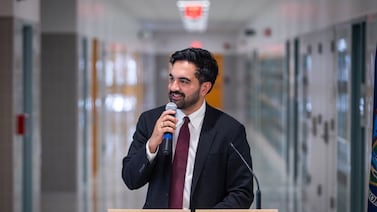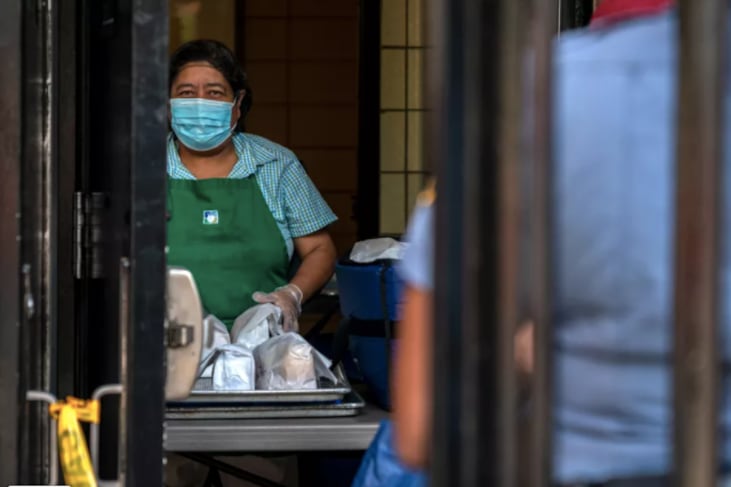
The city’s popular grab-and-go free meal program for adults will remain in place at select schools in high-need areas, operating after classes, according to city officials.
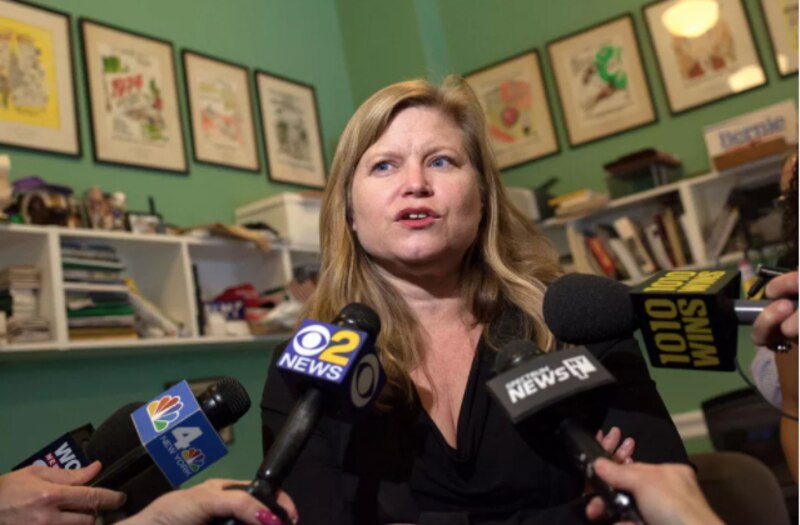
Breakfast and lunch will be distributed from 3 p.m. to 5 p.m. at about 200 schools, outgoing Sanitation Commissioner Kathryn Garcia, who has been overseeing the city’s food response during the pandemic, said in an email to advocates and nonprofits Friday.
Meanwhile, students attending in-person classes will get grab-and-go meals and eat them in classrooms.
Students learning remotely will have access to meals at the school buildings closest to them, according to Joshua Goodman, a spokesperson for the city’s Sanitation Department, the city agency in charge of the food program. The kids can pick up the food from 9 a.m. to noon, he said.
On Tuesday, Garcia announced her resignation from the de Blasio administration as she reportedly mulls a run for mayor. Her last day is Sept. 18.
School employees have given out approximately 60 million meals at about 400 locations since late March, when classes went remote and the food program began, Goodman said.
“The continuance and expansion of the grab-and-go program is an apt response to high and increased levels of food insecurity,” Nick Freudenberg, director of the CUNY Urban Food Policy Institute.
The schools that will continue to offer food to adults, now from 3 p.m. to 5 p.m., have not been announced yet. The last day of full operation of the current program is expected to be Sept. 18, and the new afterschool system will launch on Monday Sept. 21, with the start of classes.
Some of the dedicated kosher spots will also serve halal protein options, according to Garcia’s email.
Food Crisis Grows
An estimated 2.2 million New Yorkers are food insecure, compared to 1.2 million before the coronavirus crisis, according to the city, which calculated the figure based on unemployment claims and new Supplemental Nutrition Assistance Program (SNAP) applications.
“Even more heartbreaking is the effect that this has had on children: One in four city households with children say one of their kids has been hungry because they could not afford food as a result of the coronavirus crisis,” Garcia wrote in her email. “One in three report having a child who lost weight since the pandemic began.”
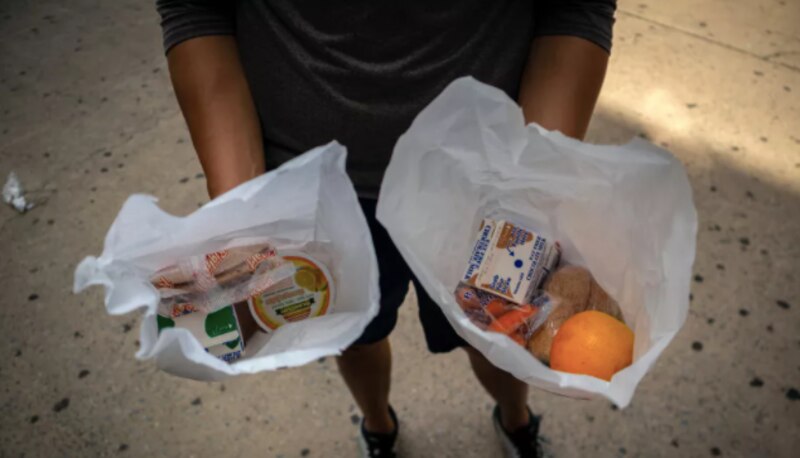
The grab-and-go program at the schools has generated daily lines. People bring bags and carts to carry the cereal, milk and sandwiches distributed by school staff. Many recipients say they bring the food back to their families.
Joel Berg, CEO of Hunger Free America, said he wishes the program could stay at 400 sites “since the local crisis is still raging.”
“But I understand the city’s logistical and fiscal challenges, so I am glad they are keeping 200 sites,” he added, calling the continued meals for adults “a big deal.”
Calls for More Help
In addition, the city has delivered 61 millions meals to seniors and other homebound New Yorkers in need. All public school families got $420 per child for food through a federal relief program.
Freudenberg is urging the de Blasio administration to conduct a comprehensive survey to better identify people in need and how to reach them.
“What we don’t know yet is what is the cumulative impact of all these programs of meeting the need of all these food insecure people,” he said.
Freudenberg and other experts say the federal government should step up to help people via SNAP.
They noted that the new school grab-and-go hours will make it more difficult for some people working or seeking employment to participate. There’s also a possibility of confusing people by distributing breakfast and lunch in the afternoon, Freudenberg said.
“Giving people more access to supermarkets by providing SNAP seems like a more useful method for making sure people have food because it gives people access to all the places where food is being given,” Freudenberg said. “Anything charity-based has its limitations.”