Sign up for Chalkbeat New York’s free daily newsletter to get essential news about NYC’s public schools delivered to your inbox.
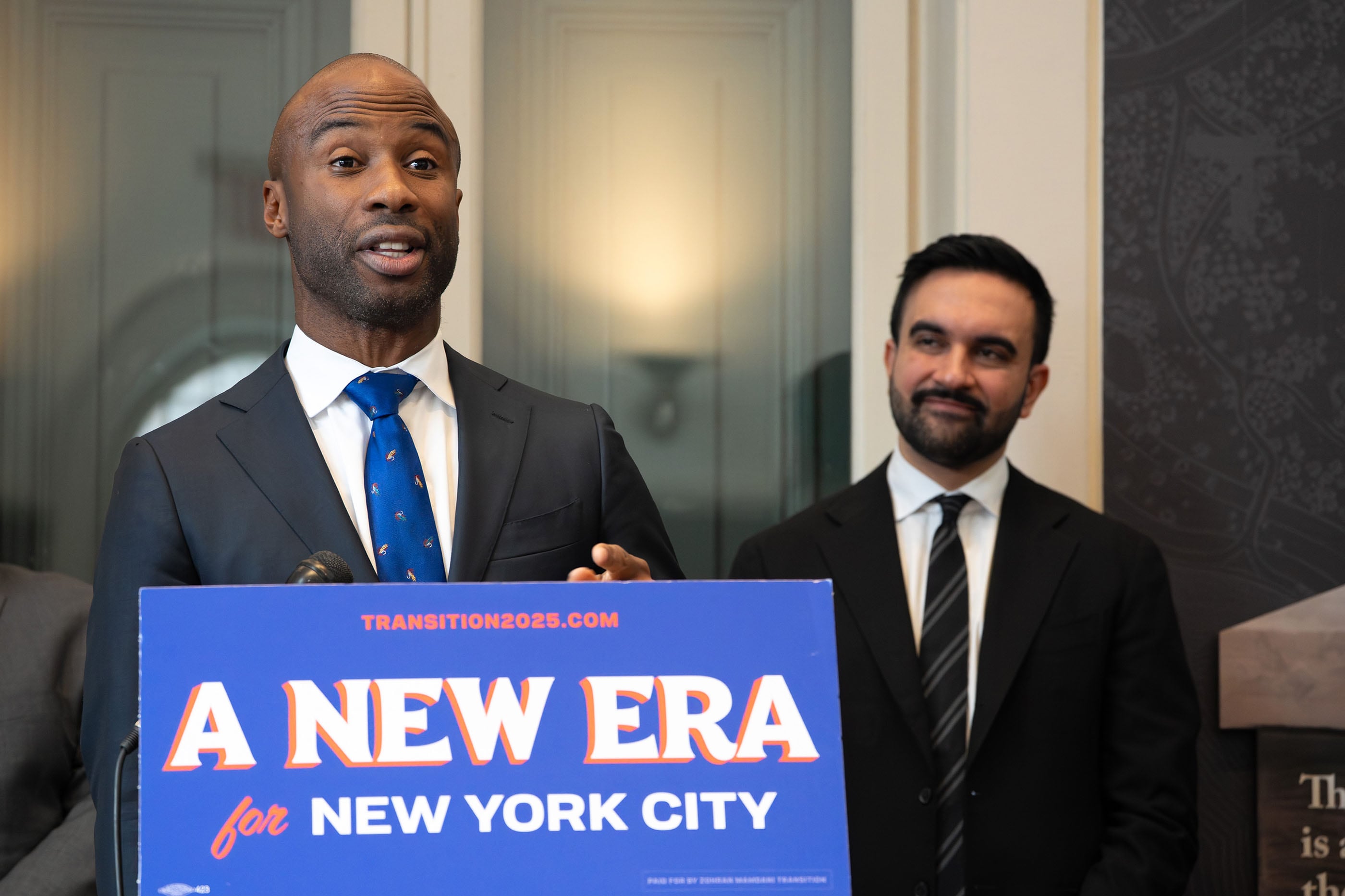
A reading curriculum overhaul launched by Mayor Eric Adams isn’t going anywhere, schools Chancellor Kamar Samuels told principals Tuesday. But he signaled changes could be coming to the prior administration’s math mandate.
“I completely believe in academic rigor and excellence — that’s why we are doubling down on what we’re doing with New York City Reads,” Samuels told principals during a Tuesday morning webinar, according to a recording obtained by Chalkbeat.
“We’re going to probably take a little bit of a different approach to New York City Solves, so you might see some shifts there,” Samuels said of the math mandate. Neither Samuels nor an Education Department spokesperson elaborated on what changes he is considering.
Under Adams, the city required all elementary schools to adopt one of three approved literacy curriculums. The program, known as NYC Reads, marked a major shakeup for a system that has long given principals freedom to choose what materials their schools use. Meanwhile, high schools had to adopt a standardized Algebra 1 curriculum, and a growing number of middle schools have been required to use new math programs, too.
Samuels’ comments indicate that key pieces of Adams’ education agenda will continue despite the transition between mayoral administrations — echoing sentiments shared by Mayor Zohran Mamdani on the campaign trail. The new schools chief also told high school principals “not to worry” about the fate of another key Adams initiative that created new career education pathways at over 130 schools, known as FutureReadyNYC.
That may be a relief to some school leaders who often fear promising programs could be discarded when the city’s political leadership changes. Still, Samuels indicated he is willing to make changes to the city’s math mandate, which has proved less popular with many educators and school leaders.
Michael Mulgrew, president of the United Federation of Teachers, said he is encouraged that Samuels is taking a closer look at the math program. Some educators have raised concerns that the Illustrative Math curriculum, which emphasizes open-ended activities and discussion, is not in sync with the state’s exit exams that are currently required for graduation. The program’s critics say it can be a struggle for students who are behind or don’t have enough background knowledge in the subject.
The union leader said many teachers appreciate the curriculum’s approach but are frustrated with some of the implementation challenges. Mulgrew praised Samuels as a “practical” leader who could help troubleshoot. “He’s an educator — he gets the fact that you can’t start the first unit with something children have no baseline knowledge of,” Mulgrew said.
Samuels also praised some of the prior administration’s efforts to ramp up assessments to identify children who are struggling and standardize how schools help them catch up. For the first time this school year, all of the city’s public schools must pick from a list of approved programs to help students who are behind.
“Our most vulnerable students need to learn how to read,” Samuels said. “That is our number one goal.”
Samuels has also recently touted his own record on literacy. As superintendent of Manhattan’s District 3, Samuels presided over an increase in reading scores. Scores in his district climbed just over 3 percentage points last year, to 67.4% proficiency, after implementing a new reading curriculum. Citywide, about 56% of students were considered proficient last year, a roughly 7 percentage point increase, matching the gains statewide.
In his address to principals, Samuels reiterated his commitment to school safety and integration, an idea he said should go beyond shifting classroom demographics and focus on culturally responsive teaching.
Alex Zimmerman is a reporter for Chalkbeat New York, covering NYC public schools. Contact Alex at azimmerman@chalkbeat.org.