Sign up for Chalkbeat New York’s free daily newsletter to get essential news about NYC’s public schools delivered to your inbox.
Mayor Zohran Mamdani’s preliminary budget plans to ramp up spending to comply with the state class size mandate and will continue to fund the city’s free summer program that combines academics and enrichment.
Several other education programs were not included. They include a program that focuses on restorative justice — a conflict resolution approach that prioritizes talking through problems rather than punitive discipline — and one that provides intensive mental health support at dozens of Bronx and Brooklyn schools.
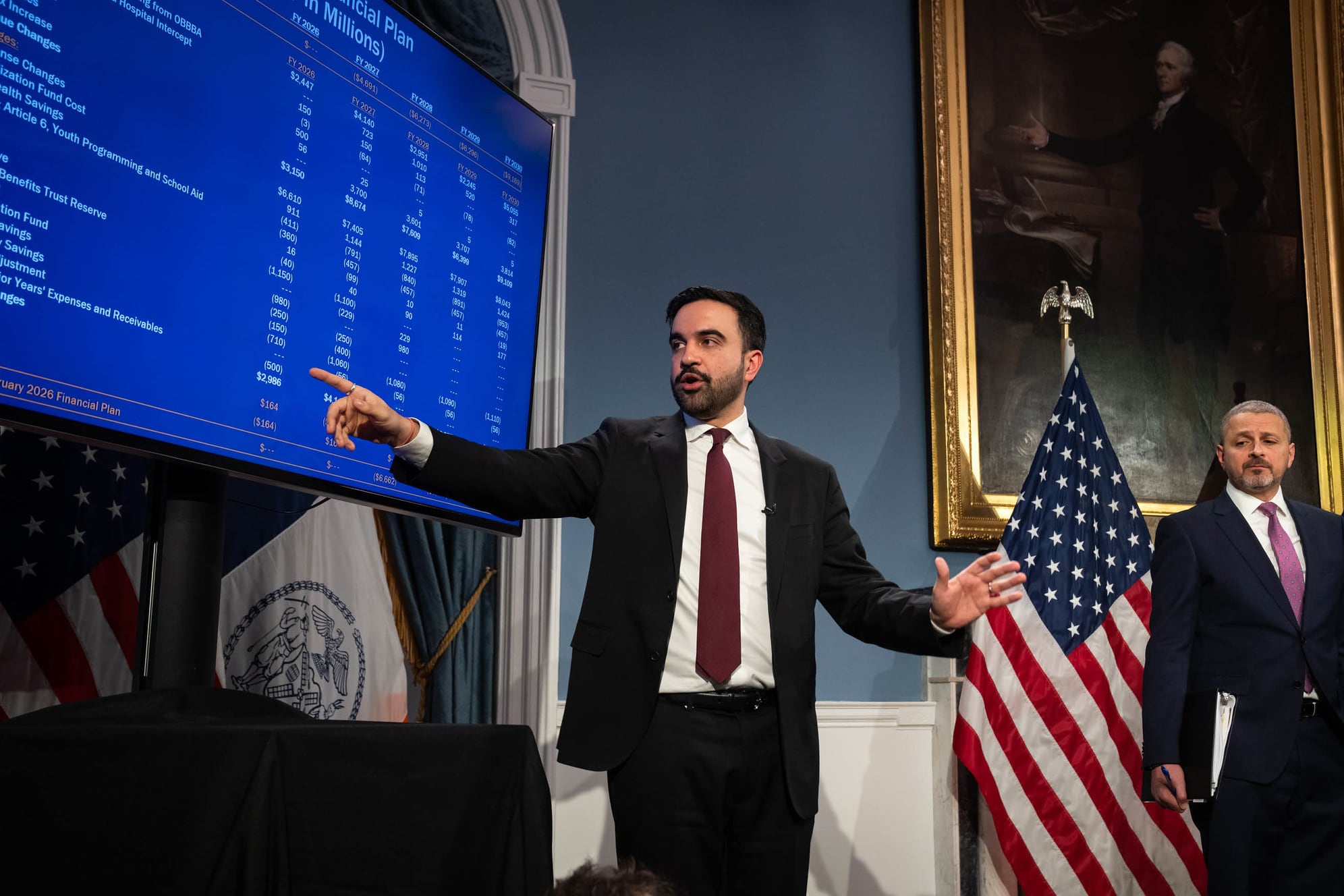
The mayor’s preliminary $127 billion budget, released Tuesday, represents his opening salvo in negotiations with City Council over city spending next fiscal year, which begins July 1. It also offers a window into his education priorities.
Mamdani told reporters the city is “firmly within a budget crisis” and pressured Gov. Kathy Hochul to support his proposal to raise taxes on corporations and people making more than $1 million a year.
The city is facing a $5.4 billion gap over the next two fiscal years, an ever-changing figure the mayor indicated was closer to $12 billion earlier this month. Mamdani said without additional revenue, city officials would hike property taxes to plug the gap. He also called on city agencies to find savings of 1.5% this year and 2.5% next fiscal year.
“For those who have watched budget after budget, it is tempting to assume that we are engaging in the same dance as our predecessors,” Mamdani said, blaming former Mayor Eric Adams for leaving behind a big budget gap. “Let me assure you, nothing about this is typical.”
Over the weekend, Mamdani and Hochul announced the state would kick in $1.5 billion more dollars into the city budget over the next two years for operating costs, including about $300 million for youth programming. (Officials have not said what programs that funding will support.)
Here are three takeaways from the mayor’s preliminary budget.
More funding to shrink class sizes
The city is facing a state requirement to cap class sizes at 20 students in elementary school to 25 in high school. Eighty percent of classes must fall below those caps next school year, with all classes expected to meet them by the 2027-28 school year.
Mamdani’s budget includes nearly $543 million in new city spending next school year to reduce class sizes and estimates jumping to nearly $943 million in each of the three fiscal years after that.
An Education Department spokesperson did not immediately say how that money will be spent, though officials have recently said they will need an additional 6,000 teachers at a cost of more than $600 million to meet the mandate.
The Education Department has already struggled to meet the law’s requirements and has issued thousands of exemptions from it. Meeting the mandate will only get more challenging, officials have warned, as the city faces difficult tradeoffs at crowded schools, which must cap the number of students who can attend, find new space, or receive an exemption from the law.
Stabilized funding for summer school and preschool special education
During the pandemic, city officials launched a popular summer program that combines enrichment and academics using one-time federal relief money. Ever since, the Summer Rising program has been funded in one-year increments. The city had not guaranteed funding for this summer.
Mamdani’s preliminary budget includes $106 million for this summer’s program and includes money to keep it going in the three fiscal years after that.
Officials also renewed $70 million in funding for preschool special education services, evaluations, and staff — though, despite that funding, many students still do not receive all of the help to which they’re entitled.
Advocates cheered the mayor for including the funding. But Maria Odom, executive director of the nonprofit Advocates for Children, stressed that “as the City moves forward with its plans for universal child care, it must ensure that young children with disabilities are not left waiting for the support they need and have a right to receive.”
The mayor’s proposed budget also includes nearly $50 million a year to open new classes in District 75, which supports students with more complex disabilities.
Some education programs left out
Several education programs that are at least partially funded with dollars that are set to run out in June were not included in the mayor’s budget, in addition to the $6 million for restorative justice and $5 million for mental health support.
Officials did not include funding for Learning to Work, a $31 million effort that pays for internships, social workers, and guidance counselors for students at risk of dropping out. Also left out: a $12 million wraparound program for students with disabilities who have sensory issues that interfere with school performance.
It will be up to local lawmakers and the mayor to determine if those items are restored, as they have been in previous years.
Alex Zimmerman is a reporter for Chalkbeat New York, covering NYC public schools. Contact Alex at azimmerman@chalkbeat.org.