Sign up for Chalkbeat New York’s free daily newsletter to get essential news about NYC’s public schools delivered to your inbox.
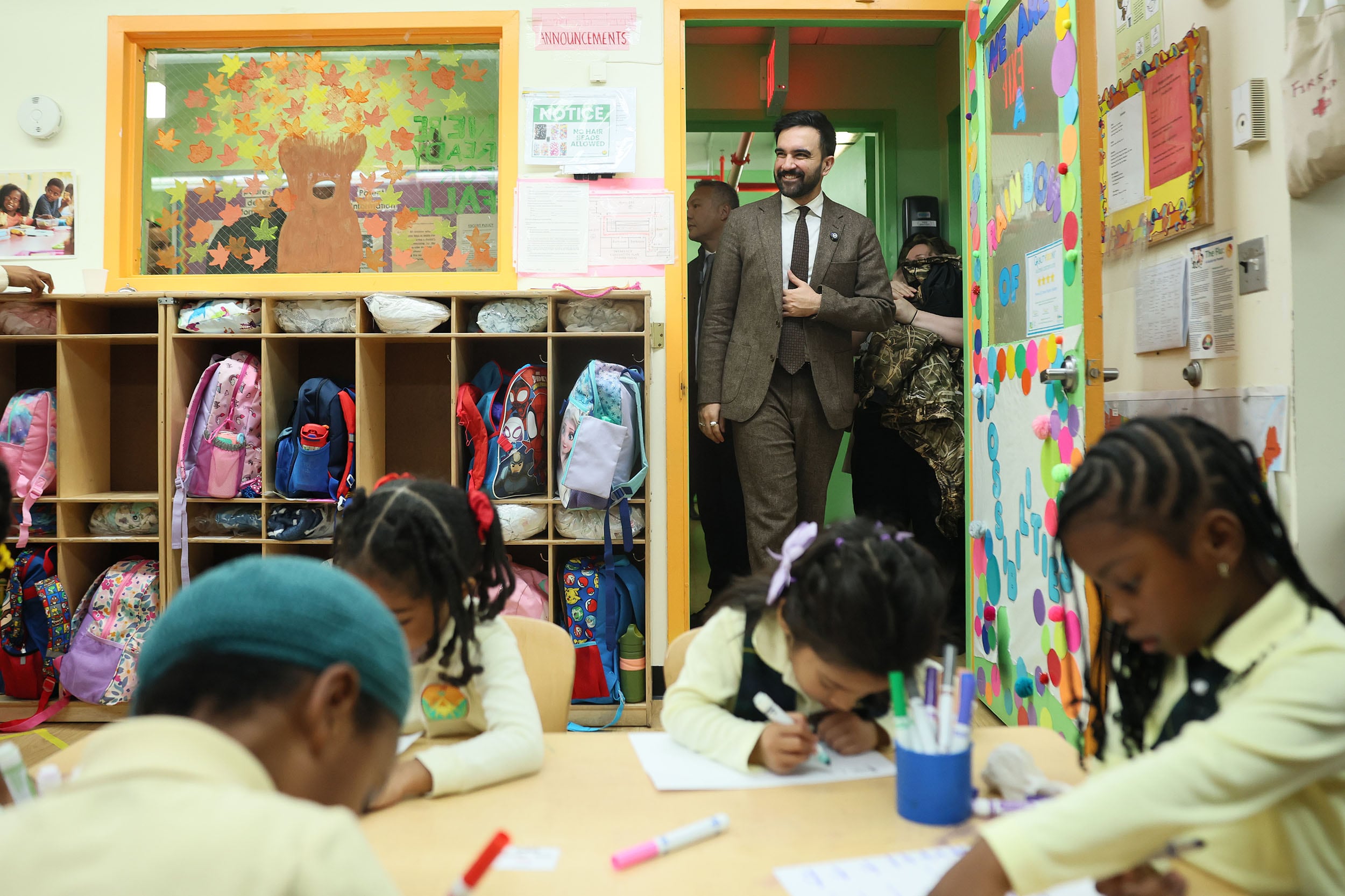
New York City Mayor Zohran Mamdani wants to change the role of parent coordinators in the city’s schools — making each one “a meaningful organizer of parents, rather than an administrative coordinator reporting to a principal.”
Chalkbeat asked parent coordinators how they see their roles and what they want the mayor to know.
We heard from nearly 360 current parent coordinators, a number that represents nearly 20% of the positions in the city.
You can read a sampling of what they had to say below, but one message was clear: Parent coordinators want to be heard and included in the decisions made about them. And they have lots of ideas for making schools and communities stronger.
Their most important job, they said, is serving as a bridge between parents and schools. Several wrote that their work is especially important for newly arrived families, who may be afraid to engage with government agencies, and for families of students with disabilities.
“When parents trust the school and feel confident reaching out, students benefit academically, socially, and emotionally,” wrote Melissa De Los Santos, a parent coordinator in Brooklyn.
Many parent coordinators said that because the city does not clearly define their roles, they end up taking care of a myriad of loose ends at their schools. They are de-facto tech support, attendance monitors, public health messengers, and counselors for parents and kids.
When asked if they were adequately paid, the response was an emphatic and overwhelming “absolutely not” — often in all caps. In the words of Mariela Chevry, a parent coordinator in Manhattan, “Love doesn’t pay the bills.”
The city created the role of parent coordinator in 2003, a year after the state legislature implemented mayoral control, transferring authority over New York City school budgets, curriculums, and closures from elected community school boards to the mayor.
Then-chancellor Joel Klein told the first-ever cohort of parent coordinators that their jobs were proof that the city was committed to parental involvement.
Now, with Mamdani calling to extend mayoral control under his own tenure, his administration is pointing to parent coordinators as essential players once again.
“We need to build the capacity of our parent coordinators,” said schools chancellor Kamar Samuels at a Feb. 10 City Council hearing on mayoral control. “We need to invest more in our parent coordinators and their training.”
Here are parent coordinators’ top suggestions for the Mamdani administration.
1) Clarify the job description and consider alternative supervision structures
Parent coordinators are often pulled between their responsibility to parents and their accountability to principals, who have significant control over their workloads, salaries, and time off. One of their primary jobs is to help parents bring concerns and complaints to school staff, which can get tricky when administrators and parents disagree. Because their contracts are vague, parent coordinators say their time often gets eaten by administrative tasks outside of the scope of their jobs.
“If I had [to] describe my role it would be closest to a school aid, handling all tasks I’m asked to do even though they don’t relate to my title directly ... Both the contract and role and responsibilities documentation are very vague.” — Dilyon Stanislaus
“We are expected to listen to the concerns of every parent we come across as well as providing resources, creating activities, bring up parent engagement numbers, have answers to all questions, be the face of the school, advocate for parents, all while being asked to do the work of others just because we are support staff and because our contract doesn’t specifically say what we are allowed to say no to.” — Jennifer Colon
“Clear protections, expectations, and respect for the role would allow parent coordinators to focus on what we do best — supporting families, advocating for students, and helping schools function effectively.” — Madelin Lopez
“We are the backbone of the relationship between DOE/admin/faculty and families ... a tenuous relationship for sure. We are treated like customer service representatives when in fact we are community stewards.” — Fernando Maneca
2) Improve pay and benefits, making time off comparable to other full-time school staff
Salaries for new hires start at $44,000 a year, going up to just under $74,000 for those who have already worked for the city for two years. Unlike most school staff, parent coordinators work year-round, with no summers off. They often need to be available early mornings, evenings, and weekends.
“We need decent pay that adjusts to [the] cost of living.” — Sergio Borrero
“Higher pay and summers off. We are overworked and undervalued.” — Jackie Cartagena
“Not only are we not paid well … it feels like we are a dumping ground. If this group can’t do it, doesn’t want to do it, just have the [parent coordinator] figure it out … Since we are on the appreciation topic, we have teacher appreciation day, we have principal and AP appreciation day. PC appreciation day? We don’t have that. Give us our flowers, we work hard and schools would fall apart without us." — Mariela Chevry
3) Elevate respect and include parent coordinators in decisions about their schools and districts
Parent coordinators want to be treated like professionals. Many want formal training and opportunities to move forward in their careers. Despite being the school staff most in touch with parents’ concerns, they are often excluded from decision-making about their schools and districts.
The parent coordinator position has historically been treated as an underdog role in schools, and many principals already fail to show the respect the position deserves." — Vanessa Murray
“Parent coordinators are more than the bridge that connects parents to the admin and school. We are a lifeline to many in our school community ... We need to be seen and heard and deserve so much more respect.” — Illiana Rosario-Urban
“I would love for the mayor to sit down with parent coordinators from the different districts so he can hear directly from us — both our passion for the work and the challenges we face.” — Lynette Bradshaw
“Parent Coordinators should be afforded clearer pathways for advancement and professional development. This could include access to at least two paid classes per semester, greater schedule flexibility, and guaranteed summers off. There is little justification for requiring Parent Coordinators to work throughout the summer performing duties unrelated to family engagement, often … without meaningful choice or autonomy.” — Madelin Lopez
Deputy Managing Editor Caroline Bauman contributed reporting and analysis.
Abigail Kramer is a reporter in New York City. Contact Abigail at akramer@chalkbeat.org.