Sign up for Chalkbeat New York’s free daily newsletter to get essential news about NYC’s public schools delivered to your inbox.
New York City education officials are hitting pause on releasing comprehensive artificial intelligence guidelines after their draft policy from March sparked fierce backlash.
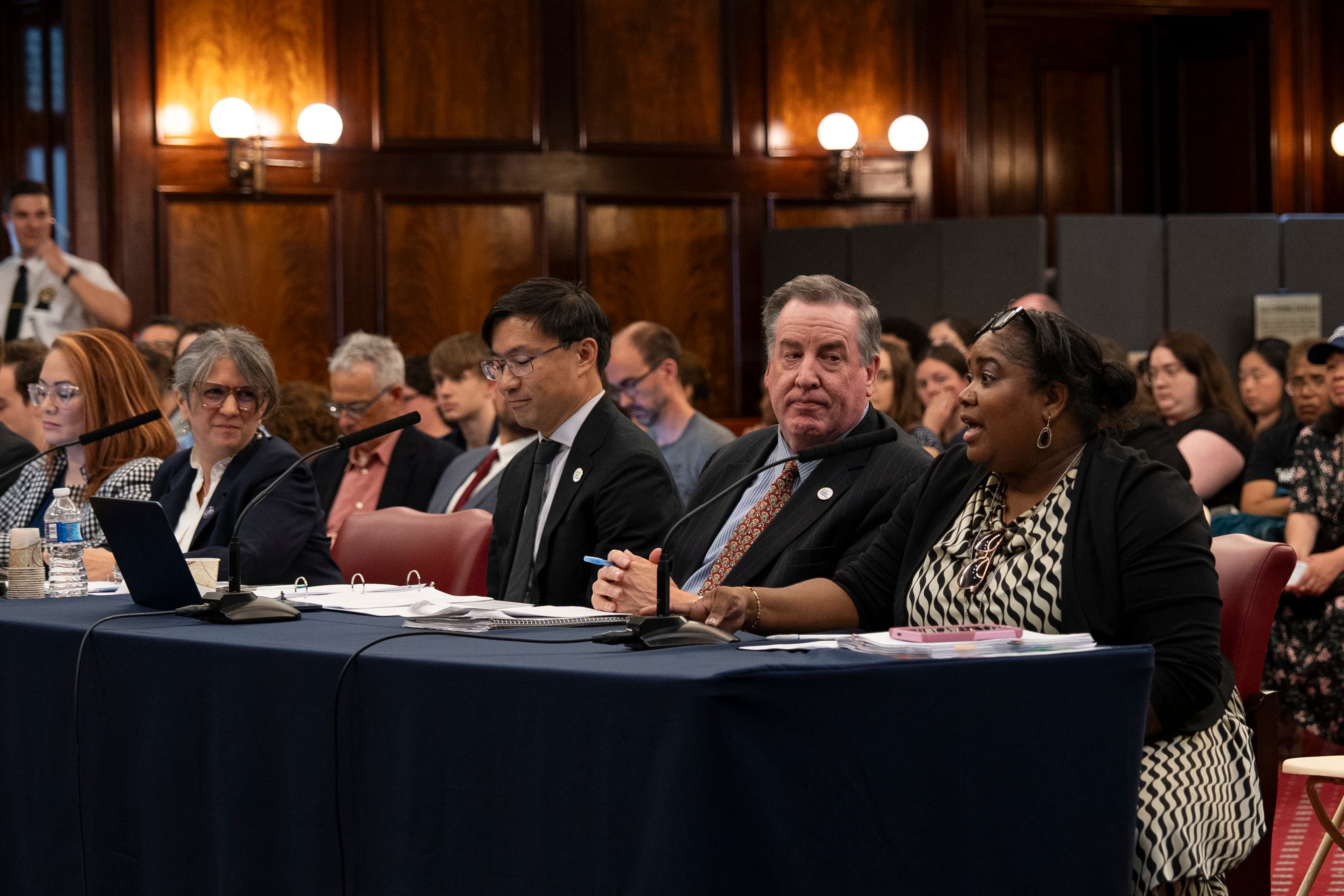
Officials initially said their final guidance would be released in June, but backed away from that timeline during a Wednesday City Council hearing focused on AI in schools. Instead, the policy guidance will be released sometime this summer, First Deputy Chancellor Danielle Giunta said.
Giunta said the “shifting national conversation, which has really escalated over just the last couple of weeks alone” was one reason for the delay, along with nearly 6,500 comments responding to the March draft. Officials have not released those responses but told City Council members they would do so.
Worries about AI — and education technology in schools more broadly — have increased in recent months. More than half of City Council members signed a letter urging Mayor Zohran Mamdani and schools Chancellor Kamar Samuels to pause AI use in schools citing concerns about learning and mental health. A broader petition seeking a moratorium on generative AI use in city schools has received thousands of signatures.
The Education Department’s draft policy used a traffic light framework that spelled out various uses of AI and their risk levels. Assessments and grading are not allowed, for instance, but brainstorming lesson plans gets a green light. Student AI use was largely left out, even though it’s one of the most pressing issues schools face. In response to the draft policy, parents packed public meetings and largely criticized the approach.
Samuels, who did not attend Wednesday’s hearing, recently said that the Education Department’s draft policy “missed the mark” that AI “is the most invasive technology that we’ve seen.” He suggested the final guidance would have stricter limits for the city’s youngest students.
Giunta said Wednesday that the city is considering different expectations based on age and grade level and thinking about how to prepare older students “for a world in which AI is already present without allowing AI to replace their own thinking.”
City Council members repeatedly pressed Education Department officials about the extent to which AI tools are already used in classrooms and indicated families should have a greater say over how their children are exposed to it.
“There are huge gaps in our understanding of how the technology is being deployed and when,” said Manhattan council member Carmen De La Rosa, who chairs the technology committee. “We do need the time to be able to wrap our arms around what is happening in our classrooms.”
Education officials said they are working with superintendents and principals to develop a more comprehensive sense of what tools schools are already using.
The Education Department’s stance on AI has whipsawed in recent years. When ChatGPT gained widespread use, city officials blocked its use in schools in 2023. Three months later, they rescinded the ban.
Former schools Chancellor David Banks grew increasingly warm to the technology, saying “AI can revolutionize how we function as a school system” and could be used for everything from college advising to assessing student work. But he never released a clear policy, leaving that task to Mamdani and Samuels to complete. Meanwhile, schools have been left to devise their own approaches.
Alex Zimmerman is a senior reporter for Chalkbeat New York, covering NYC public schools. Contact Alex at azimmerman@chalkbeat.org.