Sign up for Chalkbeat Philadelphia’s free newsletter to keep up with the city’s public school system.
Philadelphia will open two new schools as part of the new North Philadelphia Promise Zone, which is meant to boost student achievement and provide additional support to families in one of the city’s poorest areas, Superintendent Tony Watlington said.
The program will be modeled on the Harlem Children’s Zone, a high-profile education program launched in New York City in the 1990s.
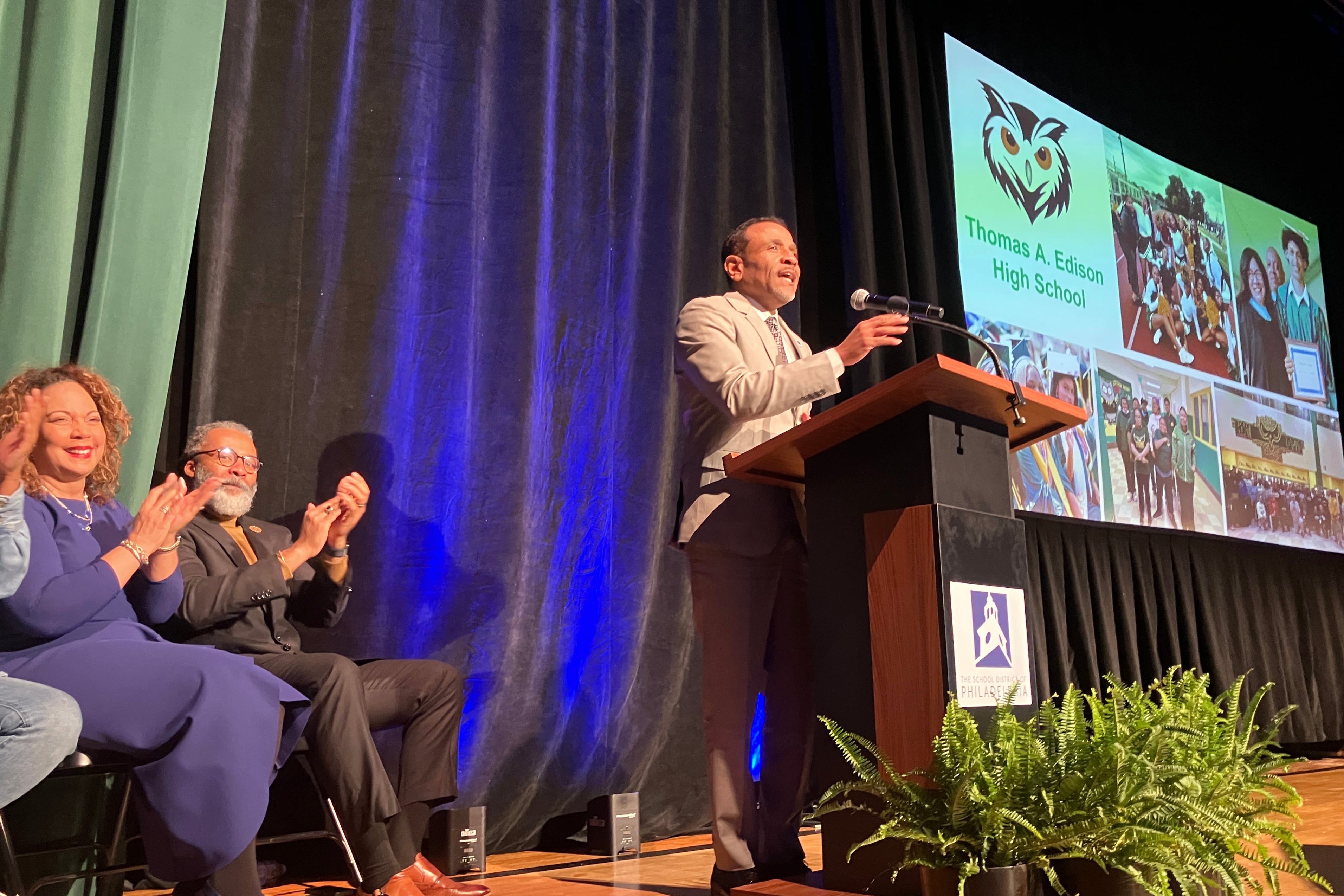
In his annual State of Schools address Wednesday, Watlington said the district plans to open the new schools in existing facilities. He did not say when the schools would open. But his announcement coincides with a facilities planning process that will lead to school closures across the city.
Watlington also said Wednesday the district will release that facilities plan — including recommendations for which schools to close, colocate, modernize, and repurpose — “this winter.”
The facilities plan is meant to better allocate building space and resources, since some schools have hundreds of empty seats and others are overcrowded, especially in the city’s Northeast. Watlington and other school officials say the aim is to provide more access to pre-K, AP classes, and extracurriculars.
Watlington did not say how the Promise Zone program will factor into the facilities plan.
The Harlem Children’s Zone organization provides charter schools and social services to families in one of New York City’s poorest neighborhoods. Researchers found it helped boost student achievement and shrunk the gap between Black and white children’ achievement. However, some experts have warned that efforts to replicate the program elsewhere have had mixed results.
Watlington said Philadelphia’s version has the support of Geoffrey Canada, president of Harlem Children’s Zone, which now runs several charter schools, community centers, childcare programs, and after-school programs in Central Harlem.
“This will be the first big city to replicate the success of the Harlem Children’s Zone,” Watlington said. “We are going to set these schools up to demonstrate to all the rest of us how to not only get better, but get there faster than our district average.”
Watlington said the schools will be staffed by the “very best, most effective” principals and teachers, and they will be “choice schools” that parents will be able to choose. Aliya Catanch-Bradley, principal of Mary McLeod Bethune Elementary School, will lead the “conceptualizing” of the zone, he added.
Mayor seeks solution for ‘persistently vacant’ school buildings
Even as the district plans to open new schools, its old facilities remain a burden.
The average school building is more than 70 years old, which has led to expensive upkeep costs along with outdated — as well as sometimes unsafe — learning environments.
The district also owns more than 20 buildings considered persistently vacant, meaning they haven’t been used in several years. One such building, Ada Lewis Middle School in East Germantown, became a crime scene last year after police found the body of 23-year-old Kada Scott buried behind the building.
Mayor Cherelle Parker said Wednesday at the State of Schools event that she is working with the district and school board to create a plan for vacant buildings, including using some to create more housing, one of Parker’s main campaign promises.
The buildings “have been red ink on the school districts’ budget,” Parker said. “We are going to find a way to do something that has never been done in the city of Philadelphia before: develop a plan for those buildings that have been persistently vacant.”
Rebecca Redelmeier is a reporter at Chalkbeat Philadelphia. She writes about public schools, early childhood education, and issues that affect students, families, and educators across Philadelphia. Contact Rebecca at rredelmeier@chalkbeat.org.