Sign up for Chalkbeat Philadelphia’s free newsletter to keep up with news on the city’s public school system.
Creating small, themed high schools was once a key component of Philadelphia’s education reform strategy.
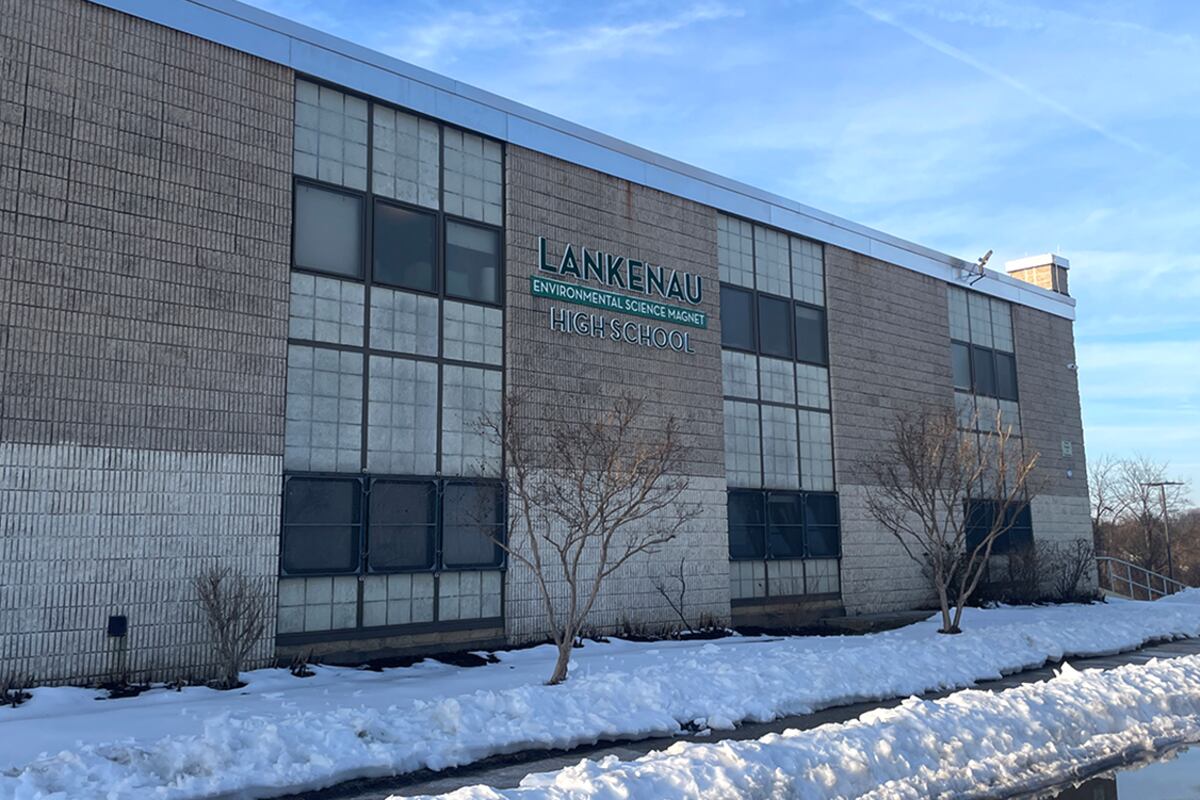
The intent behind schools like Paul Robeson, Lankenau, Motivation High, Building 21, and the U School was to offer students more intimate settings, the chance to form close relationships with teachers, and the opportunity for a very different kind of learning experience than what large, comprehensive high schools provided.
Now, however, most of these schools face uncertain futures under the district’s facilities plan, which would close 18 schools and is now being considered by the Board of Education.
Superintendent Tony Watlington’s plan would move most of the small schools into nearby neighborhood high schools and either close them entirely while creating a dedicated program in the larger school, or have them maintain a separate identity in the building with their own principal and staff —the so-called co-location strategy.
“We can’t keep all the small boutique high schools and the neighborhood high schools,” Watlington told the City Council at an early February hearing on his plan. “We don’t have the resources to do all of it.”
In comments to the Board of Education last week, he repeated his conviction that small schools can exacerbate inequality of opportunity. “There is too much disparity in this city,” he said. “What we want to do is level the playing field.”
Research attempting to quantify the benefits of small high schools is limited Generally, the smaller schools have higher attendance and graduation rates, with students more likely to pursue — if not finish — a postsecondary degree.
“Kids have a higher sense of agency and graduate with a deeper understanding of who they are, and what they want” in life, said Simon Hauger, founder of The Workshop School.
And parents and students love them, saying in surveys that they feel safer in these schools and “part of a real community,” Hauger said. Under Watlington’s plan, Workshop would eventually move into Overbrook High School.
In the superintendent’s vision, neighborhood high schools would establish or strengthen a multitude of different programs that could satisfy the needs of all students, a model that already exists at schools like Northeast High. While he expressed some praise for small schools to the City Council, he said in most cases they lack opportunities for students to take Advanced Placement courses, access robust art and music programs, and participate in sports.
Nevertheless, most City Council members have criticized the plan. And members of the public complained bitterly at neighborhood meetings.
Students from Motivation High, which Watlington originally wanted to move into Bartram, and Parkway Northwest, which is slated to become an honors program at Martin Luther King, have been particularly vocal in opposition.
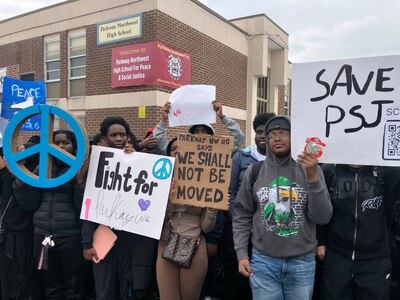
“The school may be small, but small means great,” said Samantha Brumfield, the home and school association president at Paul Robeson High School.
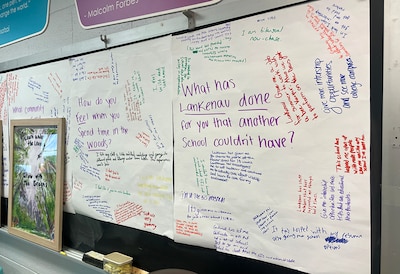
That type of criticism may have had some impact. Initially, Watlington proposed closing Robeson and making it an honors program within Sayre High School. After hearing the public’s dismay, he changed the plan and now proposes combining Motivation High and Robeson into one building. And after an outcry from students and parents at Lankenau High, which has an environmental focus, he changed his recommendation to move these students into W.B. Saul High of Agricultural Sciences rather than to Roxborough. That, however, has not mollified the critics.
Supporters of the small high schools say they were established for a reason that’s still relevant.
“What I love about Paul Robeson is that we teach children to build their own brand,” said Elana Evans, Robeson’s special education compliance manager. Due to the close relationships, teachers can help students figure out “who do you want to be,” and “help you get there.”
But Board of Education President Reginald Streater, a graduate of Germantown High School — a historic neighborhood school that closed in 2013 along with 23 others in the district’s last wave of downsizing — clearly agreed with Watlington when he told the City Council that maintaining so many small high schools in the district is “unsustainable.”
Philadelphia’s small high schools took decades to develop
The history of high schools in Philadelphia is complex. It was fueled by educators’ desire to improve student experiences. But race was also a factor as neighborhood demographics rapidly changed and student enrollment in many schools grew more diverse.
These small high schools were established in Philadelphia in several waves, starting in the 1960s and taking off in the early 2000s under former superintendent Paul Vallas.
Until the 1960s, the vast majority of students in the public system went to neighborhood high schools, although three vocational schools opened in the 1920s and 1930s to teach students trades: Bok, Mastbaum and Dobbins. Two prestigious magnets for the top students, Central High for boys and the Philadelphia High School for Girls, both opened in the 19th century.
Some of the neighborhood schools, like Olney and Bartram, in their heyday had an enrollment of 4,000 or 5,000 students. They were, for the most part, divided into several distinct “ability” tracks that often served to keep classes largely segregated even as the overall school enrollment became multiracial.
Former mayor Wilson Goode, who is Black and went to Bartram, told the Philadelphia Inquirer in 2004 that despite his desire to be in academic classes, his counselor told him he was better suited to an “industrial arts” program within the school. He had to persist to be put into the academic, college-bound track, he said — and even then, despite making the honor roll, his counselor discouraged him from applying to college.
A key moment was in 1963, when the city was undergoing rapid demographic change. That year, district leaders created so-called Motivation programs to handpick what they termed promising but average students in the neighborhood schools and prepare them for college. A frequent effect of this, unintended or not, was to isolate within the program a school’s dwindling number of white students.
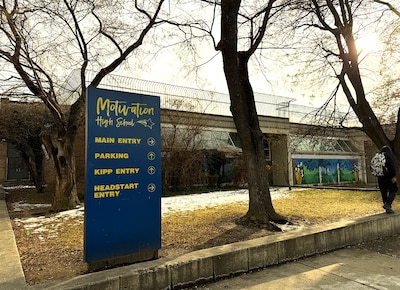
What is now Motivation High School was originally the Motivation program at Bartram High. What became Lankenau High School was once the Motivation program at Germantown High School.
Then in 1967, educators created the Parkway program, which they called a “school without walls.” Through Parkway, students could get academic credit for real-world experiences rather than spending most of their time in traditional classrooms.
They also had more control over their learning, creating their own educational plans, working in real jobs, and taking advantage of museums and other cultural and historical resources.
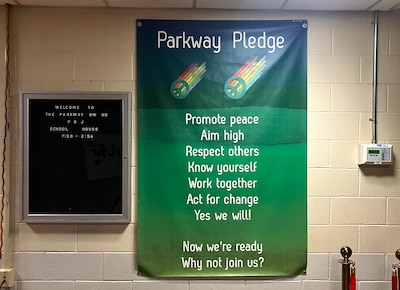
Eventually, three Parkway programs opened — Parkway Center City, Parkway West, and Parkway Northwest. Over the years their education approach became much more traditional, if theme-focused: Parkway Northwest, in Mount Airy, organized around peace and justice studies, for instance. If Watlington’s plan is approved, only the original Parkway will remain; Parkway West would move into Science Leadership Academy at Beeber, and Parkway Northwest into Martin Luther King.
The district’s next wave of new high school creation, in the 1970s, came in response to a 1968 desegregation lawsuit. Philadelphia opened several themed special admissions schools with strict requirements, including the High School for Creative and Performing Arts, commonly known as CAPA, and Carver High School of Engineering & Science. Officials anticipated that these schools would attract a racially diverse student body, which for the most part they did.
The small schools that opened later, starting in the 1980s, are known as “citywide admissions” schools. They also required students to apply, although their standards are more relaxed.
Changes were taking place in large neighborhood high schools too. Before the small schools movement took off, the district attempted to provide more personalized learning for students by investing heavily in “small learning communities” that were autonomous, offered their own courses, and had distinct enrollment, among other features.
But these communities were also designed to counteract the strict ability tracking that was still a feature in neighborhood high schools.
Watlington made key change at Philadelphia’s small schools
Especially in the smaller schools that Watlington called “boutique,” principals historically were able to shape their incoming classes as they saw fit and admit students who may have otherwise fallen short based simply on their grades, attendance and test scores.
However, in a sign of things to come, Watlington and the board put an end to that discretion in 2022, setting up a system that largely removed human judgement and was instead based on an algorithm they said was more fair and equitable. That system, however, made it harder for some schools to fill their spots.
“The new enrollment system was the beginning of the end for these citywide schools,” said one school leader, who spoke on the condition of anonymity in order to speak candidly. “Everybody’s enrollment for the most part has declined in these schools … there’s no longer any flexibility.” For instance, Motivation’s enrollment dropped from 331 in 2022-23 to 151 this school year.
Others involved in the founding and development of these schools said that even co-location with a larger school will have an impact. And they say that uncertainty about the schools’ future is likely to affect enrollment even more.
Joshua Kleinman has worked at the U School, which uses a project-based learning model, since its inception in 2014. But he prefers to see an upside in Watlington’s plan, saying that many of the new small schools have long struggled with inadequate and even inappropriate facilities.
U School leaders have “fiercely advocated for a facility we deserve since opening our doors,” Kleinman said. If Watlington’s $2.8 billion plan led to modernized and specialized school facilities, “it would be one of the most ambitious in the school district’s history.”
But Thomas Gaffey, who helped establish Building 21 in 2014 to help all students “develop their passion” in a small, supportive setting, is more pessimistic.
“You can’t take a program like Parkway and put it within a big comprehensive high school,” he said, “and expect it to stay the same.”