Sign up for Chalkbeat Philadelphia’s free newsletter to keep up with news on the city’s public school system.
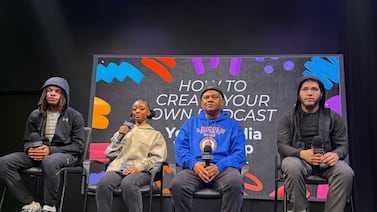
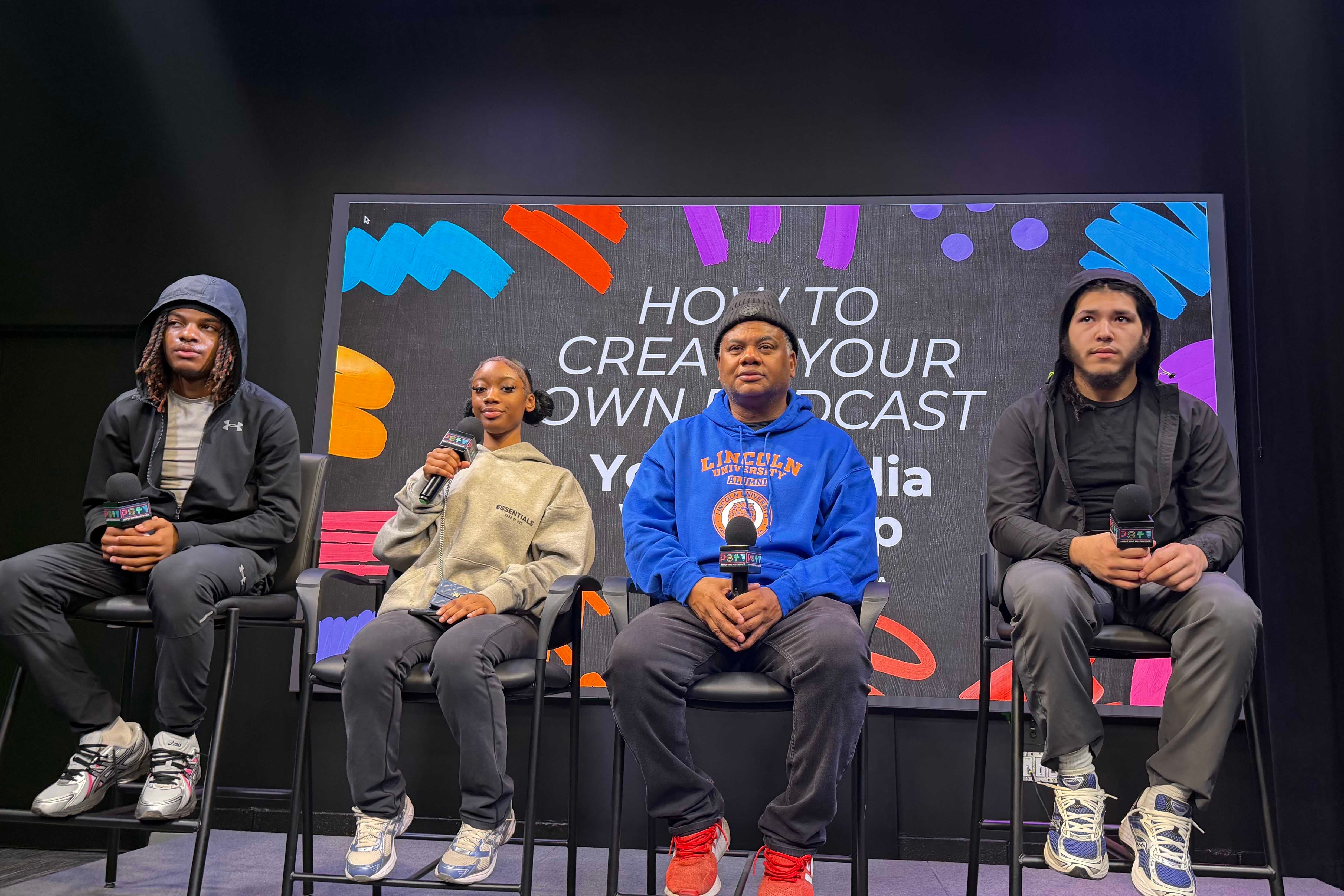
In the hectic two minutes before the cameras started rolling, a producer told high schoolers Jayden Alston and David Torres to keep their sweatshirt hoods away from their eyes.
Next, she reminded Cyniah Goodwin to sit straight and hold the mic up to her mouth. Then, they were ready.
The trio of teen hosts recorded their first-ever episode of the Peacemakers Podcast last month. During a recording session last month, they dug into how Philadelphia students process anger, depression, insecurity, and other challenges that they feel contribute to gun violence across the city. They released a condensed version of that conversation on YouTube this week.
There were 450 to 500 fatal shootings in Philadelphia each year between 2020 and 2022, according to city data. The numbers have dropped significantly since then, with 206 fatal shootings last year, but thousands of kids are still grappling with firsthand loss or the ongoing risk of gun violence in their communities.
Goodwin, Torres, and Alston attend Vaux Big Picture High School in North Philadelphia. They’re producing the podcast as part of a school-based internship with gun violence prevention organization Frontline Dads.
The goal is to show other young people it’s okay to share your feelings with your friends, said Alston, who is 16 and lost a classmate to gun violence in middle school. He said it’s hard to find an adult to talk to at school.
“The adults, they’re not going to really hear us out,” he said. “But students talking to students, that’s real life conversation. … Nobody’s gonna admit that they really going through something. So by hearing other students admit it, they feel comfortable enough to where they can admit it, too.”
The first episode features the students interviewing a special guest from the Philadelphia Anti-Drug Anti-Violence Network. Their next episode will feature a roundtable discussion about the reasons for gun violence in Philadelphia.
“I think gun violence is more so where a person is mentally at,” Alston said during the recording session. “If everything’s not okay at home, your mom’s on drugs, your pops don’t care about you, that’s all gonna be taken out on the world.”
“What I think gun violence come from is not knowing yourself,” said Goodwin, who like Alston is 16. “It’s about love all around, loving yourself as a person, and not even wanting to put yourself in that predicament.”
“I feel like people want to be something, so they look up to the next person, like follow the next leader,” said David Torres, 17.
That missing sense of self-love, combined with pressure from peers or social media and trauma at home, can propel someone toward gun violence if they don’t have a place to process those feelings, the hosts explained.
It’s why they and other students in their internship program are also pushing for solutions on their school campus. They recently submitted a proposal to their administration for a “deescalation room” where students who are feeling overwhelmed can go to take a breather.
During the recording session the teens discussed their ideas for the space, which would be called the “Cougar’s Den” after their school mascot.
“A space where it’s calming, the aroma is right, the music is nice, you got all your necessities in there,” Goodwin said.
She encouraged her fellow students to visit the room when they feel angry “instead of just lashing out on the next person.”
Several Philadelphia elementary schools have deescalation rooms as part of a Temple University-supported program.
The students are planning future podcast episodes on violence and other topics. They record at PSTV, the educational channel for the School District of Philadelphia. The fully staffed, multi-room recording studio in the basement of district headquarters is available for free to all K-12 students in the city. The Vaux students received in-studio coaching from journalist P.O.C at Revive Radio.
Goodwin said it’s important to keep talking about gun violence because it’s become “normalized” in Philly.
“Everybody just goes on to the next day after somebody dies,” she said. “Like it’s just something we are all supposed to experience one day in our life.”
Even with shootings in Philadelphia on the decline, young people still need support as they grieve, as well as guidance on how to not get caught up in conflict, the Vaux students said. They hope both the podcast and the deescalation room can prevent future shootings.
“If everybody just decided what they wanted to do in life and took the time out to think about theirselves, then there wouldn’t be no violence, or maybe no going to jail, stuff like that,” said Alston.
“You have to get vulnerable with yourself to know yourself, so that you can find yourself and you won’t be in dumb situations because you want to be like the next person,” said Goodwin.
This story is part of a collaboration between Chalkbeat Philadelphia and The New York Times’s Headway Initiative, supported by the Stavros Niarchos Foundation (SNF) via the Local Media Foundation.
Sammy Caiola covers solutions to gun violence in and around Philadelphia schools. Have ideas for her? Get in touch at scaiola@chalkbeat.org.