Sign up for Chalkbeat Philadelphia’s free newsletter to keep up with the city’s public school system.
Members of Philadelphia’s City Council will examine creating an elected school board, escalating their campaign to have more control over the city’s schools.
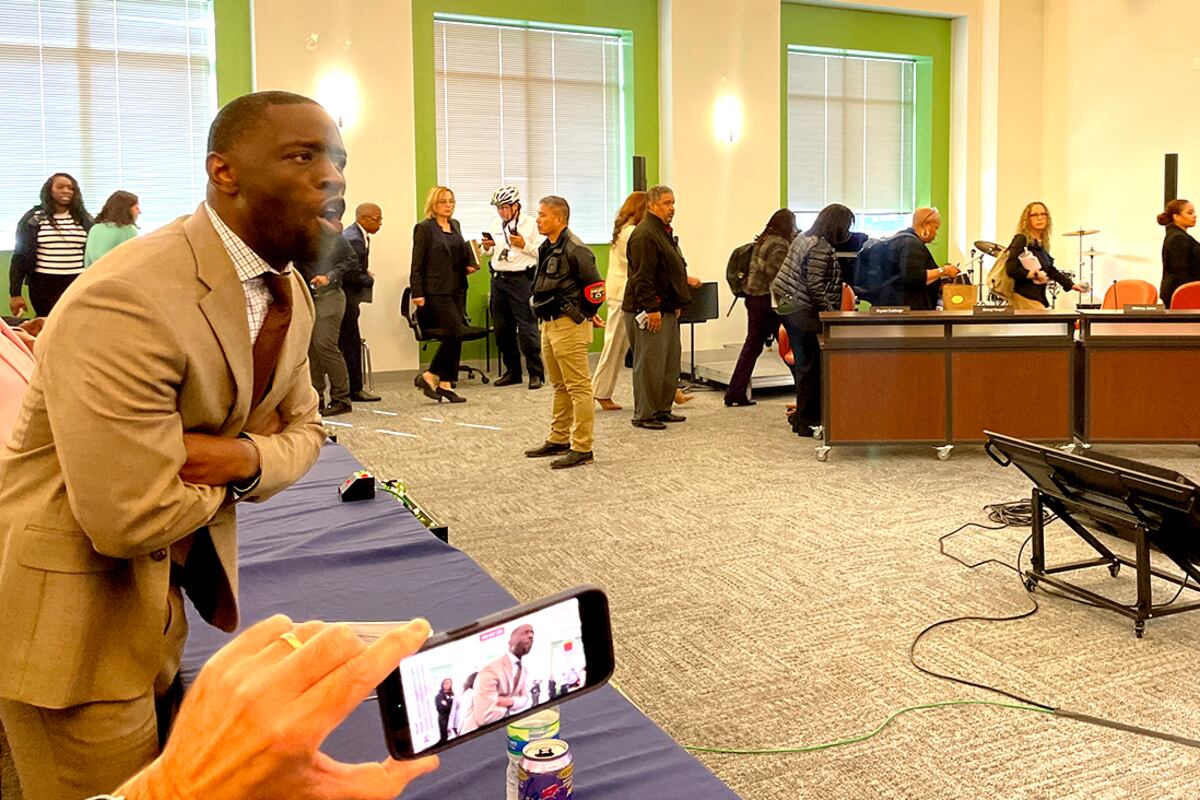
Education Committee Chair Isaiah Thomas introduced a resolution on Thursday to authorize the committee to conduct hearings into the school board’s governance model. The resolution was privileged, meaning it was adopted by the City Council with Thomas’s support.
The move comes after weeks of explosive fights between Thomas and Board of Education President Reginald Streater over the district’s plan to close 17 schools. The board voted 6-3 to approve that plan last week following protests from Thomas and other councilmembers.
Elected school boards can give residents more say over who controls schools, but they can also politicize the school governance process. Researchers have found that no particular governance model is associated with improved academic outcomes for students. School governance conversations have intensified across the country as districts grapple with declining enrollment, school closures, and budget problems.
Philadelphia law states that school board members serve “at the pleasure” of the mayor, unless they are elected. All members of the current board were nominated by Mayor Cherelle Parker. Most were also confirmed by City Council through a vote, except member Joyce Wilkerson. Wilkerson’s presence on the school board has created tension between the City Council, Parker, and the board.
Thomas’s resolution directs the Education Committee to explore options for an elected school board or a hybrid of elected and appointed members.
In response to questions from Chalkbeat, Streater said in a Thursday statement the board voted to approve school closures “grounded and guided by our commitment to increasing access and opportunities for all students.”
“As a Board, we will continue to call on our city and state partners to work alongside us to ensure that every student receives the investment and support they deserve,” he added.
The resolution calls out the board’s approach to school closures — including initially scheduling a vote on the closures with only 72 hours notice — as a reason for why the governance model should change.
“These actions and the context of these decisions should remind Philadelphians that the governance model of the Philadelphia Board of Education is unique among municipalities in Pennsylvania,” the resolution states. “Considering a more traditional elected or hybrid model of governance may compel the Board to be more responsive to students and families’ concerns than the Board has proven to be.”
In every Pennsylvania district except for Philadelphia, the state’s largest district, school board members are elected. Those elections are partisan. Boards have key powers over districts, including hiring a superintendent, various policies, and the budget.
Seven other members of the City Council cosponsored the resolution from Thomas. It does not state when the Education Committee’s hearings over school governance would begin.
Rebecca Redelmeier is a reporter at Chalkbeat Philadelphia. She writes about public schools, early childhood education, and issues that affect students, families, and educators across Philadelphia. Contact Rebecca at rredelmeier@chalkbeat.org.