A Tennessee legislator is stepping aside temporarily as the Senate’s top education leader after being indicted on charges of violating federal campaign finance law.
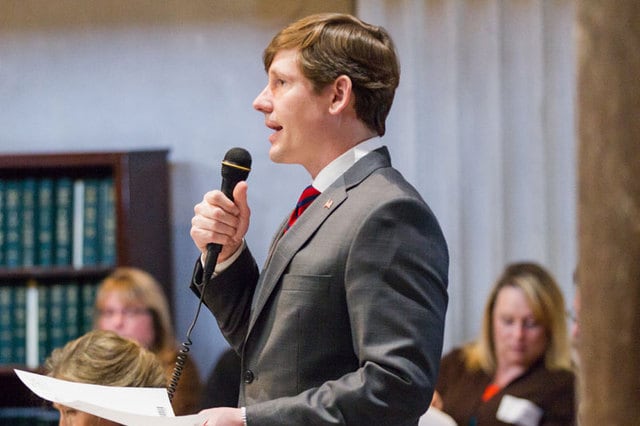
Sen. Brian Kelsey announced his decision Wednesday on the Senate floor after lawmakers kicked off a special session aimed mostly at curtailing COVID-related mandates for vaccinations and masks.
“I’m totally innocent,” the Germantown Republican said in remarks that lasted three minutes. “I trust in time the truth will prevail and I will resume my leadership role on the education committee.”
Lt. Gov. Randy McNally named Sen. Jon Lundberg, a Republican from Bristol and the committee’s vice chairman, as interim leader during the special session, which likely will stretch into next week.
A spokesman for McNally later said the speaker would not comment further at this time about a more permanent successor while the senator challenges the charges in court — a process that could take months or years.
The nine-member committee is the primary gatekeeper of hundreds of proposals annually that can affect Tennessee students, educators, and schools. Kelsey has served on the panel for a decade, and McNally named him the leader in January after long-time chairwoman Dolores Gresham retired last year.
An attorney from Shelby County and influential conservative voice, Kelsey has been a passionate advocate of education choice policies like vouchers that would provide state funding to help families pay for private school tuition. He also helped craft language in a 2021 law that restricts classroom instruction about systemic racism.
Last week, a grand jury indicted Kelsey and Joshua Smith, the owner of a Nashville social club, on charges they illegally concealed the transfer of $91,000 during Kelsey’s failed U.S. congressional campaign in 2016.
Kelsey, who is up for reelection next year, is to appear in federal court on Nov. 5. If convicted, he could face up to five years in prison and a $250,000 fine on each of five counts.
In his remarks, Kelsey said he believed he was operating within the law. He questioned the timing of the indictment, five years after the alleged offense and under the administration of President Joe Biden, a Democrat.
Under Senate rules, Kelsey would have had to appear before a Senate ethics committee about his leadership position or be suspended had he not stepped aside.
McNally thanked Kelsey for his decision. “I think this will allow you to concentrate fully on your case and not be burdened with the issues of chairmanship,” the speaker said, “and I appreciate you as a senator and as a person.”
Lundberg takes the helm as the legislature takes up thorny matters in the days ahead such as school mask mandates and several bills to make school board races partisan contests.
He did not immediately respond when asked to comment on his new role.