Eleven days before a state-imposed deadline, the Memphis-Shelby County Schools and Millington Municipal Schools boards approved an agreement to transfer control of Lucy Elementary from Tennessee’s largest district to the suburb in exchange for a $3.3 million payment.
The resolution was triggered by a new state law barring county school systems from operating schools within the geographic boundaries of a municipal school district.
MSCS can keep the school through June 15, 2027, meaning its nearly 300 students and 50 staff members will be able to stay for now. But MSCS can opt to leave Lucy earlier with a year’s notice to Millington, the agreement says.
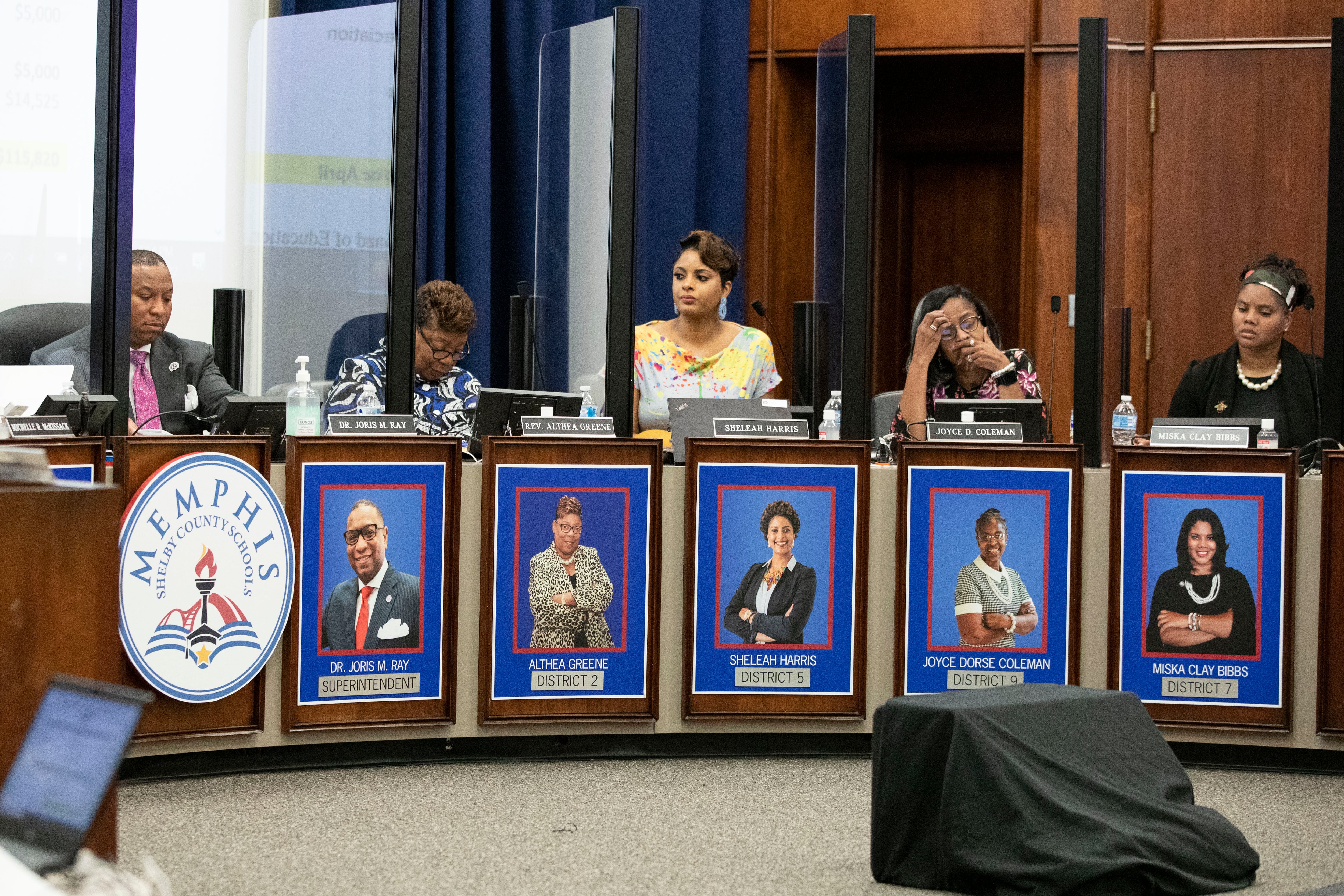
The agreement passed the MSCS board 6-0 during a specially called meeting Tuesday. Board members Sheleah Harris, Amber Huett-Garcia, and Keith Williams were absent. The Millington board backed it 5-0. Board members Maron Evans and Amanda Compton were absent.
Addressing the MSCS board before the vote, interim Superintendent Toni Williams pledged to reinvest the funds from the sale in the schools that Lucy students and staff will ultimately move to. She said the agreement was the product of community advocacy built around Lucy staff and families’ desire to stay together, and “reflects the district’s commitment to ensuring a high-quality education for all.”
In a separate 6-0 vote, the MSCS board also agreed to waive its ownership claims to E.A. Harrold Elementary in Millington for a payment of $690,657.
Millington took over the school after it left the newly merged Memphis and Shelby County school systems in 2013 and created its own district, along with several other suburbs. A legal settlement said that if the building is no longer used for educational purposes, ownership would revert back to the county district. Millington closed E.A. Harrold two years ago, and the district will sell the property to a third-party developer, which plans to use it for a veterans clinic.
After the MSCS votes, board member Michelle McKissack thanked Williams, who became interim superintendent at the end of August, for “hitting the ground running” by resolving two long-running disputes over four schools operated by MSCS. Last week, the board signed off on a deal that allows the Germantown Municipal School District to take over two schools currently operated by MSCS and provides funding for a new $100 million high school in the Cordova area.
“I thank you for your fight to make sure that our community, our families, the citizens of Memphis, the residents, the taxpayers receive some funding for the schools,” McKissack said.
Board member Stephanie Love, whose North Memphis district includes Lucy Elementary, also praised the resolution and thanked all involved in negotiating the agreement.
“I’m not happy with the $3 million,” Love said, referring to the sale price, “But I am happy the situation is put to rest.”
Samantha West is a reporter for Chalkbeat Tennessee, where she covers K-12 education in Memphis. Connect with Samantha at swest@chalkbeat.org.