Sign up for Chalkbeat Tennessee’s free newsletter to keep up with statewide education policy and Memphis-Shelby County Schools.
The Shelby County Commission once again delayed voting on a controversial proposal to reset Memphis school board elections, frustrating a crowd of parents calling for immediate action.
The county commission has gone back and forth on whether to begin election realignment in 2026, which would cut short five current board members’ terms, or in 2030, which community members decry as being too late.
“They’re not governed by anybody but themselves,” said Charles Lampkin, director of policy for parent group Memphis Lift. “Bring some governance to this awful situation.”
During Monday’s contentious hearing, school board members called the plan to align their elections with the general cycle punitive and discriminatory. The Memphis-Shelby County board has faced heavy backlash since voting in January to suddenly fire former Superintendent Marie Feagins.
Tennessee lawmakers this year paved the way for the commission to reset MSCS elections to align with other county offices.
“This is just retaliation on the board,” said school board member Towanna Murphy. “We did our jobs. We’re going to continue to do our jobs.”
Education committee members originally proposed the 2026 timeline, arguing aligning the election cycles would boost voter turnout. But the full commission pushed off voting on that plan in July due to constitutionality concerns.
Commissioners are expected to vote on Sept. 22 on the updated proposal to put all school board seats up for reelection in 2030. In August, they voted to limit Memphis-Shelby County school board members to two consecutive terms starting in 2026.
A small group of parents and community members present at Monday’s meeting called the school board members liars and urged commissioners to “return power to the voters” with a 2026 realignment.
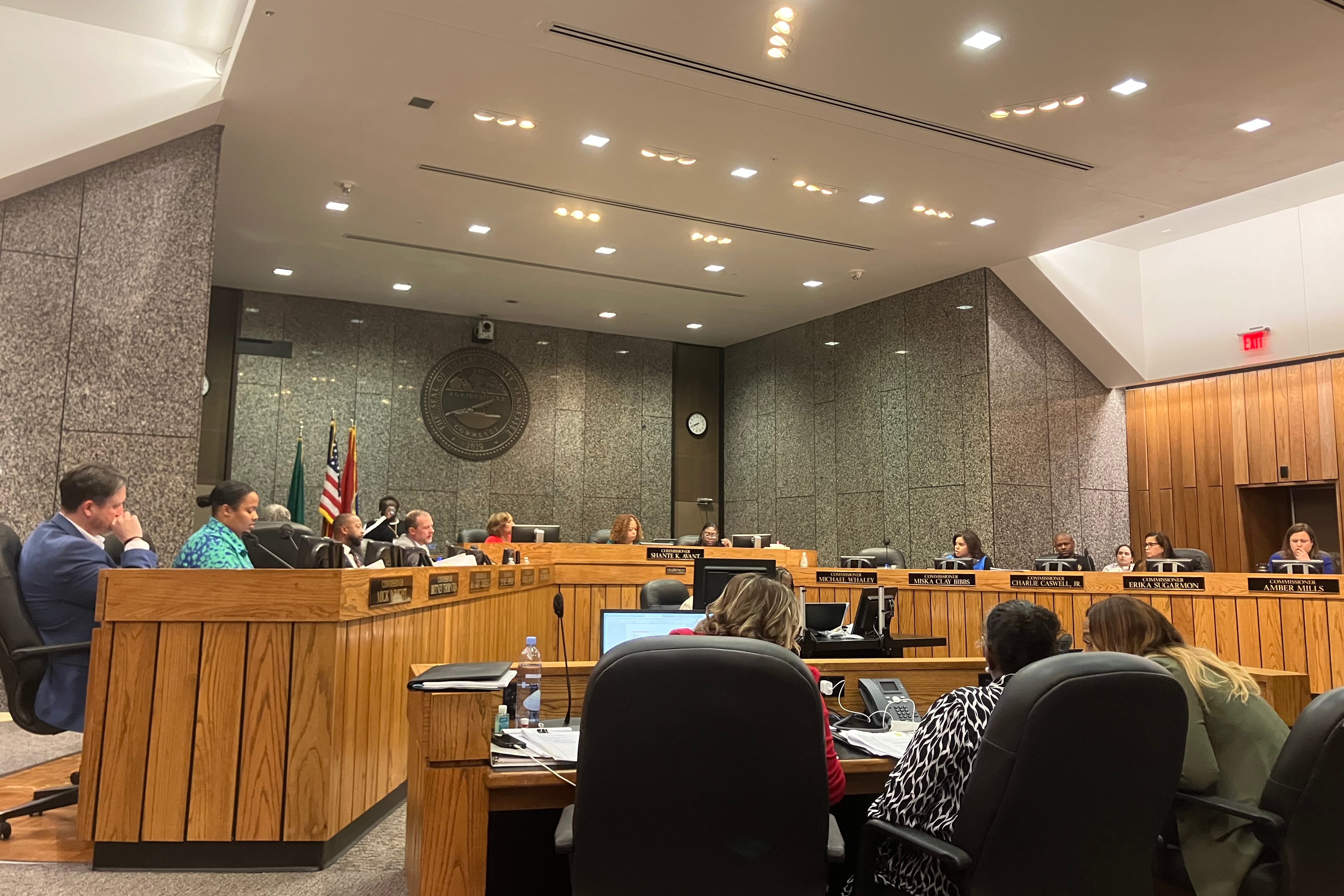
One critic of the school board was removed from Monday’s meeting for calling commissioners “greedy dogs,” and another had his microphone cut off for yelling and hitting the podium during public comment. Commission Chair Shante Avant gave multiple warnings for the audience to quiet down.
Commissioner Brittany Thornton suggested returning the proposal to its original 2026 timeline, citing the desire for “urgency” from community members.
“I have not seen many issues where the public has been so charged,” she said.
But the motion failed in a tied vote, with six commissioners voting in approval and six abstaining. Commissioner Erika Sugarmon, one of those who abstained, said the 2026 proposal is akin to a recall of the school board.
“What you’re doing is disenfranchising voters who elected these officials,” she said.
The county commission isn’t legally able to issue a recall on the MSCS school board. State legislators would have to give the local body that power, and some commissioners expressed support for that.
“If there were a recall process, we wouldn’t be here,” said commissioner Amber Mills.
Bri Hatch covers Memphis-Shelby County Schools for Chalkbeat Tennessee. Reach Bri at bhatch@chalkbeat.org.