Sign up for Chalkbeat Tennessee’s free newsletter to keep up with statewide education policy and Memphis-Shelby County Schools.
A GOP push to double the number of students in Tennessee’s voucher program cleared its first hurdle in the General Assembly on Tuesday.
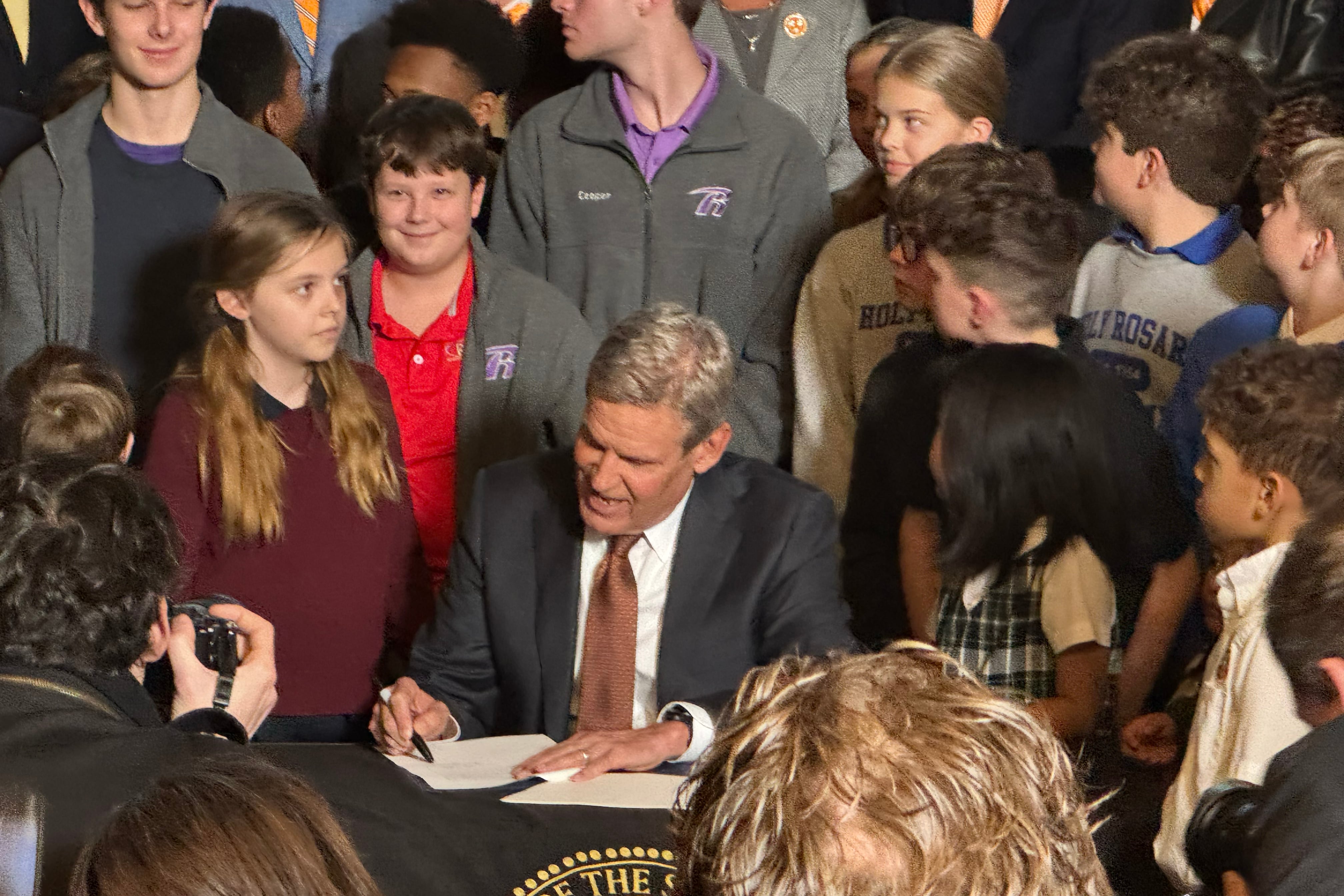
Gov. Bill Lee and Republican leadership want lawmakers to sign off on a voucher expansion plan that would grow the program — which is in its first year — to 40,000 students. If Republican lawmakers are successful, the change could direct $303 million in public dollars to private schools in the state next school year.
The K-12 education subcommittee voted Tuesday morning 5-3 to advance House Bill 2352, the first official vote on the expansion leaders have been calling for since last fall. Subcommittee chair Kirk Haston, a Republican from Lobelville, joined two Democrats in voting against the bill.
Another vote is expected Wednesday in the Senate Education Committee.
The push to double the program’s size comes just a year after lawmakers passed the initial Education Freedom Scholarship — or EFS — legislation that included an annual cap on growth of 5,000 new seats, which voucher supporters at the time argued would prevent the program from growing too rapidly.
“This is the first year we’ve had this program, and we’re already doubling it because people applied for it,” said Rep. Sam McKenzie, a Knoxville Democrat who voted against the expansion on Tuesday. “This is not the time to expand a voucher program that’s not proven. We don’t have the data on it.”
In current law, Tennessee can legally expand the program from 20,000 students to 25,000 students for next school year, due to the number of applications it received for the program.
The Tennessee Department of Education last month reported 58,000 students applied for the program next year, including 18,644 students currently enrolled in the program who have applied for a renewal.
Last year, 10,000 vouchers were reserved for first-come, first-served applicants. The other half were limited to families who earned 300% or less of the federal income threshold for students to be eligible for free or reduced-price lunch.
“The vast majority of these went to hard-working Tennesseans that are struggling to just pay their bills,” House Majority Leader William Lamberth, a Portland Republican sponsoring the bill, said when answering questions about which Tennesseans are benefiting from the program.
The department has not released household income-related data about voucher recipients.
“They feel like — and I trust these parents to be able to make the best decisions for their child’s education — that their child should be able to take advantage of one of these scholarships,” Lamberth said.
Renewal applications for next school year were prioritized and accepted by the state, but families that applied for the program for the first time this year are now stuck in limbo. Their applications are pending but unable to move forward until lawmakers decide on expansion proposals and determine exactly how many vouchers will be available.
Lee has continually pointed to the high level of demand for the program as the sole reason to expand it. There is no data yet indicating the program leads to better outcomes for Tennessee students.
“As you know, we’ve only had those scholarships available for one year, so there’s no data yet that would be of any value,” Lee said last month.
The program requires participants to take a nationally standardized achievement test or the Tennessee Comprehensive Assessment Program. Private schools accepting vouchers must report the test results in June to the Office of Research and Education Accountability, or OREA, in the Tennessee Comptroller’s office. Lawmakers are also set to be notified about test results annually.
While there are a few bipartisan efforts to enforce some accountability measures on the program, they have been knocked back by the Republican supermajority so far in the 2026 legislative session.
In February, Republicans voted down a proposal from McKenzie that would have required the OREA prepare a public report on student demographics in the EFS program and study how many vouchers went to students already enrolled in private schools.
The state education department has denied requests from the media and state lawmakers for data related to previous school enrollment, arguing it was not required to track students’ previous enrollment and therefore cannot report those numbers.
Lawmakers like Rep. Caleb Hemmer, a Nashville Democrat, have locked heads with the department over the issue. Hemmer is now pushing for a larger data transparency bill that could open the department up to more requests from elected officials.
Meanwhile, a Republican-backed bill would require the department to produce an annual report on the program including information on previous school enrollment, annual household incomes, and third-party contract administrative costs.
That legislation, House Bill 1544, could receive its first hearing this week. It is sponsored by Rep. Jody Barrett, a Dickson Republican who has publicly opposed voucher programs in the state.
Melissa Brown is the bureau chief for Chalkbeat Tennessee. Contact Melissa at mbrown@chalkbeat.org.