The Illinois State Board of Education adopted a resolution Wednesday to reignite their commitment to address racism within education. But two board members said it wasn’t enough.
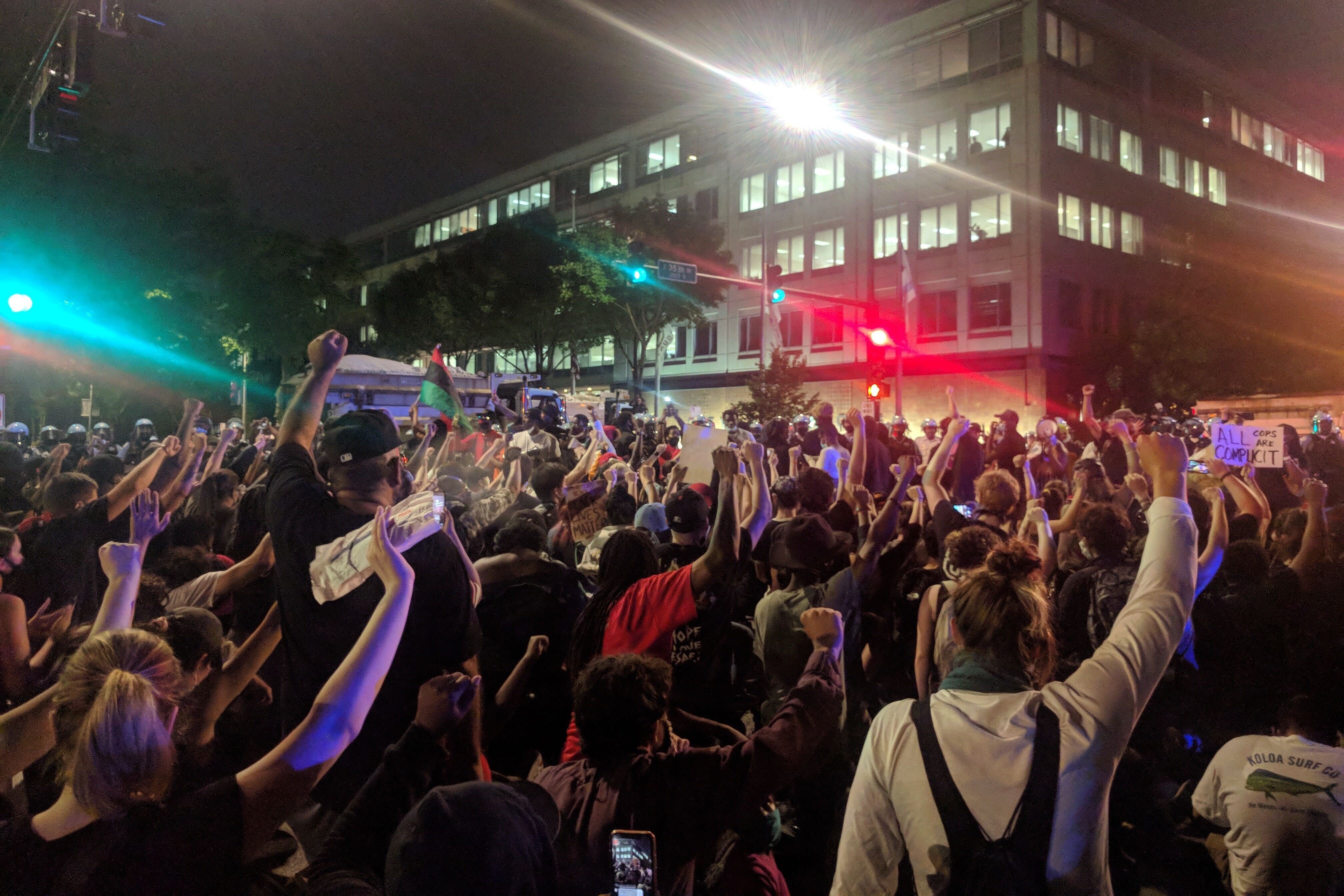
Board members brought forward the resolution after seeing student-led protests across the state about police brutality toward Black people. The resolution says that the agency will support educators, promote state education policy to address racism, and ask public school boards to address racism. It listed the names of Breonna Taylor and George Floyd, both killed by police officers in separate incidents, and Ahmaud Arbery, who was chased and killed in Georgia by a former police officer and his son.
The resolution was supported by the entire board, but board members Cristina Pacione-Zayas and Donna Leak wanted to make sure that the board also meets the moment with action.
“I support the spirit of the resolution, but I’m frankly tired of statements. I’m tired of words. I feel like they are platitudes,” said Pacione-Zayas. “I just want to make sure that this isn’t another nice statement. I didn’t come to this table to put my feet up or to build my resume. I came to do the real work. I don’t want to leave here with incremental change.”
Leak added, “My support is that these words become very real to people across the state of Illinois.”
In Illinois, the majority of students are Black and brown but the majority of teachers are white. At Wednesday’s board meeting, several public speakers said that the state needs culturally responsive teaching and learning standards to train educators to have uncomfortable and difficult conversations about racism. State Superintendent of Education Carmen Ayala said that the board will look at the agency’s social science standards and mandated units of study over the summer.
Josh Kaufmann, executive director of Teach Plus, spoke about the urgency of adopting culturally responsive teaching and learning standards to help teachers engage with students about racism in society.
“Acknowledging whiteness, race, and privilege is difficult and is a skill that teachers can learn and that every teacher needs to be able to provide for their students, whether they are white, Black, Latinx, or Indigenous,” said Kaufmann.
Keisha Rembert, an assistant professor of teacher preparation at National Louis University in Chicago, spoke about her experiences as a parent raising Black children in Plainfield.
“I’ve witnessed my own children wondering about their place in a system where they don’t see themselves reflected, whether that be in the staff or in the curriculum. My son advocated to be placed in the only African American teacher’s class in his school his senior year because he realized that he’d never before had a Black teacher and wanted to have that experience,” Rembert said.
As an educator, Rembert said that she has seen her colleagues shy away from or dismiss conversations about race. But with the recent killings of Black people by police officers, she believes that the conversation cannot be ignored.
Rembert added, “I believe it’s imperative to our humanity, and the cries of the people around the country tell us that it is time for Illinois to coalesce around standards that are inclusive of all students.”