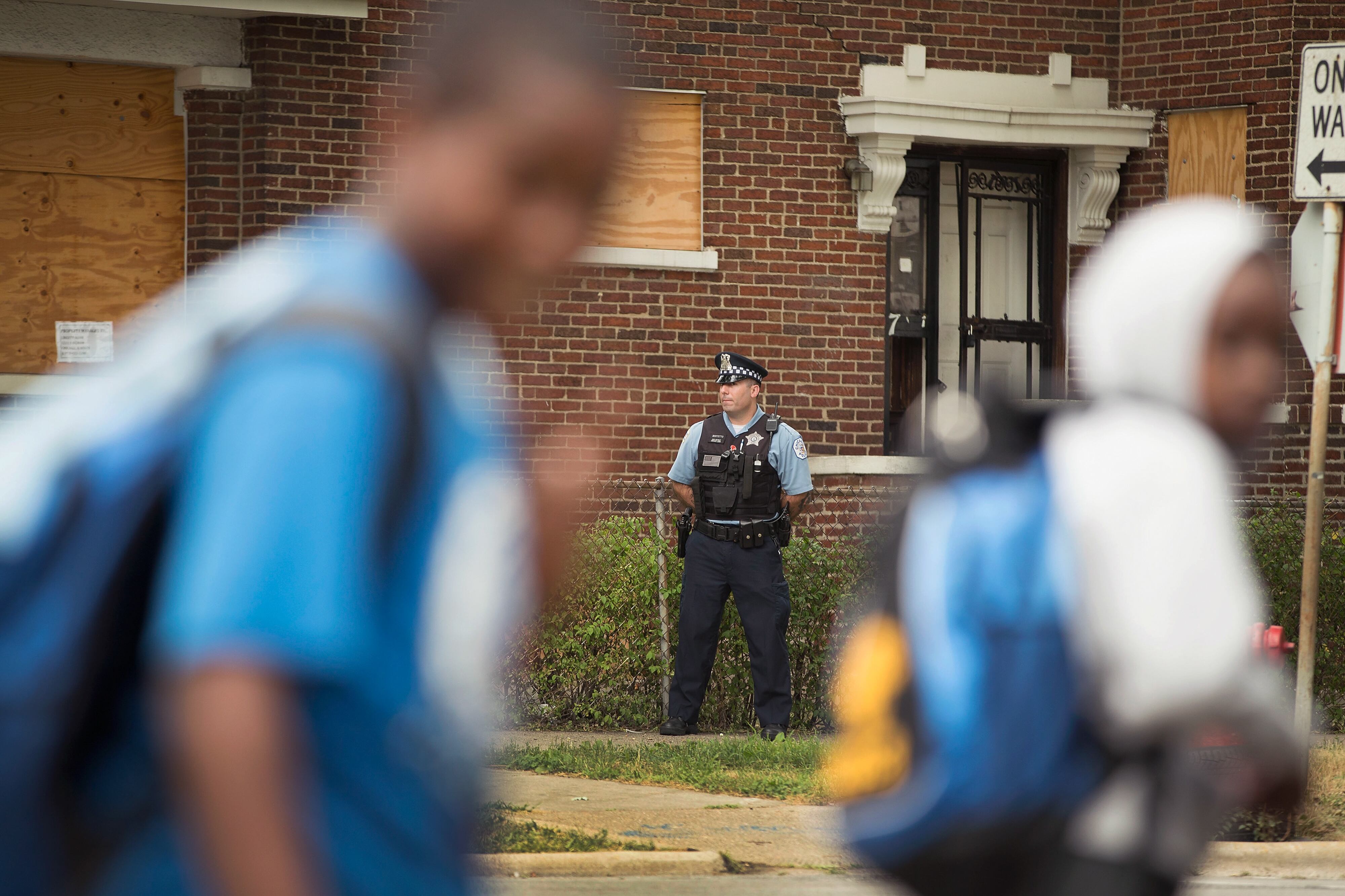
After months of deliberation, the majority of Chicago high schools with campus officers have voted to reduce the size of their in-school police forces this year or remove them entirely.
So far, of the 53 schools that currently have officers, 31 schools have moved to reduce their in-school police force. Two votes are still pending, and another 17 schools had already decided to remove officers last year.
Among the 31 campuses deciding to reduce their in-school police force, seven have voted to fully remove officers, including Jones College Prep and Lake View High School. The remaining 24 — including Marshall High School and Hyde Park High School — have voted to retain one of two officers this coming year and use the savings from the force reduction for programs such as social workers and private security.
Chicago high schools had until last week to vote on safety plans for the school year, the second such vote in 12 months. This time, the conversations were more nuanced and informed by more comprehensive data showing students of color are more harshly disciplined and overpoliced than their white peers.
Local School Councils — volunteer groups comprised of parents, teachers, and community representatives that govern individual schools — made safety decisions at most schools based on community meetings with administration, staff, and parents. Schools without LSCs voted on SROs after convening community meetings with parents and school leaders.
“We are making progress,” said Jasmine Roach, a student leader with Voices of Youth in Chicago Education, in a Tuesday statement. “While it’s been a long time coming, I am glad to see that the voices of students are taken seriously.”
Schools that voted to cut SROs from their campuses last summer lost district dollars that would have supported those officers. Now, they get to keep some of those funds. They’ll receive at least $50,000 per officer they voted to remove to reallocate toward new safety plans, with more money sent to schools prioritized by the district’s Equity Index, district spokesperson James Gherardi said. (The average campus police salary is $87,000, plus an additional $65,000 in benefits.)
In total, about $2 million is set to shift away from SROs to fund alternative safety methods across the district, according to a joint statement released by the Whole School Safety Committee. Over the past three years, the district’s police force has been cut by almost half, according to the steering committee’s analysis.
The district-commissioned committee in March issued guidelines to help schools that voted to reduce police presence craft their next steps. It recommended methods for investing in student mental health and engaging with de-escalation strategies, among several other specific and actionable measures. At their meetings, councils drafted a long list of alternatives, from off-duty officers stationed at pickup and dropoff to hiring administrators, social workers, and restorative justice coordinators.
Advocates have expressed enthusiasm about the trend away from police on campus and toward holistic safety alternatives. Others have voiced concerns that bringing in private security could reduce accountability in cases of police violence against students, and that teachers might not have capacity to take on yet another role in facilitating de-escalation and restorative justice.