State Superintendent Carmen Ayala is proposing a $516 million, or 5.3%, increase to the state’s education budget next year, a request that education advocates say falls short of what Illinois school districts need.
Ayala’s budget proposal calls for a $350 million boost for K-12 schools, or about 4%, plus a $60 million increase to early childhood education. The rest of the requested increase relates to transportation, special education, and free meals.
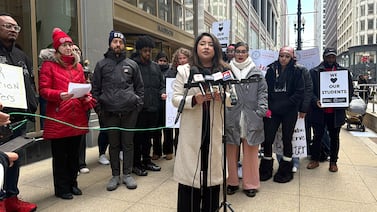
The proposal, which surfaced on the board’s monthly meeting agenda Friday evening, drew pushback from some education advocates who say a $550 million increase in K-12 funding is needed to fully fund all districts under the state’s evidence-based funding formula.
Getting a budget request approved by the Illinois State Board of Education is Ayala’s final order of business before she retires from education. If her request is approved by the Legislature later this year, the state’s total education budget will grow from $9.8 billion to $10.3 billion.
The board discussed in December how much money to recommend for the state’s education budget. While Illinois’ finances have improved since taking a hit in 2020 due to the coronavirus pandemic, there are still concerns about an economic slowdown or recession in 2023, Ayala noted in her proposal.
The state approved $350 million increases for K-12 public schools in 2021 and 2022, the minimum promised by lawmakers in 2017 when the evidence-based funding formula was created. Advocates are concerned that continued funding increases at the minimum level will not be enough to adequately fund schools by 2027.
Funding for IL’s Future, an organization representing districts, school leaders, and community and faith-based organizations, said on Twitter that “too many students, disproportionately those from urban and rural communities, are still in districts below 75% of full funding.”
Aimee Galvin, government affairs director for Stand for Children Illinois, said in a statement that “the current pace of funding is far too slow.”
“By adding $550 million to the formula, we can close that gap in less than 10 years,” Galvin said. “A generation of Illinois children looks for leadership to support the school funding they need to get the education they deserve.”
Robin Steans, president of Advance Illinois, said in a statement that the state should not only include $550 million more in the evidence-based funding formula, but also increase early childhood education funding by 20%, rather than the 10% Ayala proposed.
“The 10% incremental increase in early childhood is simply not enough to address the gaps in access to high-quality learning programs that persist in communities across Illinois, or to provide needed increases to compensation for early childhood educators,” Steans said, adding that “parents, educators and community members were loud and clear during the ISBE budget hearings — more resources are needed now.”
The board will vote on Ayala’s proposal during its monthly meeting on Wednesday. If approved by the board, it will head to Gov. J.B. Pritzker’s office for consideration as he develops a budget to present to legislators for their approval.
Samantha Smylie is the state education reporter for Chalkbeat Chicago, covering school districts across the state, legislation, special education, and the state board of education. Contact Samantha at ssmylie@chalkbeat.org.