Sign up for Chalkbeat Chicago’s free daily newsletter to keep up with the latest news on Chicago Public Schools.
Illinois has released the first draft of a road map for educators to rethink how math is taught in schools.
The first draft of the “Comprehensive Numeracy Plan,” unveiled during an Illinois State Board of Education meeting Wednesday, comes as Illinois students’ math scores continue to lag behind where they were five years ago before COVID-19 shuttered schools and disrupted learning.
The draft plan outlines evidence-based practices for improving numeracy and the intent is to give districts resources to plan strategically, but schools are not mandated to follow it.
The 96-page document encourages schools to emphasize early numeracy skills and help change community perceptions of math abilities.
“When students and families view mathematics as an exclusive subject reserved for a few, rather than a right for all, it diminishes confidence and access,” the report reads.
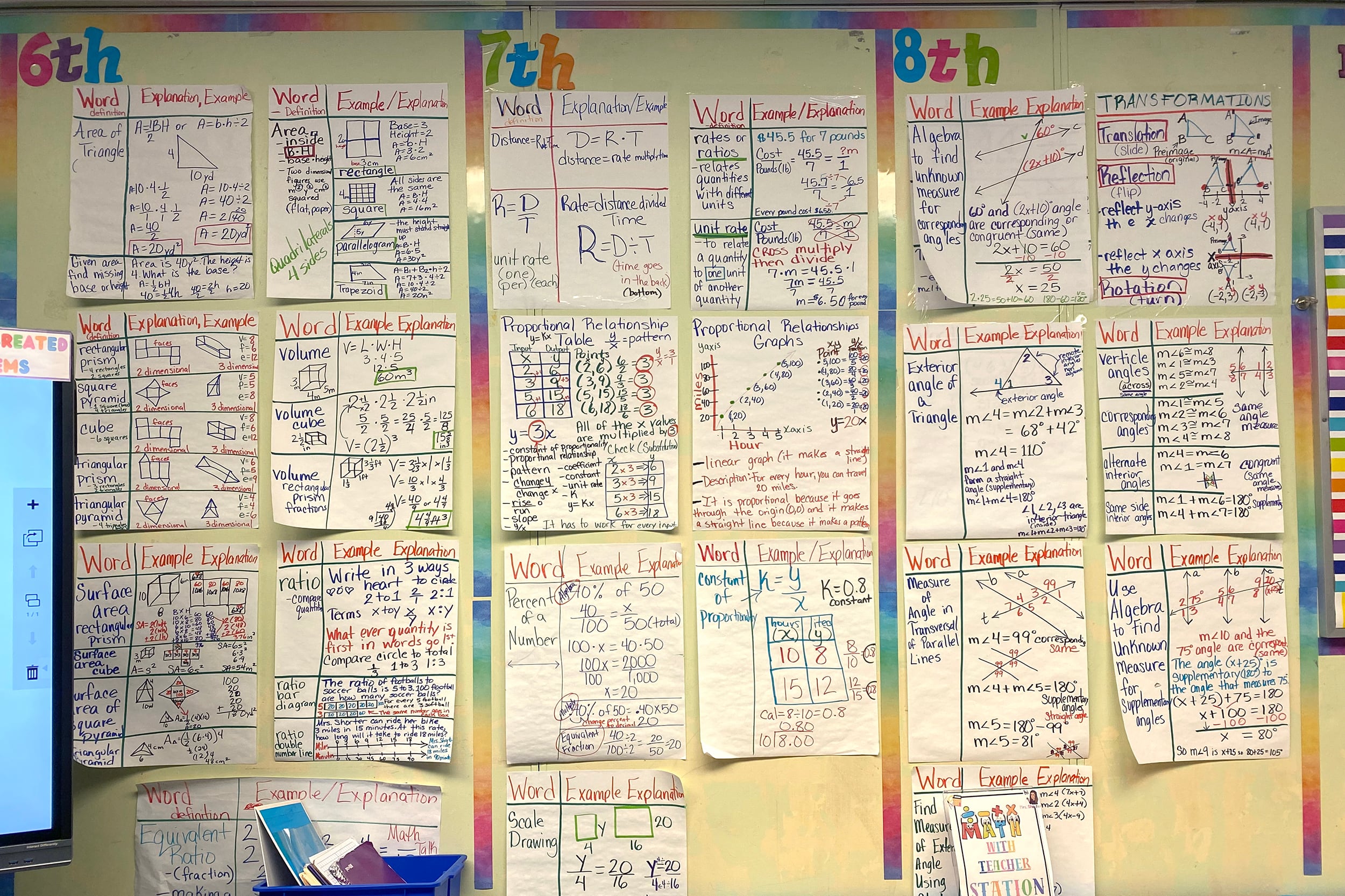
It also pushes for a shift from traditional methods for teaching math, such as memorization, drills, and textbook exercises, toward problem-solving and student-centered learning that uses physical materials, such as counters and ten-blocks, and asks students to find answers using multiple approaches.
For example, instead of “a worksheet with 20 addition problems like 36 + 47, 58 + 69, 24 + 18” that asks students to solve them all correctly and quickly, the draft numeracy plan suggests a better activity would be a problem that asks students to “regroup 106 into tens and ones to subtract 37. Show your thinking using a drawing, equation, or number line.”
Kirsten Parr, director of standards and instruction at ISBE, said Wednesday the goal is to “set up our schools, our classrooms and our learning environments, to support that important development of numeracy skills.”
Last year, the state finalized a Comprehensive Literacy Plan, which provides recommendations for implementing evidence-based reading instruction.
ISBE is hosting a series of listening sessions to get input on the draft numeracy plan in the coming month.
Becky Vevea is the bureau chief for Chalkbeat Chicago. Contact Becky at bvevea@chalkbeat.org.