Sign up for Chalkbeat Chicago’s free daily newsletter to keep up with the latest news on Chicago Public Schools.
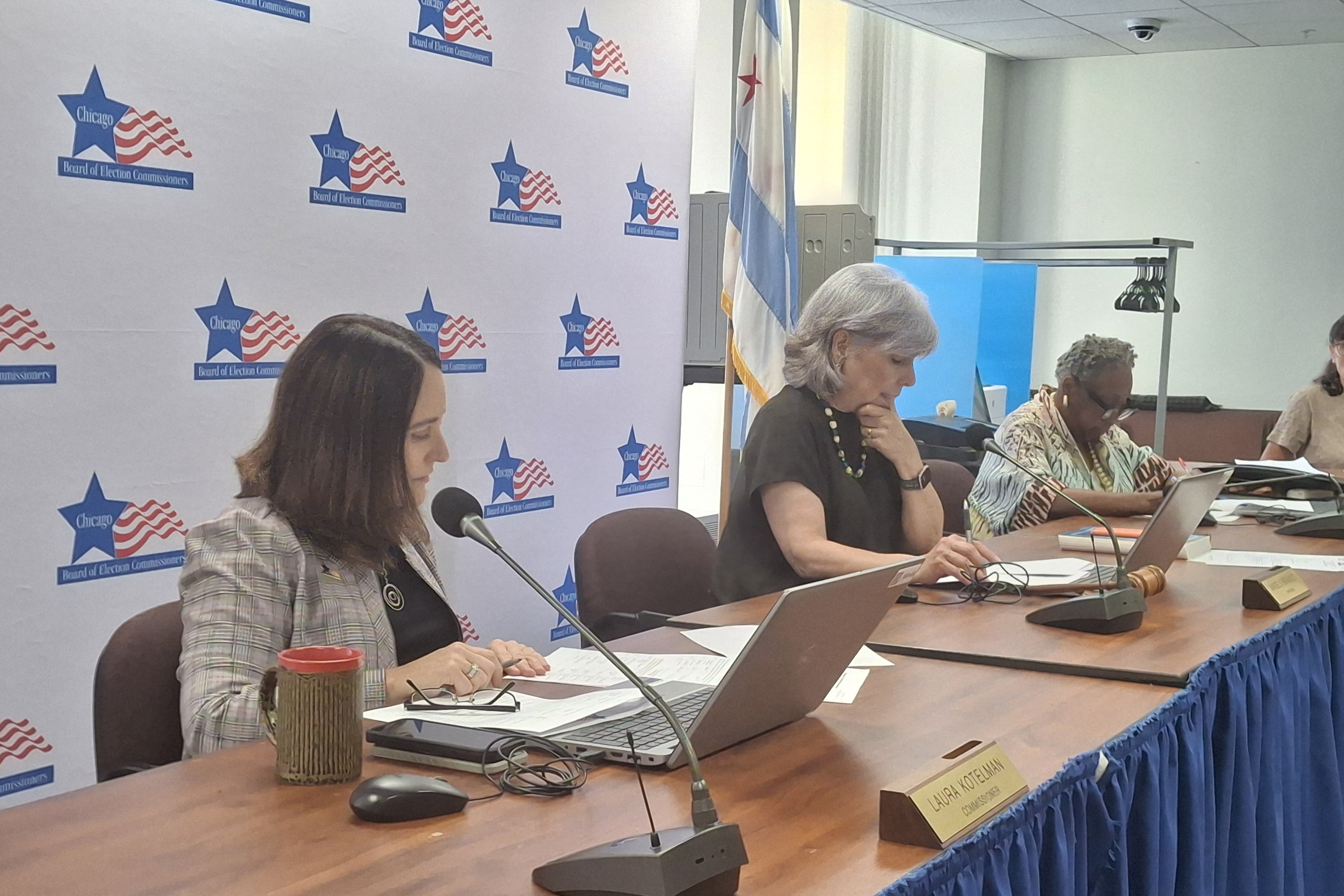
Five candidates running for seats on Chicago’s 21-member, fully-elected school board got removed from the ballot Tuesday by the city’s Board of Election Commissioners.
Krista Nichols Alston (10a), Marlo Barnett (9b), Rosita Chatonda (10b), Angel L. Velez (9a), and Cydney Wallace (8b) all have five days to appeal the electoral board’s ruling.
The latest removals mean districts 8b and 9a join districts 4b and 8a as races where voters will only have one choice on the ballot. Juan Ignacio Gonzalez (8b) and Brittany Bailey Preston (9b) the only candidates left in those races.
On Tuesday, the Chicago Teachers Union said Tameka Walton would be running a write-in campaign in district 10a, but the electoral board has not yet ruled on her case. If she is removed, that district would also be uncontested.
The electoral board also voted to keep five candidates on the ballot by dismissing challenges to their petitions. The fates of the remaining 16 candidates facing challenges are expected to be decided later this month.
In May, 51 candidates filed petitions to appear on the ballot for the 21 school board seats to be voted on this November. Since then, 28 candidates faced objections , claiming they contained improper or fraudulent signatures.
If enough of these signature objections are upheld, a candidate may not have enough signatures left to secure a spot on the ballot.
Since the challenges were raised, multiple objectors have withdrawn their objections. The board moved to dismiss these dropped challenges, confirming Jessica Biggs and Sendhil Revuluri for board president, and three candidates for seats: Daniel Basco (2b), Debby Pope (2b), and Emma Lozano (7a).
Those five candidates will join Jitu Brown (5a) and Katherine Dunneback (9b) on the ballot, who have also beaten their challenges following decisions in June, as well as the 23 candidates who did not have their petitions challenged.
Presidential candidate Victor P. Henderson and District 6a candidate Brenda Lee Anderson have both had some — but not all — of the objections against them withdrawn. The board voted Tuesday to dismiss the withdrawn objections, but will decide the rest after the hearing officers in charge of the cases make their final recommendations to the board.
General Counsel Adam Lasker said this doesn’t necessarily mean the end for the dropped candidates. Each candidate will have five days to file a petition for judicial review to the circuit court to appeal their case. Candidates can also decide to run write-in campaigns.
The electoral board’s meeting concluded with a brief appeal hearing of oral statements on several objections involving candidate Marlo Barnett.
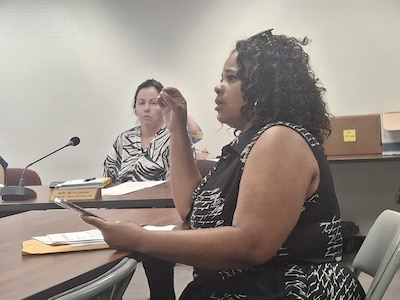
Barnett’s cases concerned the information on her nominating papers, on which she stated she was running in district 9, not 9b. Other paperwork from the filing process for candidacy did specify 9b.
Barnett, who is running as a school board candidate for the first time and represented herself in all official legal hearings, told the board that the paperwork didn’t make clear that she needed to specify which subdistrict she was running for.
Barnett said that the switch from unified districts to subdistricts, a change made between the 2024 and 2026 election cycles, was confusing to voters and candidates in her community.
“When you start knocking good, qualified candidates off the ballot, then you don’t leave voters a choice,” Barnett said.
Board of Election Commissioners Chairwoman Marisel A. Hernandez told Barnett that the instructions were clearly stated in the materials provided.
Lawyers representing the objectors argued that without a specified subdistrict on the petition, voters could not make an informed decision to endorse Barnett’s candidacy.
Following the hearing, Lasker gave his recommendation on the cases, citing past case precedent that determined not specifying one’s district on candidacy petitions was grounds for invalidating those signatures.
In a 3-0 decision, the Board of Election Commissioners moved to uphold the recommendation to invalidate Barnett’s petition papers. Barnett will not appear on the ballot this fall.
Lasker said he hopes to have most of the objection cases decided by the next electoral board meeting, scheduled for July 28.