Did you know search engines like Google are changing the way you see news? Keep Chalkbeat’s valuable education coverage at the top of your feeds by clicking here and checking the box next to our name.
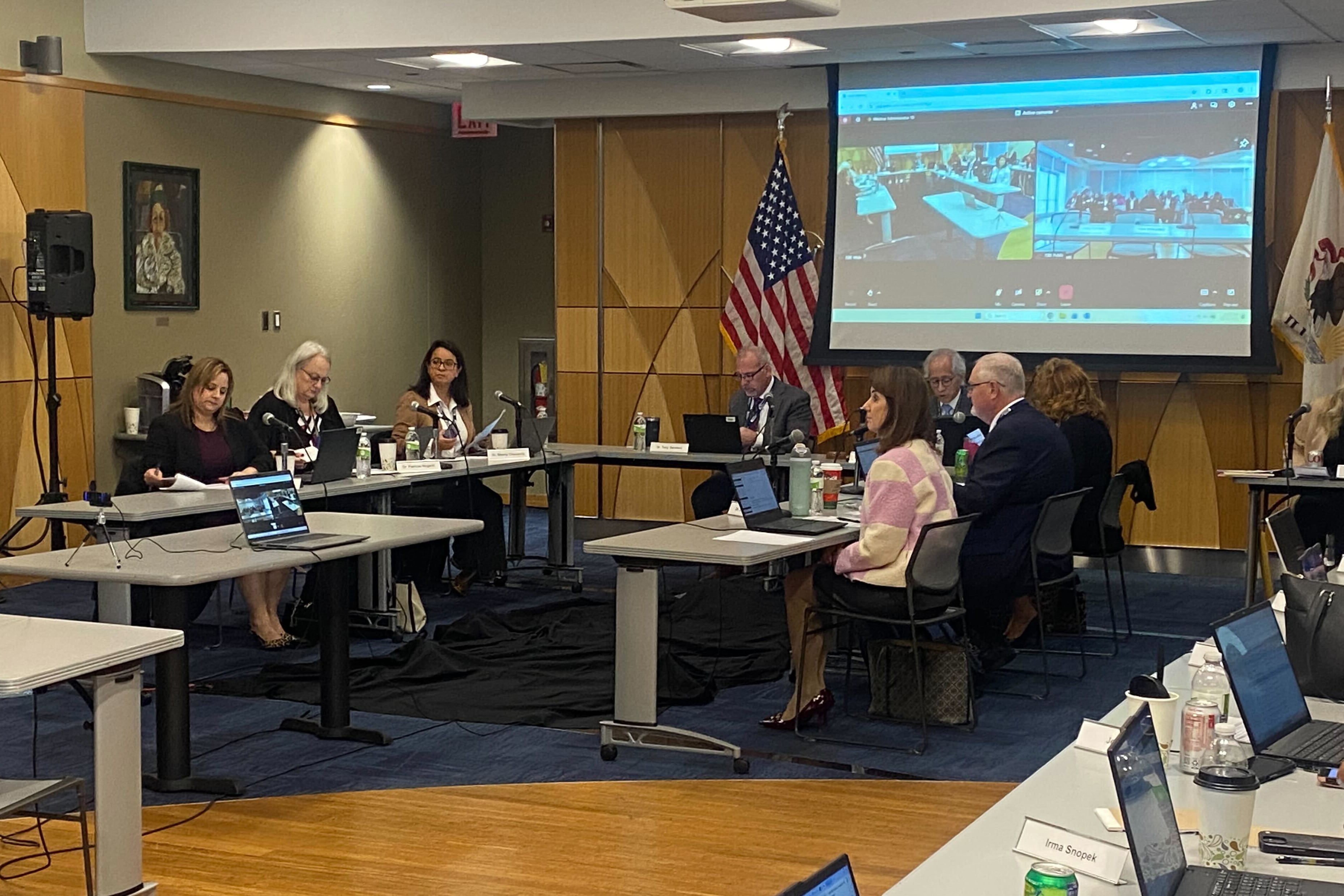
While the amount of money requested differed by each speaker, public feedback solicited on Monday by the Illinois State Board of Education to inform next year’s budget discussions revolved around one key issue: evidence-based funding.
Calls for increasing evidence-based funding — the state’s way of distributing money by calculating which K-12 public schools districts have the highest needs — dominated the conversation during the ISBE hearing. But state officials also heard about other funding changes Illinoisans want to see in their local schools. That feedback and future public input will be used to develop the board’s budgetary recommendations to the governor and the state legislature in January.
Here’s what Illinoisans have raised as funding needs for the next fiscal year so far.
EBF takes the spotlight in ISBE hearing
An Albany Park bilingual teacher, a rural superintendent from west central Illinois, and a paraprofessional from a district about 50 miles north of Chicago were just a few of the people who urged ISBE to advocate for more money in the state’s evidence-based funding. Funding requests ranged from about $500 million in additional money to a general recommendation of “fully funded” all Illinois public schools. Because schools are guaranteed to receive at least as much money as they received the year prior, the total funds for Illinois schools over the course of this fiscal year is more than $9.2 billion.
Illinois’ evidence-based funding formula calculates a school district’s financial needs based on several cost factors and student population needs. The formula helps the state determine which districts need more money through a tiered system. It’s up to state lawmakers and the governor to decide if they will allocate more funding.
Next year is the tenth year the state has used evidence-based funding. It has facilitated over $2 billion more for public schools since 2017. Nearly every year since its introduction, state lawmakers have committed to a $350 million increase in evidence-based funding.
Despite this significant spike in funding, Illinois school districts are still largely underfunded, according to the state’s funding formula. That means the state is slated to miss its original goal of fully funding schools by 2027.
Chicago Public Schools slipped from 73% to just over 70% funding adequacy this school year. CPS needs a larger windfall of money from the state as it continues to grapple with its significant budget deficit.
“The challenge is no longer designing the right formula. The challenge is funding it with sufficient urgency,” said Hal Woods, chief of policy at Kids First Chicago. “That has consequences in communities across Illinois, particularly those serving high concentrations of students living in poverty, English learners, and students with disabilities.”
Frustrations have only heightened as more than 700 districts are farther away from reaching their funding targets than they were a year ago because of growing financial demands. Some speakers shared how inadequate funding has led to overwhelming staff workloads or lack of mental health resources for students.
“This is not an accident. The state created the evidence-based funding formula. The state established the cost factors. The state established the adequacy targets. The state has told us through its own formula what it believes it costs to provide students with an adequate education,” said Megan Accardo, a paraprofessional from Grayslake Community Consolidated School District 46.
The Chicago Board of Education voted to approve a school year budget this summer that assumed the district would get $150 million additional dollars from the state. How much it will get won’t be determined until the state legislature reconvenes for its November veto session after the school board elections.
Career and technical education gets a few mentions
Aside from evidence-based funding, requests to allocate more money toward career and technical education emerged as a top priority for speakers. Gov. JB Pritzker has given more money in recent years to programs in fields such as automotive repair and healthcare, but some people said Monday that even more funding is needed to meet enrollment demands.
One speaker, Adam Seaney, director of Galesburg Area Vocational Center in northwestern Illinois, requested a $20 million increase in annual state funding for career and technical education programs. That money could be used to improve facilities, purchase new equipment, and retain staff.
“The requested funding will directly address these capacity issues, ensuring more students can access modern, high-quality programs that align with the needs of Illinois employers,” Seaney said.
Other funding requests made during Monday’s hearing included:
- $46 million for afterschool programs.
- $1.8 million for a principal recruitment initiative.
- $5 million to support students experiencing homelessness.
- $800,000 increase for agricultural education programming.
- $67 million for free school meals.
ISBE has scheduled two more public input sessions this year. The next meeting will be held in person on Wednesday, Oct. 21, in Springfield. The last session of the year will be hosted virtually on Thursday, Nov. 5. Speaker sign-ups for both are still open.
Makiya Seminera is a reporter covering how the state and federal government affect education in Chicago and across Illinois. Contact Makiya at mseminera@chalkbeat.org.