
Become a Chalkbeat sponsor
State Government
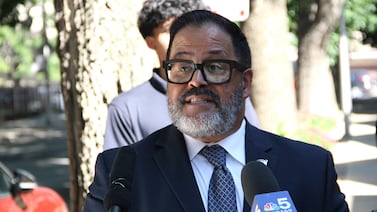
The scholarship program, which rolls out next year, has raised questions of equitable access for all students and its implications on public school funding.
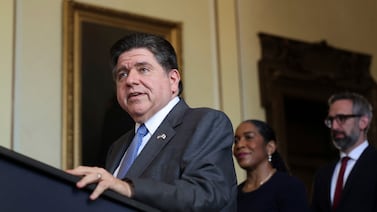
Pritzker’s name has come up in speculation about which Democrats could run for president in 2028, potentially bringing his education record into the national conversation.
The firms tied to former Ald. Isaac “Ike” Carothers and former Blagojevich administration official Bamani Obadele have gotten campaign business from Gov. JB Pritzker and in the hotly contested race for Chicago School Board president.

The new funding calculations from state officials fall short of what Chicago’s school board assumed the district would receive in its recently passed budget.
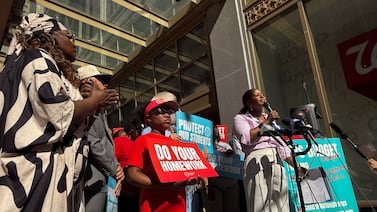
The budget adopted by the board assumes that state lawmakers will provide another $150 million over what it’s already projected to provide to CPS. Some say it is a pressure tactic, and others see major financial risks.
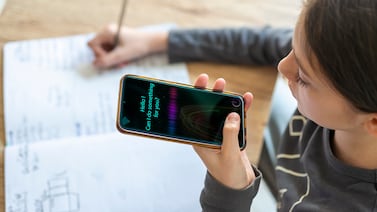
Illinois lawmakers asked the state’s education board to give schools a framework for using artificial intelligence. The 400-page document emphasizes the importance of human relationships — but also discloses that early drafts were created with the help of AI.
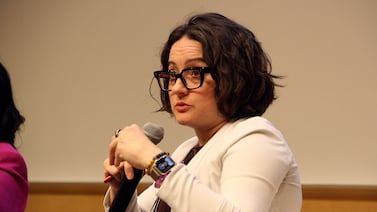
The Illinois Department of Early Childhood officially launches July 1 after consolidating several state programs under one roof. Secretary Teresa Ramos talks to Chalkbeat about what’s next.

The Illinois Department of Early Childhood, an initiative championed by Gov. J.B. Pritzker, has finally launched after a multiyear process to create the agency.
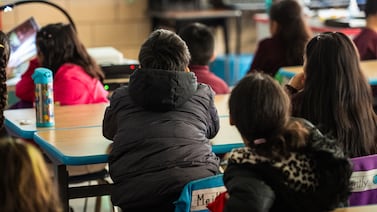
State lawmakers created the noncitizen advisory board as a way for Chicagoans without U.S. citizenship to have a voice since they can’t vote or run in school board elections. The mayor has not yet created the board.

The Chicago Board of Education adopted the agenda about a month after state lawmakers adjourned for the summer. The agenda includes asks for more state funding and a millionaire’s tax.

The plan does not mandate math curriculum or instructional practices, but does provide educators and school leaders with resources and best practices for math instruction.
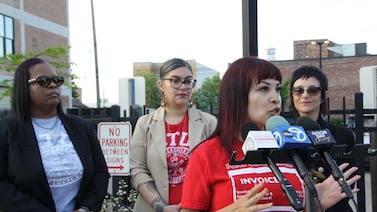
Illinois lawmakers put an additional $350 million toward K-12 schools, bringing the total to $9.2 billion. But it still won’t be enough for many schools.
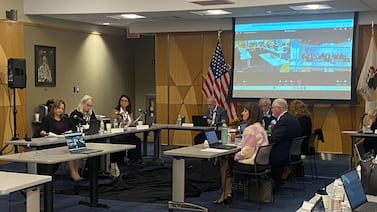
Now the state will await approval from the federal government. Some education advocacy groups continued to oppose some elements of the overhaul.
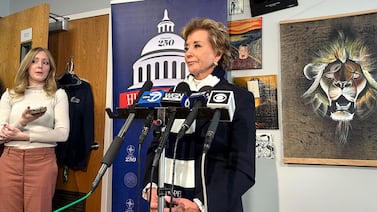
The school board voted to approve a resolution that criticizes the federal government’s efforts “to expand and incentivize voucher or publicly funded scholarships for private schools.”
The resolution denounces public funding for private schools, saying voucher programs and other similar efforts “weaken” public schools.
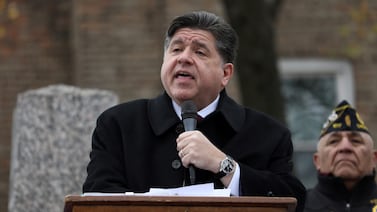
The governor’s budget proposal increases the main funding for Illinois schools by $305 million. Still, that increase is less than what state education officials and advocates had called for.
The funding increase would be in line with past years but doesn’t keep up with inflation and comes as the state is facing a major deficit.
The investigation, which has spanned multiple years, alleges that Instituto has failed to provide more than 100 students with disabilities with services they are legally entitled to.
The Minority Teachers of Illinois Scholarship was a 33-year-old initiative funded by the state to diversify the teacher workforce. After the program was challenged in 2024, lawmakers decided to erase all language related to race and ethnicity and change eligibility requirements.
The bill signed by JB Pritzker bars public colleges and universities and child care centers licensed by the state from disclosing certain individuals’ immigration and citizenship status.