Sign up for Chalkbeat Chicago’s free daily newsletter to keep up with the latest news on Chicago Public Schools.
Illinois schools chief Tony Sanders called the Trump administration’s decision to withhold almost $7 billion in federal education funds “deeply disruptive” for the state’s 1.9 million public school students.
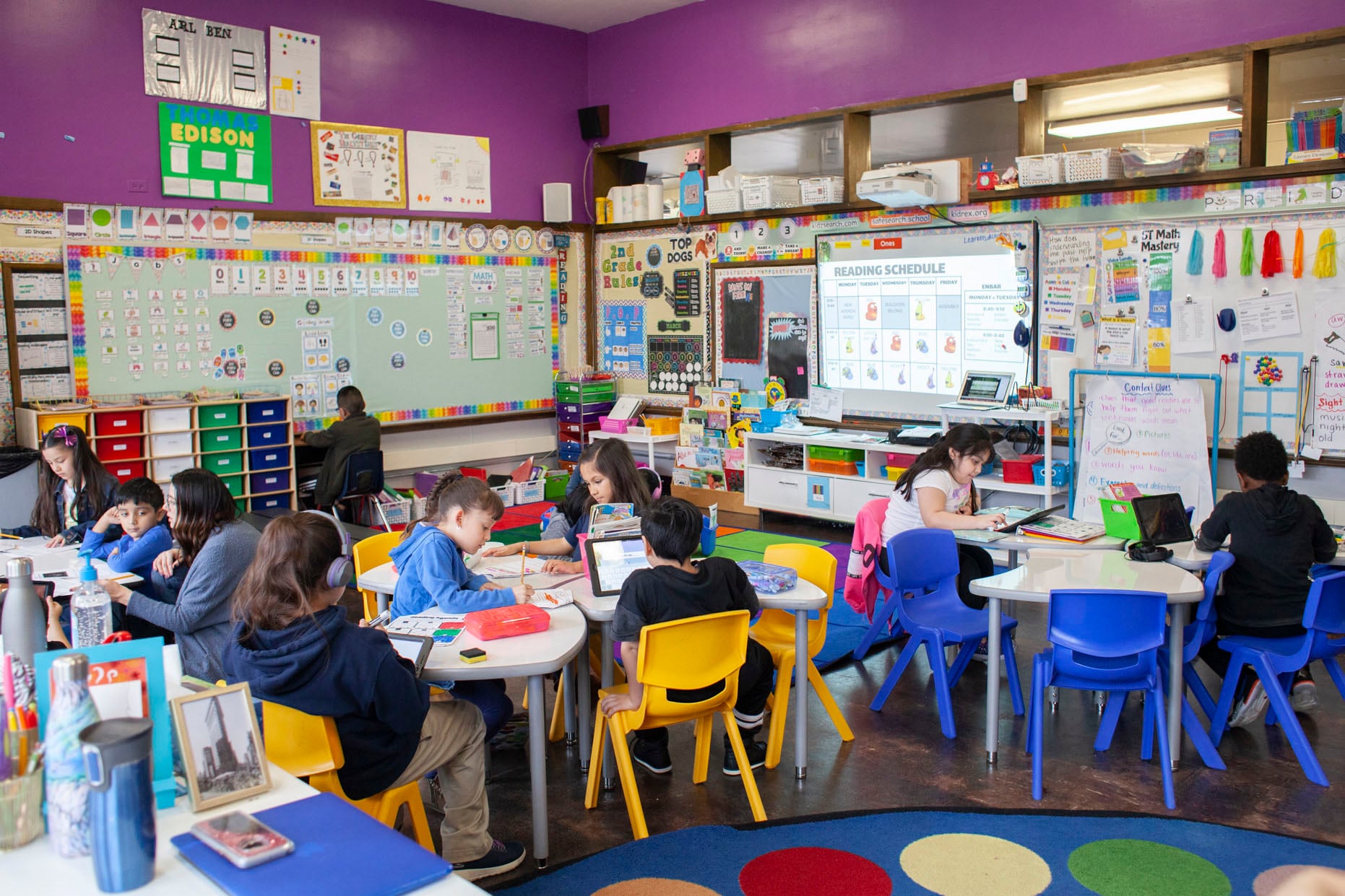
The U.S. Department of Education notified states on Monday about the hold on funds, Sanders, the state superintendent of education, said in a weekly message Tuesday. According to news reports, most of the funding was to support English learners and children of migrant workers, while a smaller part was supposed to go to afterschool programs, teacher training, and enrichment programs.
The funds were approved by Congress earlier this year and were expected to go out by July 1. However, the Trump administration claimed that the money was being used to “subsidize a radical leftwing agenda” and ordered a halt, pending a review.
Sanders said the administration’s move “forces local districts to deal with unnecessary uncertainty and places an undue burden on teachers, administrators, and families alike at the exact moment when they should be focused on preparing for the next school year.”
A spokesperson for the Illinois State Board of Education said in a statement to Chalkbeat on Thursday that the board expected to receive around $218.7 million in federal funding across five programs on July 1.
Afterschool advocates have also voiced concerns about the withholding of federal funds for afterschool and summer programs. Susan Stanton, executive director of the ACT Now Coalition, said in a statement on Tuesday that the decision was a “profound and direct attack on children.”
“It is a cold, calculated move to rip away the vital network of high-quality services from diverse communities,” Stanton said. “We can’t hold hostage the safety and future of our children in the name of partisan politics.”
School districts around the state already have to deal with tighter budgets for the coming school year since federal COVID relief dollars have expired. The state’s overall education budget increased slightly, with $307 million more going to the state board’s evidence-based funding formula to support K-12 schools. This fiscal year the state board’s education budget increased to almost $11.2 billion, from $10.8 billion in fiscal year 2025.
In recent years, school advocates have been asking for the state to put in an additional $550 million to help schools reach “adequate funding” sooner.
Without more state funding, and with federal funding at risk, school districts will have to adjust to a new fiscal reality. Chicago Public Schools recently reported having a $734 million budget deficit. The district has so far decided to lay off about 161 employees, including many crossing guards, and will not fill over 200 vacant positions. More cuts could be in store.
A district spokesperson said CPS does not yet know the impact of the federal funds being withheld. For the last school year, CPS was expecting to receive at least $90 million in the federal funding streams that the state said are currently on hold, according to CPS’s website.
Updated July 3: This story was updated with new information from the Illinois State Board of Education on the amount of federal funding that has been withheld, and a clarification on changes to state funding for the current fiscal year.
Reema Amin contributed to this report.
Samantha Smylie is the state education reporter for Chalkbeat Chicago covering school districts across the state, legislation, special education, and the state board of education. Contact Samantha at ssmylie@chalkbeat.org.