Sign up for Chalkbeat Detroit’s free newsletter to keep up with the city’s public school system and Michigan education policy.
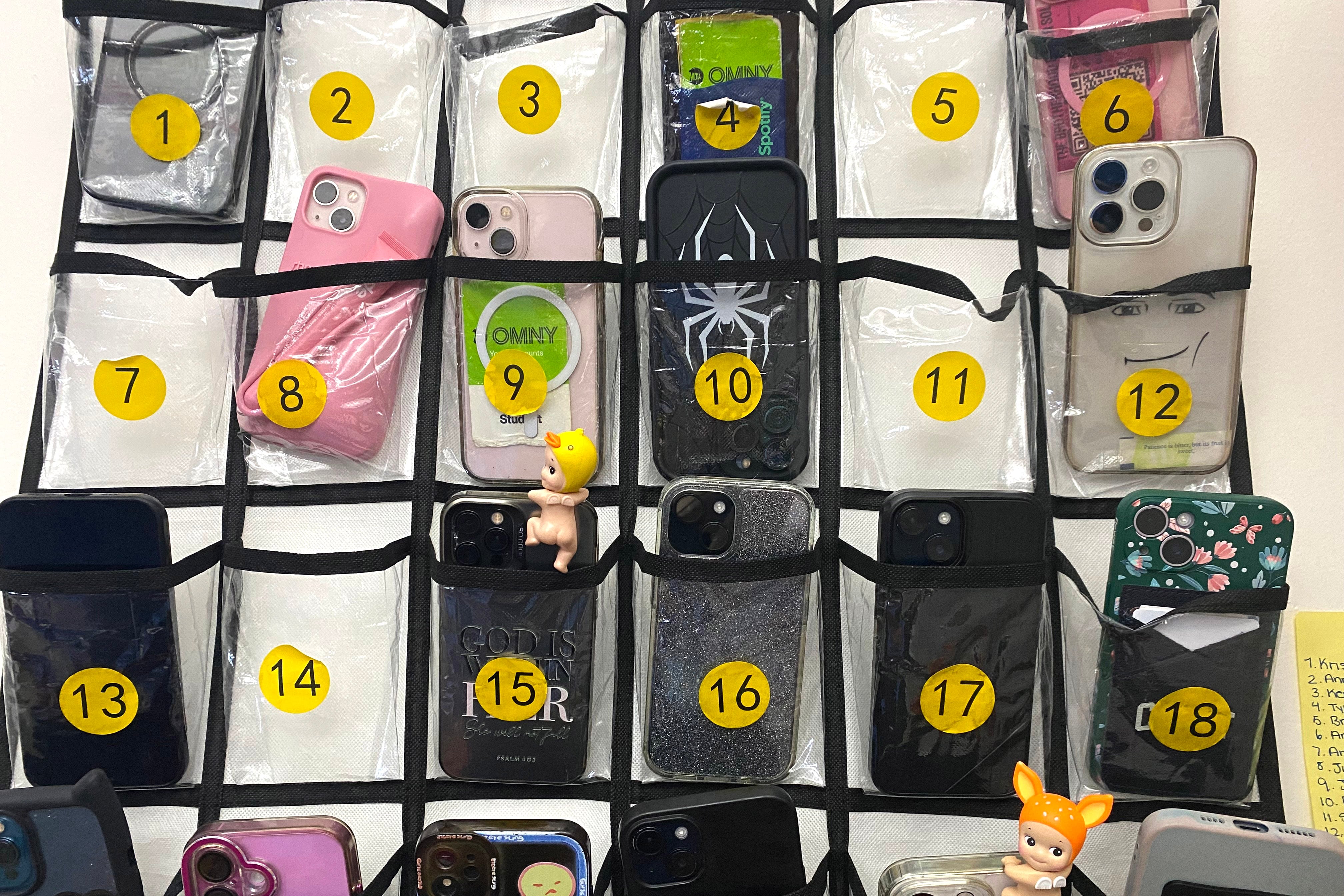
At the beginning of the year, Gov. Gretchen Whitmer asked Michigan lawmakers for a bill that will limit students’ cellphone use to improve learning outcomes after the state ranked 44th in the nation for fourth grade reading.
With two months to go before school starts for many districts in the state, there are two proposals.
One – sponsored by Democrats in the Senate – would essentially continue to allow school systems to decide their own policies. The other – sponsored by Republicans in the House – would have more specific requirements for districts to prohibit cellphone use during instructional time in all grades.
“The governor will work with anyone to ensure our students can focus on learning, and we will closely review legislation as it makes its way to our desk,” Stacey LaRouche, Whitmer’s press secretary, said this week.
Republican State Rep. Mark Tisdel, who introduced the more prescriptive bill, told Chalkbeat his goal is for new cellphone rules to be in place before the start of the 2025-26 school year.
Tisdel said both Republicans and Democrats, as well as the governor, have similar objectives and are working on the details of what will be enacted into law.
“We’re all working in the same direction,” he said.
Here’s what the two bills propose
Senate Bill 234, introduced by Democratic State Sen. Dayna Polehanki, would only require school boards to adopt policies that “seek to limit” student cellphone use on school grounds, but would leave the specific rules to the districts.
“I believe that each school district should be able to devise a policy that is right for the school community it serves, which is why my legislation provides flexibility for schools to create plans that best suit their needs,” Polehanki said at an April 22 committee meeting when the bill was introduced.
A staff member from Polehanki’s office told Chalkbeat they could not comment on whether that is still Polehanki’s position.
The bill passed May 6 in the Senate. It has not yet been taken up in the House.
House Bill 4141 would require every district in the state to ban students from using electronic communication devices during instructional time, with some exceptions.
Additionally, elementary and middle schoolers would not be allowed to use cellphones during recess, breaks, or lunch.
The bill unanimously passed on May 14 in the House Education and Workforce Committee, including support from the three Democrats on the committee. The full House has not yet voted on the bill.
Tisdel said less restrictive laws similar to Polehanki’s were passed in states like California and Ohio. California has since replaced its law with a ban. The Ohio legislature is currently considering a ban as well.
“Why don’t we skip that part and go the direction most states end up going anyway?” he said.
At least eight states have enacted bans or restrictions on student cellphone use during class. Many local Michigan districts also have put restrictions in place.
Though supporters of the restrictions cite anecdotal evidence that they have positive results, there is limited empirical evidence and new research on outcomes vary.
Tisdel said he’s been working on his bill for two years.
“I’d like to see it implemented as quickly as possible,” he said.
Hannah Dellinger covers K-12 education and state education policy for Chalkbeat Detroit. You can reach her at hdellinger@chalkbeat.org.