Sign up for Chalkbeat Detroit’s free newsletter to keep up with the city’s public school system and Michigan education policy.
To keep up with a growing demand for special education evaluations, the Detroit school district will spend $9 million more than expected this school year to staff additional school psychologists and speech language pathologists.
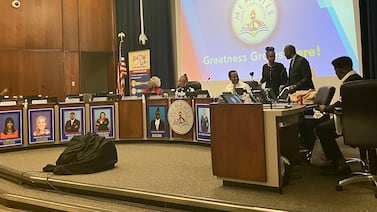
The extra funds, which were approved by the school board Tuesday night, will be added to an existing $13.5 million contract approved in June and cover higher hourly rates offered at the start of the academic year to fill open positions.
The Detroit Public Schools Community District increased the pay after the original contract was approved to match private sector rates as part of an effort to retain staff in the hard-to-fill positions. The contract with outside providers allows the district to supplement its full-time special education staff with specialists.
Delays in evaluating students to determine whether they need special education services have persisted in the district and across the state for years, advocates and educators say.
Evaluations are a critical first step in assessing the needs of students with disabilities before they may be given an individualized education program, or IEP, which spells out what accommodations they are entitled to under federal law.
The district has made progress filling vacancies of school social workers, occupational therapists, and physical therapists in recent years, Superintendent Nikolai Vitti said at a finance committee meeting last month.
But vacancies for psychologists and speech-language pathologists affected the district’s ability to quickly evaluate students.
Evaluations may require teams of various specialists. Psychologists may help evaluate students with classroom observation, testing, and interviews. Speech-language pathologists may conduct assessments in listening, speaking, reading, and writing.
Contracting with outside providers to fill those positions has improved the district’s evaluation process, according to the school system.
“This is a positive in moving into greater compliance with evaluations and direct support to students,” said Vitti of the contract increase.
With the pay increases, the district hired 71 psychologists and 45 speech-language pathologists in hourly positions this school year — more than double the previous year, according to the district.
Of the full-time and contracted positions, there is currently only one vacancy for a psychologist and four for speech-language pathologists, Vitti said at Tuesday’s board meeting.
There are also unfilled positions for six physical therapists and 12 occupational therapist positions, said Vitti, adding the number was “too high.”
All special education social worker positions are staffed, according to the district.
Last school year, there were more than 7,100 students with disabilities identified in the district, making up nearly 15% of the school system’s enrollment. Numbers for this school year are not yet available.
Hannah Dellinger covers Detroit schools for Chalkbeat Detroit. You can reach her at hdellinger@chalkbeat.org.