Indiana’s chief academic officer advised educators to use grade-level material this year rather than review previous curriculum to address widely anticipated student learning loss.
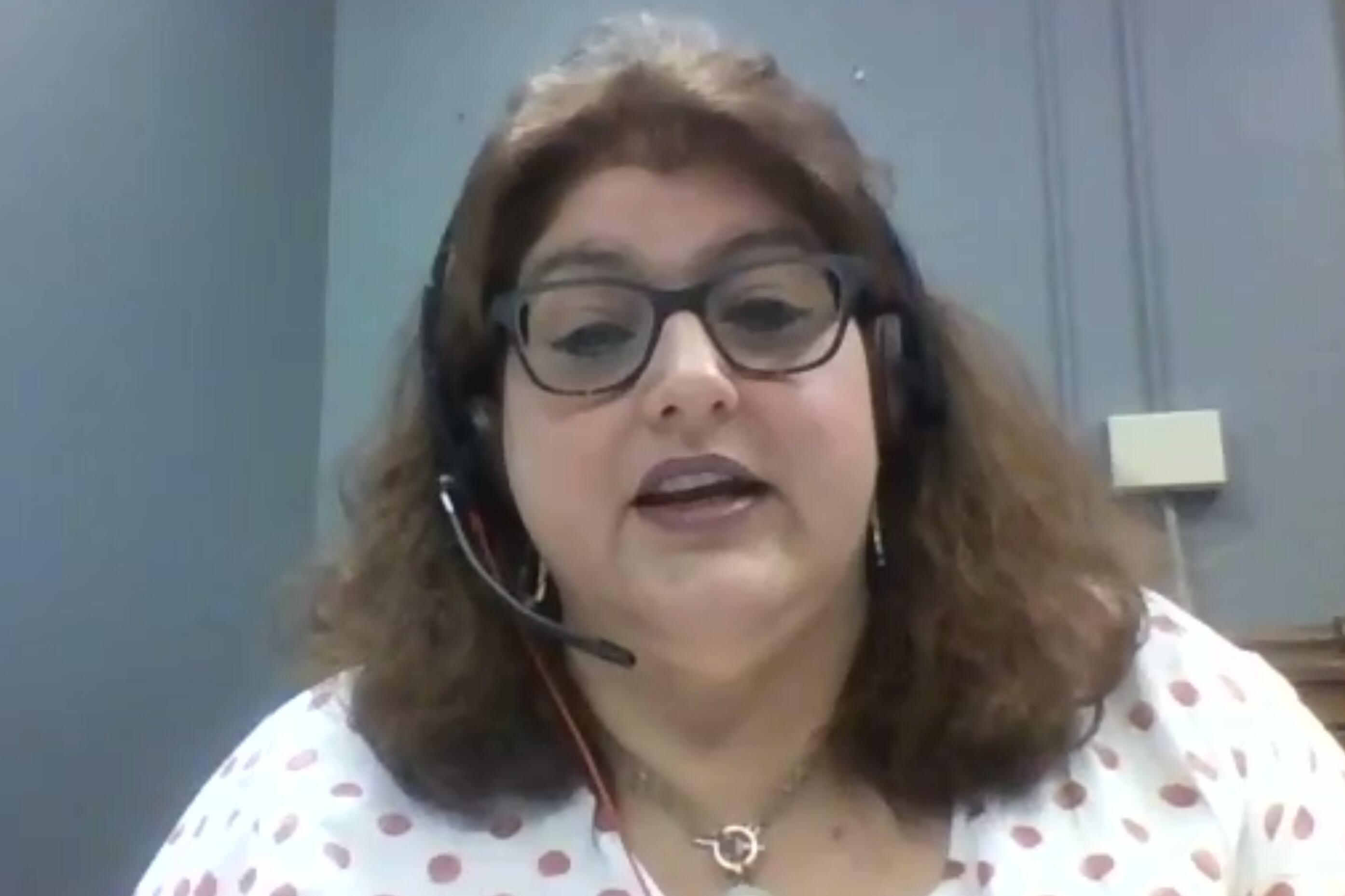
Robin LeClaire said teaching to accelerate will prevent students from falling into a catch-up cycle. This method could especially benefit Indiana’s most vulnerable children, who have also been the most heavily affected by the coronavirus pandemic, she said.
“If we focus on remediation, we will be playing catch-up with our students until they graduate,” she said.
School officials across the country do not yet know the extent to which teachers will need to catch students up this year — and potentially in years to come — after districts closed school buildings in March to guard against the coronavirus and teachers abruptly shifted to remote learning.
LeClaire spoke to educators Tuesday morning during Indiana Black Expo’s virtual education conference of nearly 5,000 people, just two weeks before Indiana school leaders expect to restart. LeClaire said educators should teach to accelerate regardless of whether their school plans to reopen completely virtually, as a hybrid, or offer a choice of all in-person or all-online.
With varying school formats, teachers will need to find new ways to diagnose students’ skills.
“We cannot have business as usual as our mentality,” LeClaire said. “We have to overcome that.”
The State Board of Education approved a measure last week to allow schools to administer a makeup third-grade literacy exam this fall to assess fourth graders’ progress. Some charter schools are offering virtual summer school to try to close learning gaps.
The state does not require schools to add instructional time this year to make up for days lost in the spring, she said. But school districts can still choose to add time on their own.
Indiana requires districts to provide 180 days of instruction per year. Each day for elementary students must include at least five hours of instruction, and for secondary students, six hours. But, LeClaire said, that doesn’t mean that students must be on camera for all of those hours if they’re doing virtual learning. But they do need to be engaged in a learning activity or project.
The state education department is offering grade-level videos and exercises on its website that students can work on remotely, without Wi-Fi. In response to surging interest, LeClaire said, the department is also offering resources for teachers on civil rights education.