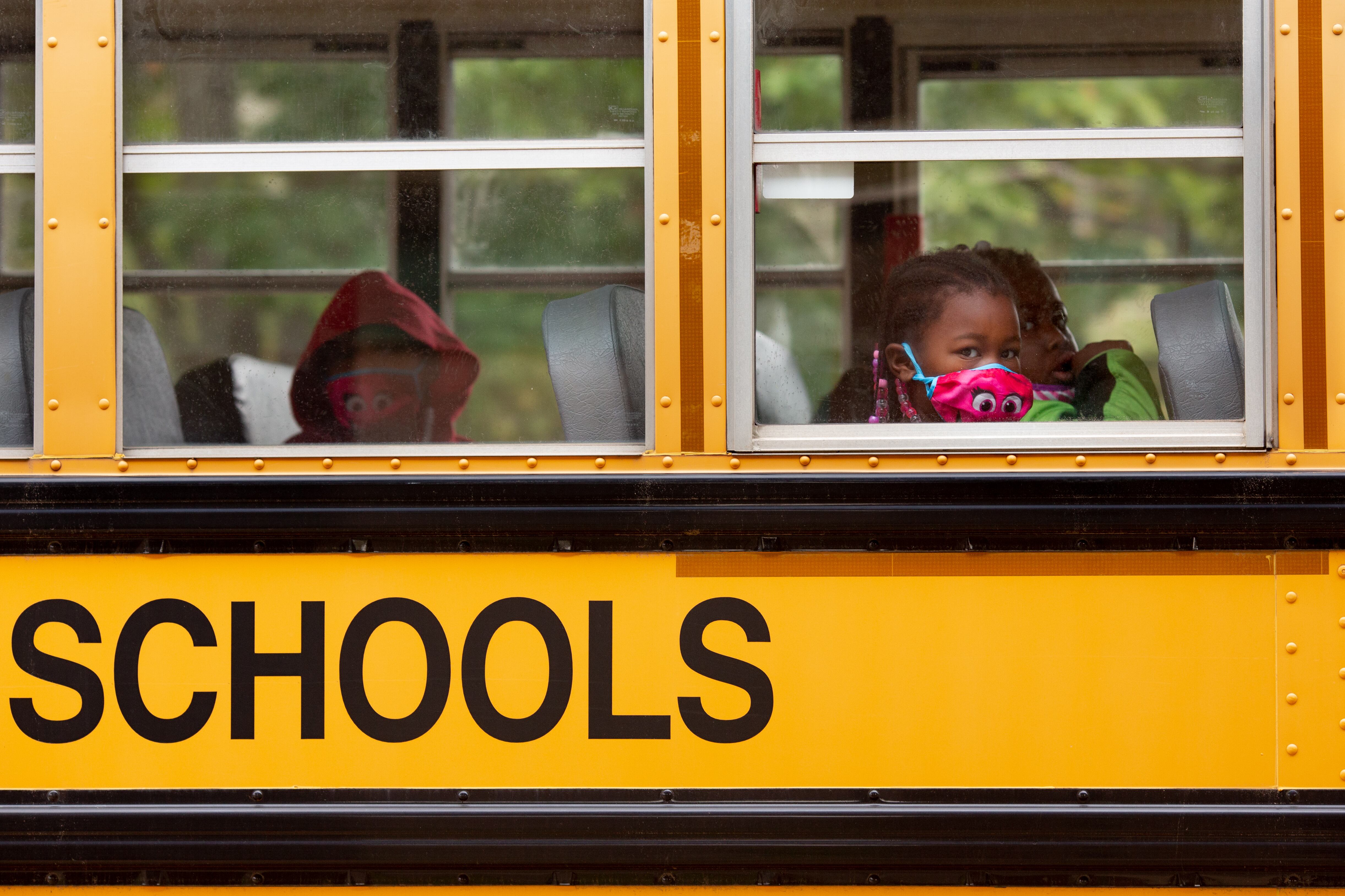
To the relief of some families, Indianapolis Public Schools has scaled back plans to trim transportation and has provided district busing for 400 more students than previously announced.
Earlier, the district had outlined a cost-cutting plan to eliminate district bus service for about 600 high school students, who would have to walk to school or ride a city-run IndyGo bus. Parents raised safety concerns, including the lack of sidewalks in some neighborhoods where students would be forced to walk to school or to IndyGo stops.
But apparently, it wasn’t a parental opinion that forced the district to rethink its plans, which now call for redirecting just 200 of the students to the city’s IndyGo bus system.
Instead, IndyGo said it lacks sufficient drivers and also has reduced bus capacity because of the pandemic.
“As we work to recruit and rebuild those levels, we want to be mindful about where and when we introduce a concentrated number of passengers to the system at one time,” said IndyGo spokesperson Carrie Black.
Earlier this year, the school district announced it would save from $200,000 to $1 million this school year by shifting some high school students to IndyGo buses. Now it will save on the lower end of that range, although the district did not provide Chalkbeat with an exact estimate.
Indianapolis Public Schools officials have stressed the need to cut transportation spending by about $5 million this school year, including having more students walk to school and changing routes. Shifting some high school students to IndyGo would cover just a portion of that sum.
“We’ve said in the beginning that we’re willing to modify if we need to in order to make that first year experience a smooth one for our students and families,” Superintendent Aleesia Johnson said last week.
Even after scaling back busing, the district likely faces more cuts to transportation and other areas, partly because of dwindling enrollment and a budget deficit. Officials have calculated that the district has been spending up to twice as much per student on transportation than other similar urban districts.
District officials still hope to increase the number of high school students who ride IndyGo buses instead of school buses in future years.