Sign up for Chalkbeat Indiana’s free daily newsletter to keep up with Indianapolis Public Schools, Marion County’s township districts, and statewide education news.
There could be rare bipartisan agreement among lawmakers in favor of a task force’s recommendation that an independent agency oversee Indianapolis Public Schools and charter schools. But they could tweak the proposal to give the mayor less power.
And state leaders are already thinking about how they could replicate the Indianapolis Local Education Alliance’s proposal in other parts of the state — particularly in rural districts where there is population decline and a need to consolidate buses and facilities.
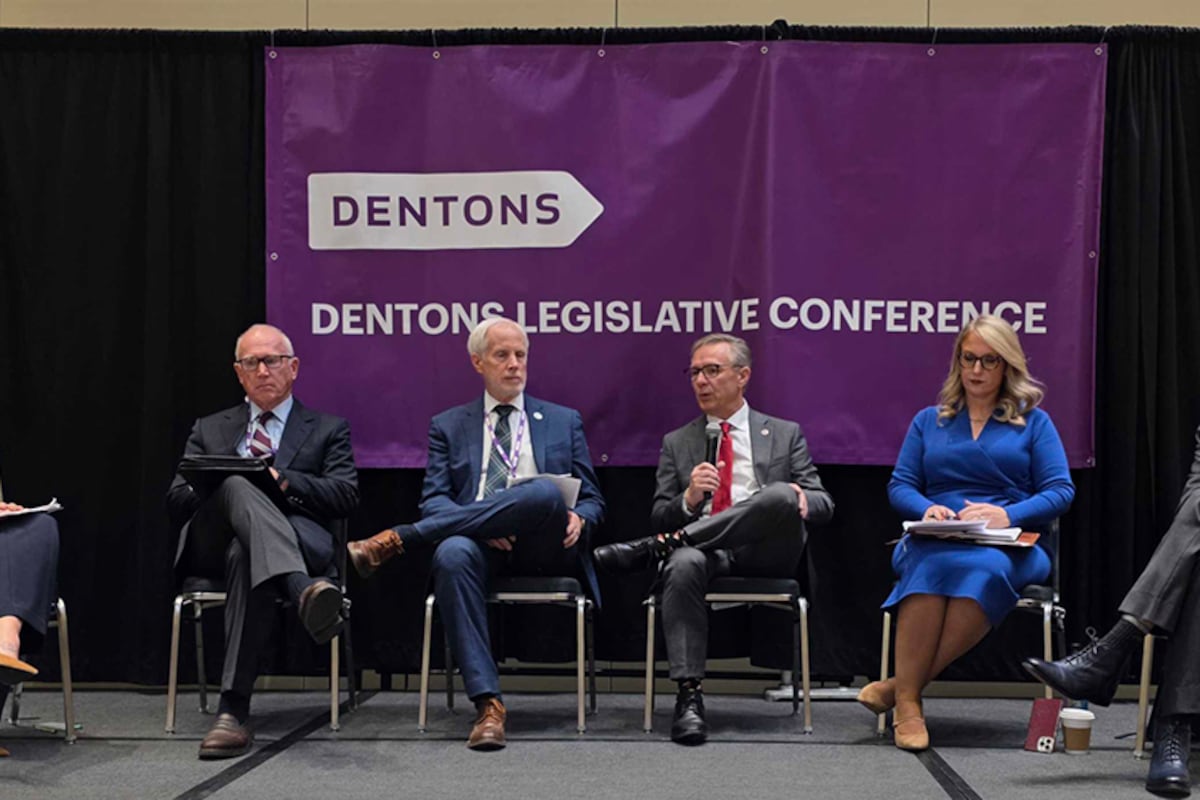
Speaking at an annual legislative conference, Republican Rep. Bob Behning, the chair of the House Education Committee, said Thursday the General Assembly could use the group’s recommendations as a guide for legislation. But he expressed skepticism about the group’s proposal for the Indianapolis mayor to appoint all nine members of the independent agency, the Indianapolis Public Education Corporation.
“A different mayor could have a totally different outcome in terms of what that panel might look like,” Behning said. “We need to at least make sure that the whims of whoever is at the helm of the mayor’s office doesn’t necessarily have a huge impact on the overall governance.”
In addition to recommending a new agency with oversight powers, the group voted 8-1 to recommend requiring that all schools provide transportation to students living within IPS boundaries, restricting the number of charter authorizers, and exempting IPS buildings from a state law requiring districts to make unused buildings available to charters for $1.
Behning said he would also support repealing the so-called $1 law, although he noted his support depended on the ILEA’s recommendations being fully implemented first.
The ILEA’s recommendations also earned support from Indianapolis Rep. Ed DeLaney, a Democrat. Since the new agency as proposed would have the power to impose property taxes for both IPS and charter schools, that means it could demand accountability for charters that’s currently missing, he said.
“Over my objection, we decided to give the charter schools tax revenue,” he said. “This gives us an opportunity to say, ‘we’re not going to give you the money, we’re going to have a structure under the mirror to see how you do it and make sure you cooperate.’”
Despite their past disagreements over charter and traditional public schools, Behning and DeLaney said they may co-author a bill based on the ILEA’s recommendations. Each said taking the responsibility of buildings and transportation away from the current IPS board would allow the board to focus more on students and academics. 2
“I think this allows the IPS board to focus on really trying to drive resources into the classroom and have a positive impact in terms of outcomes for kids, and they won’t have to be labored with facilities,” Behning said.
Lawmakers: ILEA proposals could help other school districts
Leaders from other parts of the state also see the potential to replicate some of the ILEA’s work in their own districts.
Sen. Jeff Raatz, a Richmond Republican and chair of the Senate Education Committee, said rural communities face many of the same challenges as IPS, like declining population and transportation issues.
“This is an innovation incubator on education,” he said. “So we’ll get started here, and maybe it will work in other ways across the state, to help economies of scale, and looking at the number of buildings as population declines in some counties.”
Raatz said while a statewide expansion of the ILEA’s work is unlikely this year, lawmakers may make it easier for rural school districts to merge together or consolidate services.
For example, they could repeal a state requirement that school boards must meet in the geographic boundaries of their school district, Behning said.
Secretary of Education Katie Jenner also said rural and suburban districts are watching what happens in Indianapolis closely. During the 2025 session, lawmakers initially proposed a bill that would have dissolved IPS and four other school districts where most students attend schools not directly run by the district. That led to panicked calls from leaders of the other districts, Jenner said.
“I think we’ll be able to learn some things and probably apply them more broadly in Indiana, and I believe other states will watch as well,” Jenner said.
But Jenner also encouraged lawmakers to look at more than just student enrollment when considering school consolidation, closure, or other changes. Student academic outcomes and fiscal health should also be factors to account for small, successful school districts, she said.
In a last minute move in the 2025 session, Indiana lawmakers added a provision to dissolve the Union School Corporation, citing its low enrollment of around 300 students in brick-and-mortar schools as well as its academic performance.
The same law that created the ILEA this year also gave other schools throughout the state the option to participate in a pilot program testing new ways to use facilities and transportation. Three such pilot programs were approved this year, including one involving more than 50 public charter and private schools in Marion County.
Behning said the Marion County program may be reconsidered, given the recommendations of the ILEA.
Lawmakers are up against the clock to pass a bill turning the ILEA’s proposals into law.
The 2026 session started early in December, meaning lawmakers may only have three committee hearings to pass bills before they must move to their full chambers. Raatz said on the Senate side, that might mean a max of 10 education bills this year.
Aleksandra Appleton covers Indiana education policy and writes about K-12 schools across the state. Contact her at aappleton@chalkbeat.org.