Sign up for Chalkbeat Newark’s free newsletter to get the latest news about the city’s public school system delivered to your inbox.
As New Jersey students head back to school, teachers say they are preparing for a school year shaped by uncertainty for immigrant families.
The impact of stepped-up immigration enforcement is showing up in classrooms, particularly in schools with larger immigrant populations. Immigration enforcement isn’t a new topic for students, but teachers say the situation is now taking a heavier toll, even as they try to create a sense of normalcy in school.
Arrests by Immigration and Customs Enforcement agents in New Jersey rose by nearly 150% from May to July, and reached the highest level for any month in at least four years. The number of deportation orders and voluntary departures also increased in New Jersey courts from May to June.
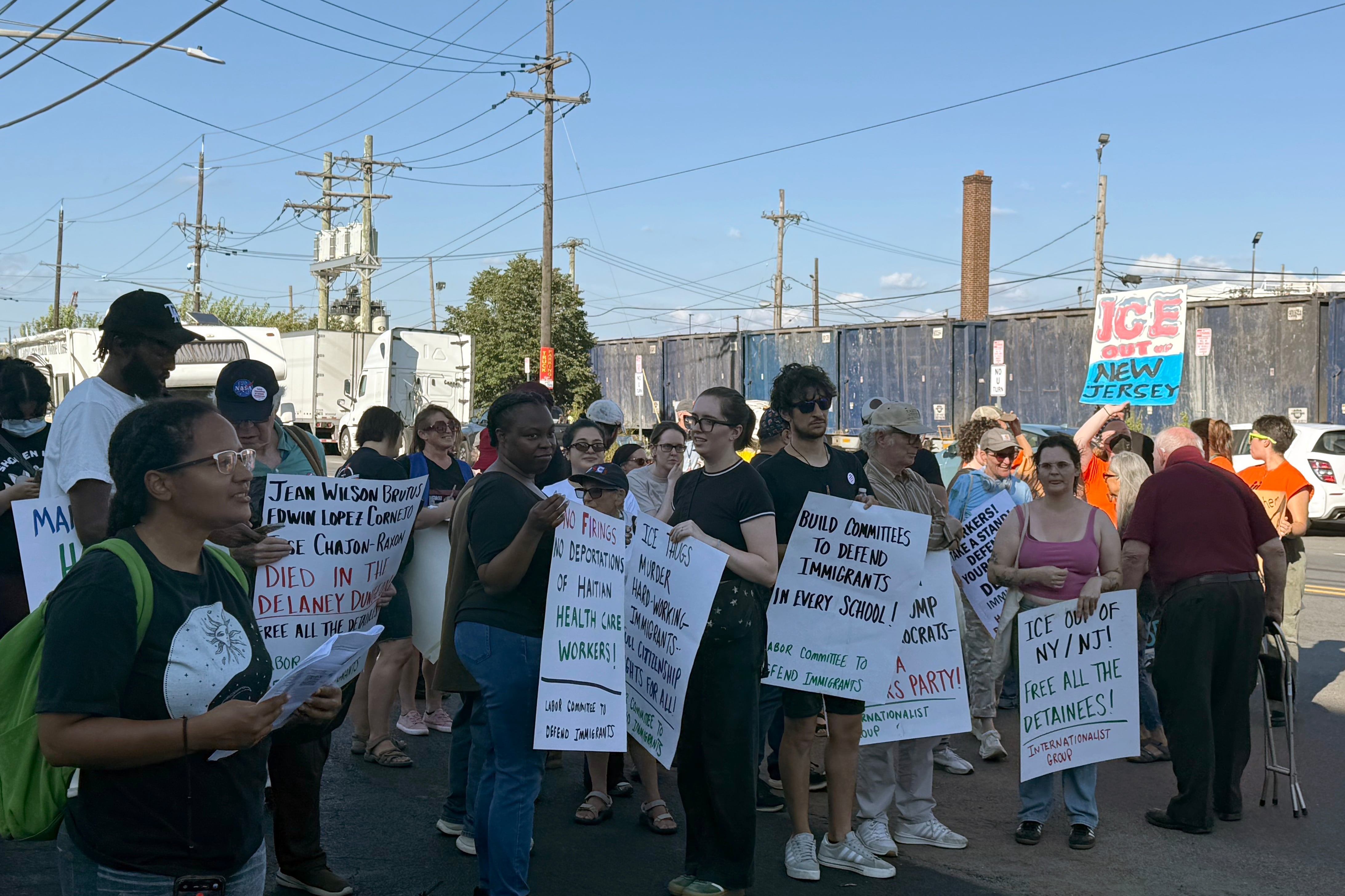
At a rally over the weekend outside Delaney Hall, a federal immigration detention facility in Newark, teachers from Newark, Orange, and Passaic joined labor unions and Newark library workers to speak out against immigration enforcement activity they say is disrupting students’ education.
They described the steps they will take to support students who may be grappling with immigration issues at home. Some teachers said they will create classrooms for students to talk through what they’re seeing and hearing, including discussions of immigration enforcement throughout U.S. history. Others said they are trying to make room for students to process anxieties or fears and validate their experiences.
In New Jersey, ICE agents generally can’t enter public schools without a judicial warrant signed by a judge, per the state. But state and local policies aren’t always clear to students, and teachers are often the ones to explain them.
Tracey Luz, a Newark Public Schools high school teacher in the Ironbound, a neighborhood where most of the residents are immigrants, recalled last spring when news about an ICE raid at a nearby seafood depot reached students mid-class. Based on what they were seeing online, students thought ICE agents were at the school, until Luz clarified the situation, she said.
“They were really upset,” Luz said. “We talked about it and told them you have to keep one foot in the reality that these people are stalking your neighborhood and your family, but you also have to keep one foot in the reality that you’re a senior, and you’re going to graduate.”
In the Passaic Public Schools district, U.S. history and geography teacher Terry Fitzgibbons said he’s focused on building the topic into the curriculum itself, rather than addressing it head-on, so students can open up more easily.
“I certainly don’t have all the answers and can’t 100% relate to what they’re going through,” Fitzgibbons said.
He said he weaves in lessons on migration, labor, and the history of political movements, and lets students engage with the topic on their own terms.
A comment from one of his students last year stuck with him: “‘Hey Mr. Fitz, we are more vulnerable than we appear.’”
For other teachers, the current political climate calls for acknowledging what students are experiencing, even if it means departing from how they usually handle classrooms.
Bradley Gonmiah, a former Newark Public Schools high school physics teacher, recalled an instance this past school year where a student pulled out his phone mid-class to show classmates a post about ICE activity near a school.
Instead of telling the student to put his phone away, as he would have in other situations, Gonmiah said he acknowledged that the situation was “messed up.” A short conversation about the issue followed.
“Validating that it’s something that’s affecting us inside and outside the classroom is something that needs to be addressed,” Gonmiah said.
Some teachers say talking things through is not always the right answer. Sonya Noebels, a math teacher at Orange High School in the Orange Public Schools district, said she and her colleagues try to keep classroom routines consistent and give students time where they don’t have to focus on what’s happening outside of school.
“Some of these students who are living this just need a place where they know what’s going to happen and where they don’t have to be thinking about everything that’s going on, and they can just be kids and do school,” said Noebels.
For Andrew Worthington, an English teacher also at Orange High School, making students feel comfortable and helping them think critically about the political landscape is crucial.
“Hopefully they can start thinking about these issues themselves, which they already are but maybe not in the most organized or structured way,” Worthington added.
While teachers are struggling to find the balance between incorporating conversations about immigration during class time and creating a sense of normalcy in school, some advocates say schools should offer more direct support to students.
The New Jersey Consortium for Immigrant Children has a partnership with Jersey City Public Schools to offer free legal services to high school students through the Beacon program, an effort other school districts could replicate, said Katarina Martucci, an attorney with the program. Students can enter the program by themselves if they don’t want to involve an adult, Martucci said.
Martucci and her team also speak with teachers who often say they don’t know how to help students. She said simple things like putting up “pro-immigrant welcoming posters are a good way to show students that their existence at school is also important and helps instill trust.”
Jessie Gómez is a reporter for Chalkbeat Newark, covering public education in the city. Contact Jessie at jgomez@chalkbeat.org.