This story was updated on Oct. 23 to include a list of the schools that are reopening on Monday.
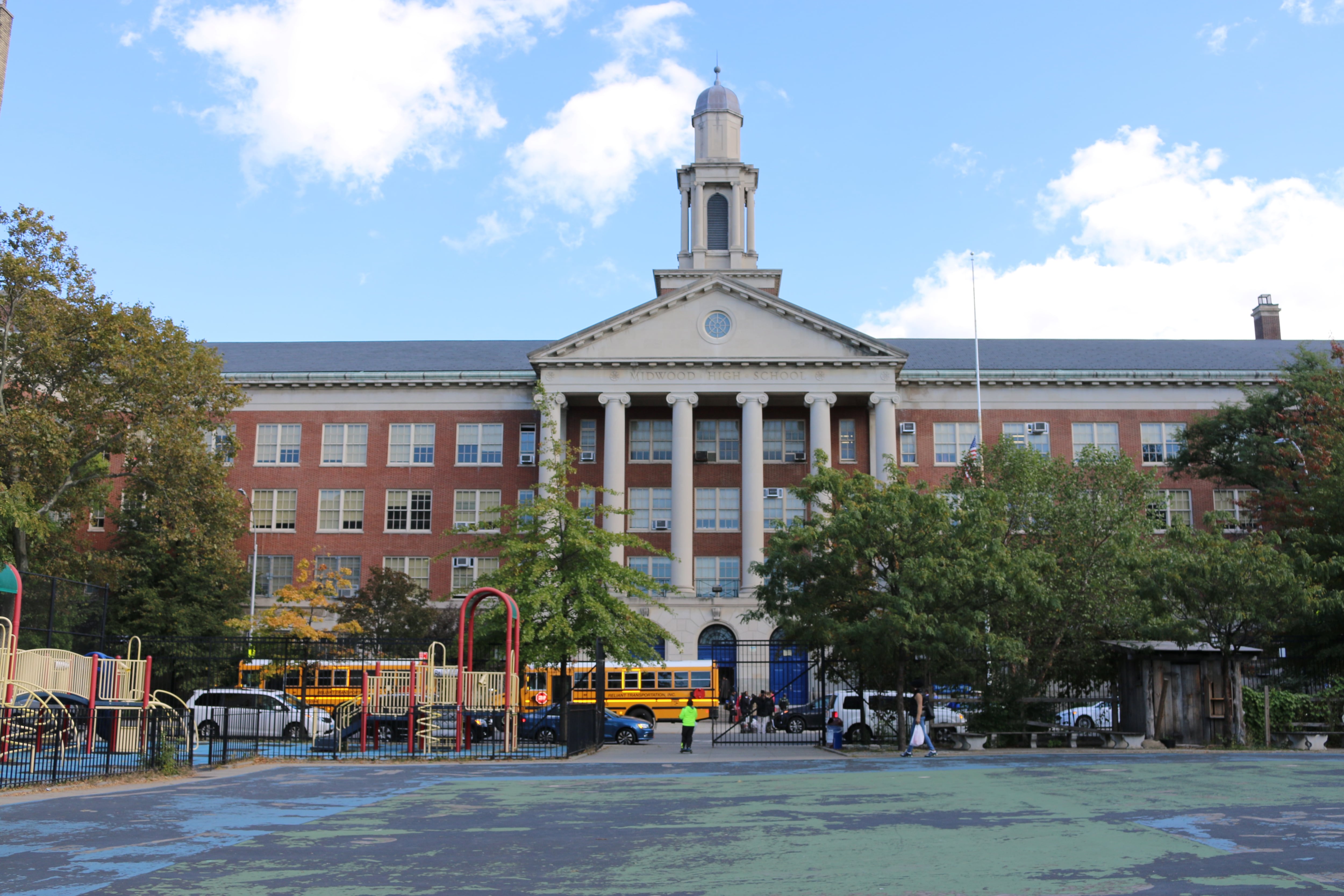
All of the Queens schools in state-designated coronavirus hotspots along with many Brooklyn schools can restart in-person learning Monday, according to state officials.
Citing a decrease in coronavirus positivity rates in certain neighborhoods, Gov. Andrew Cuomo released updated maps Wednesday with new boundaries for “red,” “orange,” and “yellow” zones, clearing roughly 120 district school sites in New York City to reopen out of 169 that were initially closed.
“It is working,” Cuomo said of the neighborhood closures.
Two weeks ago, Cuomo mapped out school closures and restrictions for businesses and houses of worship because of high neighborhood infection rates. The state forced schools in red and orange zones to close, while schools in yellow zones could remain open with more frequent coronavirus testing. Charter and private schools in those zones were also affected, though department officials have not said how many.
Kew Gardens, Forest Hills, Far Rockaway and all of the other red and orange zones in Queens are now yellow, paving the way for school reopenings.
The red zone in central and south Brooklyn — including parts of Borough Park and Midwood and stretching all the way toward Gravesend — remains unchanged, so schools there must stay shuttered. But areas that were previously designated orange in Brooklyn have been downgraded to yellow, meaning schools there can reopen with weekly testing.
In total, 103 schools operating across 128 sites are able to reopen Monday, the city’s Department of Education said.
The red zone in Brooklyn — where Orthodox Jewish communities have frustrated health officials for holding large, maskless gatherings — continues to have relatively high positivity rates, with 5.5% of tests coming back positive over the past week, according to state data, down from 7.7% in the last week of September.
Citywide, the seven-day average positivity rate is nearly 1.7%, officials said. Systemwide school closures won’t be triggered if that figure stays below 3%.
Signaling that more flare-ups could be on the horizon, state officials said Ozone Park in Queens, which had not previously faced restrictions, has become a yellow zone. For now, schools there will remain open but will see weekly coronavirus testing of a slice of teachers and students. Schools in other parts of the city are subjected to monthly testing of 10-20% of their students and staff.
For the 125 school sites previously in the yellow zone, the city found nine positive cases — five staff, four students — out of more than 5,030 test results, for a positivity rate of .18%, education department officials said Friday.
The decision to shut down schools in orange and red zones — while allowing bars and restaurants to remain open with some restrictions — has raised eyebrows among many public health experts. It’s unclear whether targeted closures will be effective, since people routinely cross neighborhood boundaries, including students and teachers.
“I understand where they’re coming from — what there’s really no will for right now is a general closure,” Benjamin Linas, an epidemiologist at Boston University, previously told Chalkbeat. “But it’s not clear it’s going to be effective as a public health strategy.”
Officials have not offered any evidence that schools were driving the increase in infections in the hot zones. Across the city, early testing efforts in schools have shown infection rates that are far below the city average, though the limited sample so far makes it hard to reach broad conclusions.
To reopen schools and ease other restrictions, the positivity rate in red zones must fall below 3% over 10 days, according to criteria Cuomo laid out for the first time on Wednesday. Orange zones must fall below 2% and yellow zones must fall below 1.5%.
The ability for zones to shift over several days — and therefore the severity of restrictions including school closures — could lead to greater confusion. City and state officials have struggled to deliver a uniform message about how the restrictions would work, with the city initially offering its own ZIP code-based strategy only for the state to override those designations with color-coded maps.
On Wednesday, both Mayor Bill de Blasio and Cuomo painted an optimistic picture that targeted restrictions would be effective though the governor left open the possibility that broader regional shutdowns are possible if infections begin spreading more widely. De Blasio remained hopeful the school system citywide would stay open.
“I really like where we are,” de Blasio said. “I think we’re on a good track.”
Sam Park contributed.