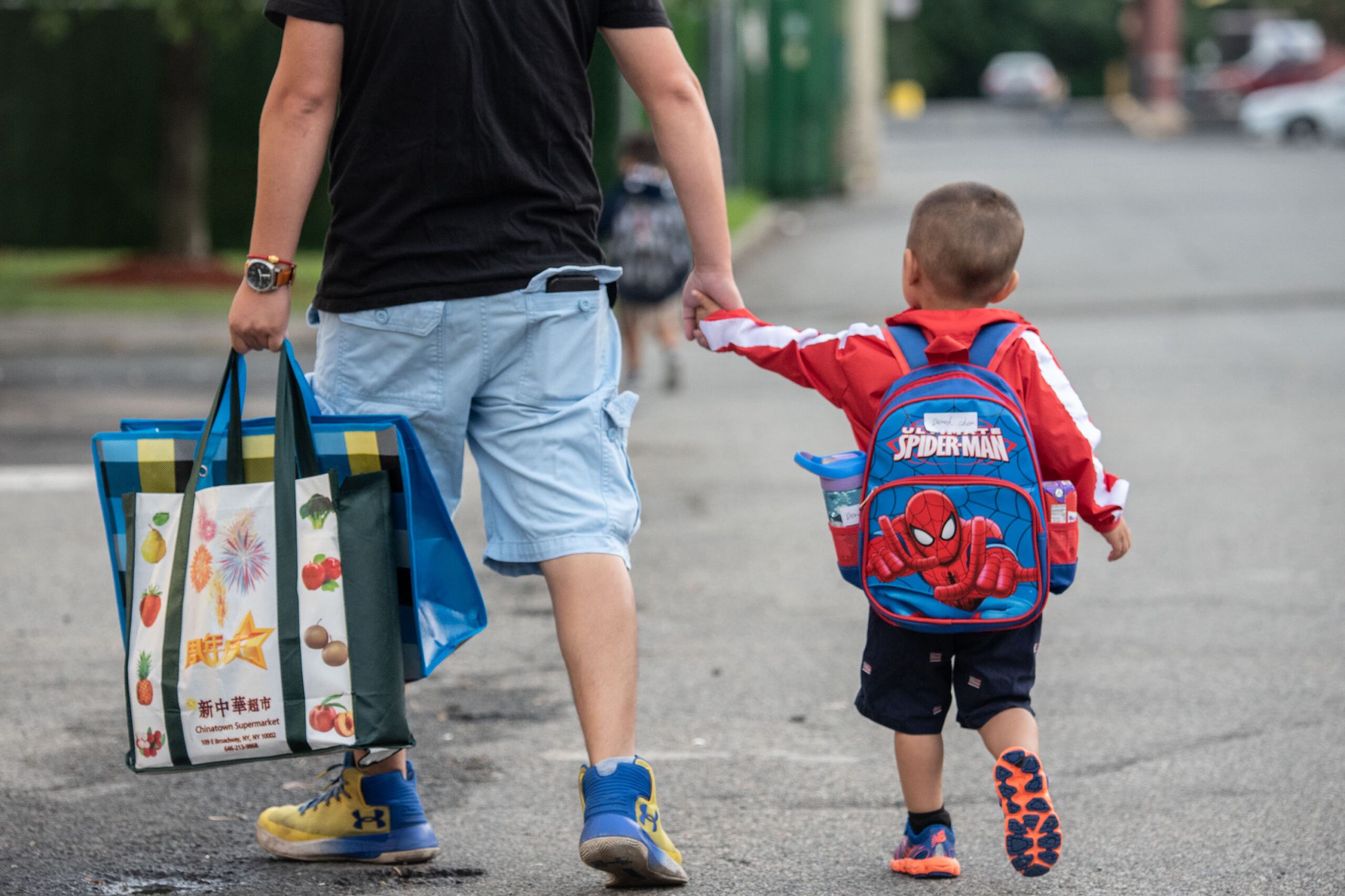
The number of students who were offered seats in New York City’s free preschool programs slipped, falling nearly 7% since last year, according to figures released Friday.
At the same time, the admissions process became slightly less competitive, with a record 91% of families admitted to one of their top three choices for the 2021-2022 school year.
Admission offers to the city’s prekindergarten programs, which are available to all 4-year-olds and have expanded significantly to include many 3-year-olds, have fallen in recent years. Just over 57,500 students received an offer this cycle, a nearly 12% drop since 2019.
Overall enrollment in the city’s traditional public schools has also trended downward, but plummeted 4% amid the pandemic, a loss of more students than the previous 14 years combined. In line with national trends, the largest declines came in the earliest grades — with an 8% drop in preschool programs for 3-year-olds and 13% at programs for 4-year-olds — as some families decided against enrolling in preschool in the midst of the coronavirus pandemic. Officials also pointed to declining birth rates as a contributing factor.
Still, families may still apply after the deadline and it’s unclear if falling coronavirus positivity rates, which have now dipped below 1%, could make parents more likely to send their children this year.
“Access to child care and early education services is a critical component of getting families back to work and putting New York City on the path to recovery from the pandemic,” Deputy Chancellor Josh Wallack said in a statement. Families who missed the deadline are still able to apply and join waitlists by visiting MySchools.nyc or by contacting programs directly. For more information, families can call 718-935-2009.
The decline in offers comes as the city is expanding access to programs for 3-year-olds, also known as 3-K, which is expanding this fall thanks to coronavirus relief funding. City officials hope to make the program universal by September 2023.
Free pre-K for all has arguably been Mayor Bill de Blasio’s most significant education accomplishment, though students with disabilities are not fully included. The city is often short hundreds or thousands of seats in specialized classrooms for students who need smaller settings or additional services, leaving some sitting at home.
“As the City continues expanding 3-K and Pre-K, the City must also ensure there are enough seats for children with disabilities who need preschool special education classes this coming year,” Randi Levine, the policy director at Advocates for Children, wrote in an email.
City officials also said that 42 preschool programs were part of an admissions program designed to enroll a more diverse group of students, up from 38 last year. The city’s schools are among the most segregated in the country and previous research has found that pre-K classrooms are less representative of the city than those in kindergarten.