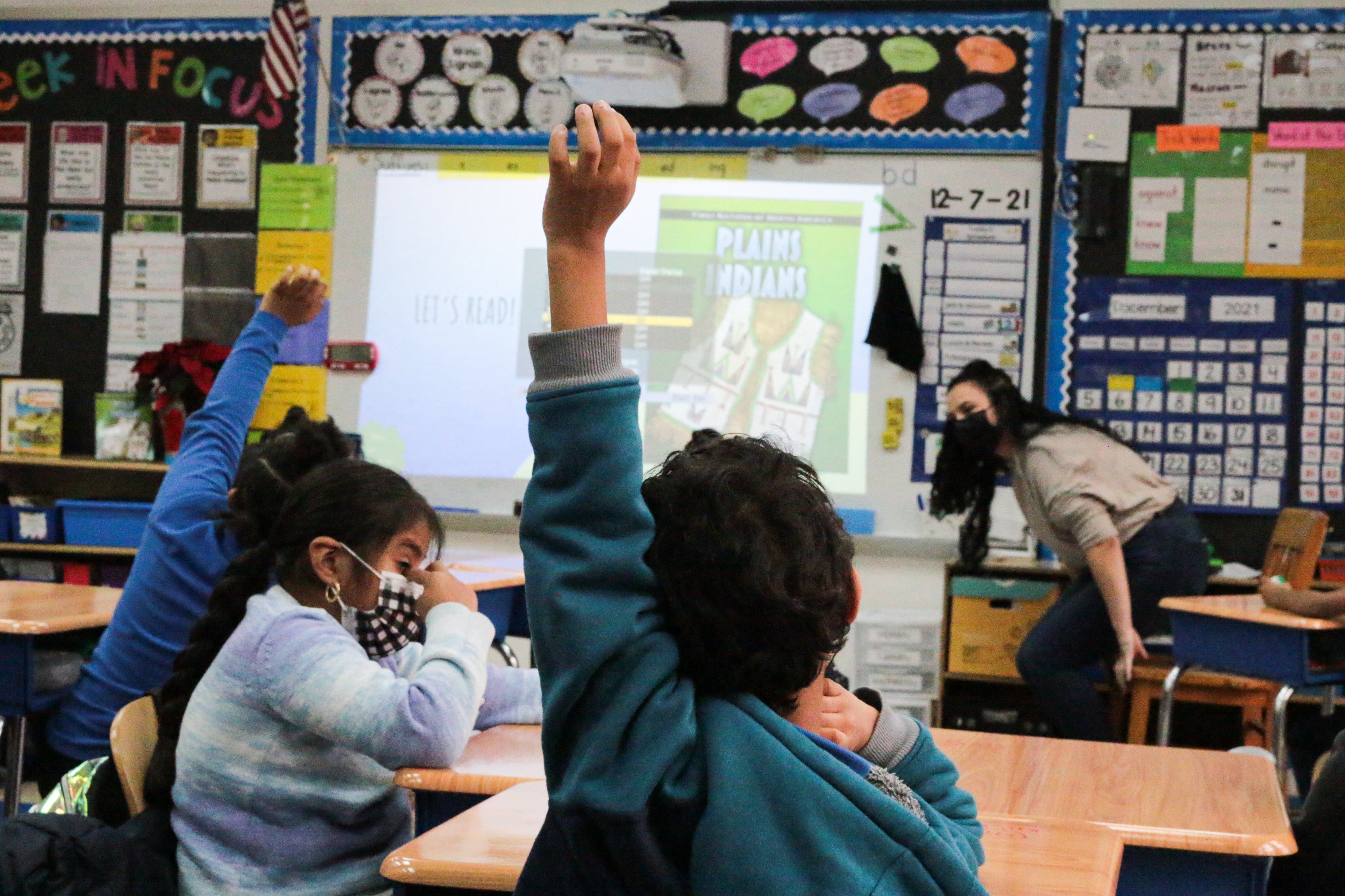
New York City may soon require hundreds of public schools to change how they teach reading and math, marking a significant shift from the freedom schools have long enjoyed in choosing their own materials.
The city has not yet publicly announced any changes. But sources familiar with the education department’s plans said the city is planning to roll out three reading curriculums in nearly half of the city districts next school year with the rest to follow the year after that. The reading curriculums include: Wit & Wisdom, from a company called Great Minds; Into Reading from Houghton Mifflin Harcourt; and Expeditionary Learning, from EL Education.
The city is also rolling out a standardized algebra curriculum from Illustrative Mathematics in at least 150 high schools, sources said.
Some city classrooms already use these curriculums, but many more could soon be required to adopt them. Chalkbeat wants to hear from educators who already use them to learn more about their strengths and weaknesses.
If you’re a teacher or school leader who has experience with any of the curriculums mentioned above, please fill out this form to tell us more. And if you haven’t used those curriculums, you can still use the survey to let us know what questions you think we should investigate about the city’s curriculum plans.
If you are having trouble viewing this form, go here.
Alex Zimmerman is a reporter for Chalkbeat New York, covering NYC public schools. Contact Alex at azimmerman@chalkbeat.org.