Sign up for Chalkbeat New York’s free daily newsletter to keep up with NYC’s public schools.
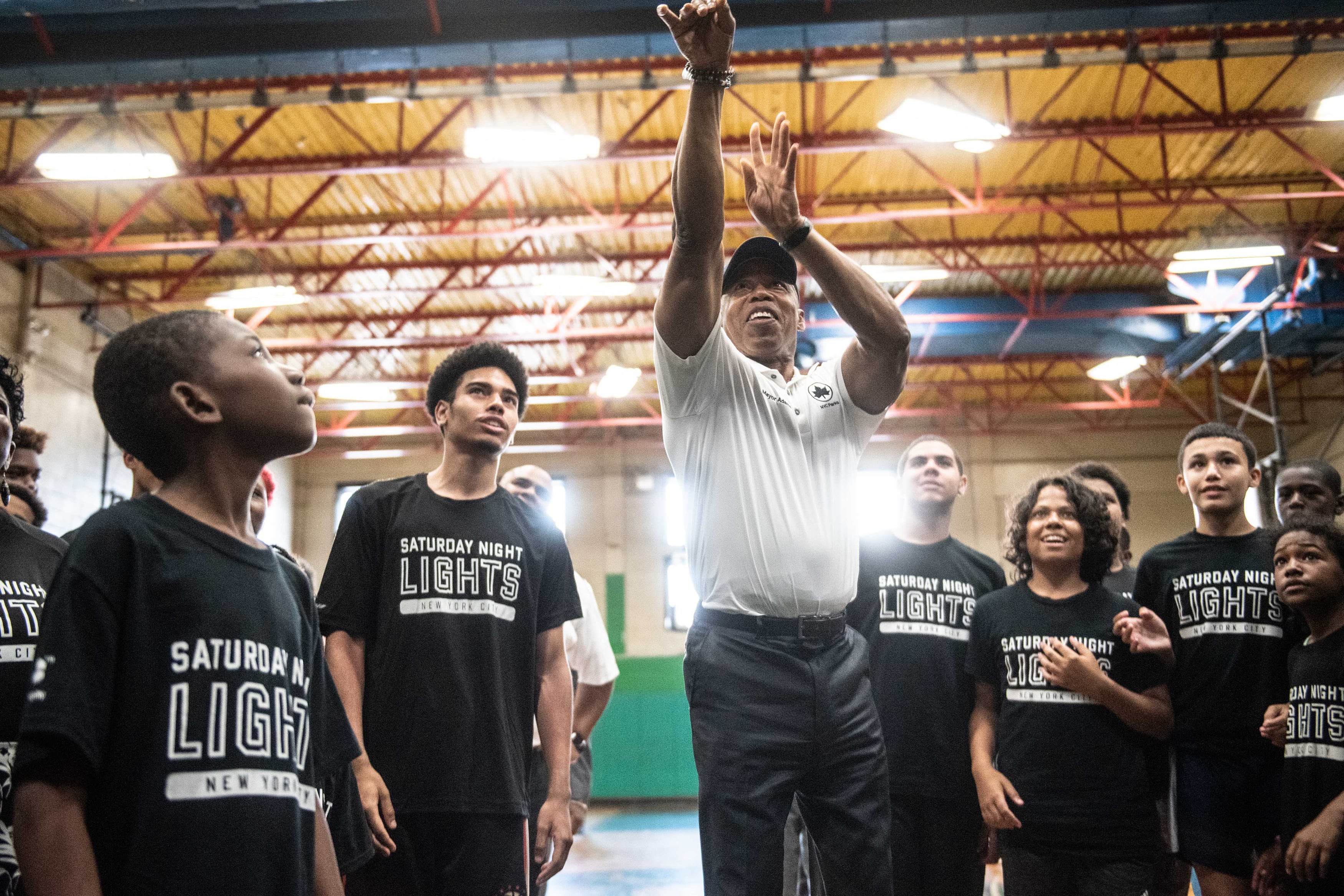
Some New York City summer youth programs will stay open extra hours in the coming weeks to give kids more time in supervised settings and to help reduce the risk of crime, Mayor Eric Adams announced Friday.
The extended hours will apply at 18 programs across the five boroughs in areas city officials identified as “historically underserved,” and in police precincts with high levels of violence, officials said.
The city is pledging $2 million to keep some of the programs open later into the night on weekdays, and to extend other programs’ weekend hours.
“When we invest in summer programming, we give our young people not just a space to enjoy themselves but prevent crime from happening in our communities,” Adams said in a statement.
Seven Beacon programs, which are located in public schools and operate as community centers for kids of all ages, will push back their weekday closing time from 6 p.m. to 11 p.m.. And for the first time, they’ll operate on weekends, staying open from 10am to 11pm, according to a spokesperson from the Youth and Community Development Department.
An additional 11 Cornerstone programs, which are based in New York City Housing Authority developments and are also open to kids of all ages, will extend their weekend hours by opening at 8 a.m. instead of 3 p.m., the spokesperson added.
Those 18 programs will also partner with “Cure Violence” programs that seek to prevent gun violence by deploying trusted community members in areas with high levels of violence to identify and de-escalate possible conflicts, according to a presentation obtained by Chalkbeat.
Despite the expanded hours, there will still be several weeks between the end of the city’s summer youth programming and the start of school. Beacon programs will end on Saturday, Aug. 17, while Cornerstone programs wrap up on Saturday, Aug. 24. The first day of school is Thursday, Sept. 5.
Adams has prioritized investments in summer programs during his two-and-a-half years in office, pointing to their potential to help reduce youth crime. He expanded the city’s Summer Youth Employment Program, which offers young people ages 14-24 paid summer internships to 100,000 spots last summer.
Past research found that teens who participated in the program were less likely to be involved in a crime than others who applied but didn’t get in.
Adams also preserved and expanded Summer Rising, a sprawling free summer camp and school program created by former Mayor Bill de Blasio to help kids recover from the effects of the pandemic. The program has attracted significant interest from families, but continues to struggle with attendance.
Michael Elsen-Rooney is a reporter for Chalkbeat New York, covering NYC public schools. Contact Michael at melsen-rooney@chalkbeat.org.