
Sign up for Chalkbeat’s free monthly newsletter How I Teach to get inspiration, news, and advice for — and from — educators.
Angelo Imperati never wanted to become a teacher. He disliked school and couldn’t wait to finish.
He only went to college to make his parents happy. But while there, he befriended a girl and began to take the same courses as her. Soon, he found himself student-teaching and signing up to take the teacher certification exams.
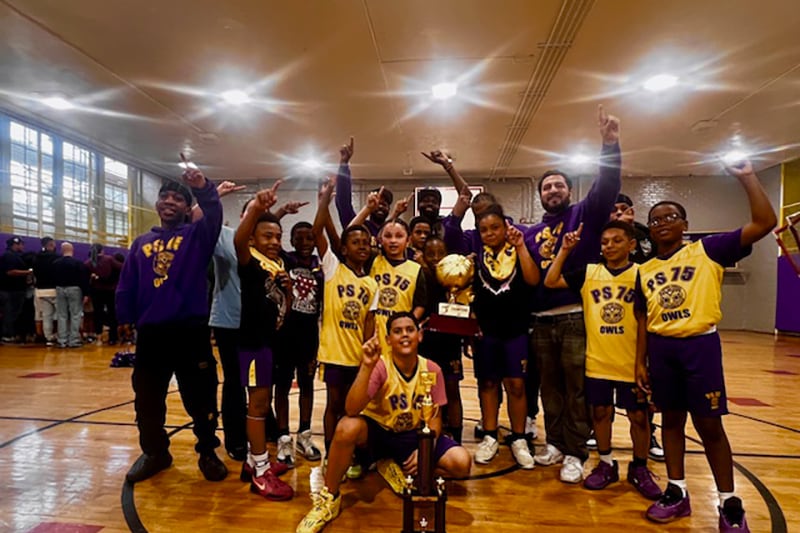
Twenty-one years later, Imperati is an award-winning fifth grade teacher at P.S. 75 in the Bronx, where he teaches math to three classes and leads social studies lessons twice a week to his homeroom class. He also started a basketball league for his students and beyond. As 2025’s FLAG Award for Teaching Excellence grand prize winner for elementary school educators, he received a grant for $25,000, and his school received $10,000. (Nominations for the 2026 FLAG awards are open through Nov. 30.)
Imperati couldn’t be happier than educating kids from the borough where he was born and raised, making learning feel relevant to their lives.
“I share stories about myself, and show them how I have used the topics I’m teaching in real life settings,” Imperati said. “I create word-problems using my students as characters in the problem. We, as a class, act out the problems to bring it to life, and students begin to make that connection between what they’re learning and the application of it in a real-world situation.”
He focuses on building community and a “sense of belonging” for his students. At lunch, he opens up his room to kids from across his school for tutoring. He cooks for his students on Thanksgiving and brings his outdoor pizza oven from home to make pizza with the fifth graders for an end-of-year party.
His approach yields academic results, Imperati said. Of his 60 students who took the state math tests, 55 of them — or 92% — showed proficiency levels. The citywide average for fifth grade math was 57%, according to public data.
And though he’s proud of his students’ test scores, he was disheartened to see that test prep programs were basically the only option in terms of after-school activities. So he started a basketball league and has been continually adding teams over about 10 years.
“It was a perfect outlet for kids to exhaust some of their energy, and give them an organized activity with something that they enjoy doing,” Imperati said.
We talked to Imperati about his approach to making school feel relevant and fun. This interview has been edited for length and clarity.
What’s something happening in the community that affects what goes on inside your classroom or school?
My school is located in the South Bronx. Some of our students live in shelters, struggle financially, or come from broken homes. Some children don’t know where they are going to sleep, or where their next meal will come from; but yet they are still expected to care about a fraction, a decimal or anything else getting taught.
I believe this is a teacher’s and a school’s biggest obstacle. How can I get them to care about education when they have all these odds against them? How can I empower them and help them overcome life’s challenges? How can I make them feel like their existence matters and are essential parts of their communities? As an educator, I feel immense pressure to do everything in my power to help put these kids on a path to success.
How have you boosted student performance? What’s your secret?
It’s about building a relationship where students feel valued and respected. I believe once you’ve established that sense of trust and respect with your students, they will work harder to make you, their families, and most importantly themselves proud.
We are a community of learners that follow a growth model; a classroom where the focus is on realistic, individualized goals for every child.
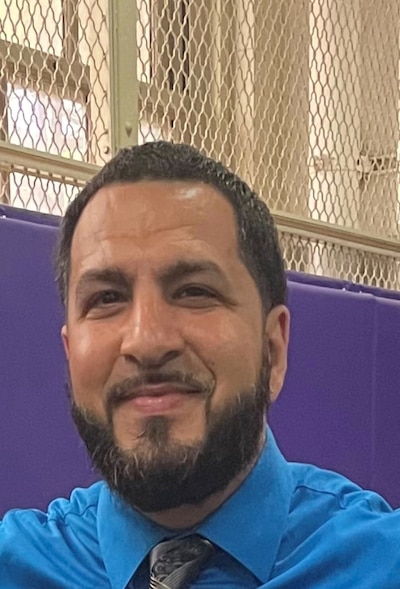
In addition to this, I strategically pair students up to encourage collaboration in my classroom. It creates an atmosphere where they are all responsible for each other’s learning and success. I give up my lunch every day to do lunch-and-learns. My top math students stay to “tutor” any child who wants to come for extra help. They eat, mingle, and learn.
Lastly, I communicate often with my students and parents. I create online assignments that address topics that have been taught in previous lessons and questions that relate to the current topic being taught. Students are expected to complete and submit these daily assignments on Google Classroom. Every evening I check these assignments and leave feedback for every student.
I also created a digital math notebook that students, parents, and guardians can access anytime they need clarity or assistance with the work.
What’s your favorite lesson to teach and why?
When it comes to math, I don’t really have a favorite lesson to teach. I just love to teach. I love the challenge of finding ways to make math practical for my students. I love finding ways to motivate and inspire children (especially children from the Bronx) how to be successful in their educational paths, how to ultimately be successful in life, and how they can be positive contributors to their respected communities and world they live in.
I love educating students on past events like slavery, World War II, and what happened to the Native Americans during the age of exploration. I teach about the current injustices that are happening in our world today and how we can learn from the wrongdoings and injustices of the past. These lessons create excellent discourse around topics like racism and inequality, and allow students to look at the world from a different perspective. It helps build community within the classroom, and I believe students are transformed through these lessons.
Tell us about the basketball league you’ve founded. Why is coaching so important to you?
I began by organizing a basketball program during recess time for fourth and fifth graders to participate in. I had about 30 kids that would participate on a daily basis. I began to notice the difference it was making, especially with the “troubled” kids. I started to make them responsible for their behavior and academics to stay in the program.
Later that year, my principal hired a basketball organization to come and work with the kids. If I remember correctly, she paid about $15,000 for nine weeks. At the end of the year, I put forth a proposal to my principal allowing me to run my own after school basketball program for a lot cheaper than she was paying this organization. Thankfully, she granted my wish, and the following year, I set up an after-school basketball program for third to fifth graders. I partnered with another teacher and a school aide. We had about 40 kids.
While running this program, I began to reach out to other schools to set up exhibition games. We would take our 10 best players to travel to different schools to play against different competitions. I saw how these games would attract the surrounding community. My new goal became partnering with different schools to form our own basketball league.
With the support of my principal, I was able to partner with several other schools in my district to create a District 8 elementary basketball program. We are entering our seventh year as a league.
What’s the best advice you’ve ever received, and how have you put it into practice?
An excellent piece of advice came from my boss when I worked in a dry cleaners while in college.
I was 19 years old and very short tempered. My boss noticed my temper and anger on a couple of occasions. This one particular night, after we closed, he called me into his office. I thought he was going to terminate me. The first thing he asked me to do was take one hand and ball it into a fist. He then asked me to use the pointer finger on my other hand and travel along my knuckles of the hand that was balled into a fist. He asked me what did I feel. I replied, “ups and downs.” He replied, “That’s life!”
He explained that when I’m feeling down, I should keep my head up because I am surely bound to go back up again.
I have used this analogy every year with my students. My hope is that they realize no matter how hard life gets, and no matter what individual adversities they may encounter, there are brighter, better days ahead.
Amy Zimmer is the bureau chief for Chalkbeat New York. Contact Amy at azimmer@chalkbeat.org.