Sign up for Chalkbeat New York’s free daily newsletter to get essential news about NYC’s public schools delivered to your inbox.
An Education Department safety official sent a letter to Brooklyn high school principals last week, signaling a major change: Students found with weapons on public school grounds will be automatically arrested.
The message sparked confusion among school leaders and families about how widely it would be applied and whether it could lead to a spike in students getting tangled up in the criminal justice system.
On Monday morning, some schools swiftly informed students and parents about the new policy on student arrests. By the afternoon, Education Department officials admitted the letter was sent in error.
The messages “do not represent a New York City Public School policy,” wrote Jenna Lyle, a department spokesperson. “They are being corrected with the small number of schools that received them.” She did not explain how the mistake was made.
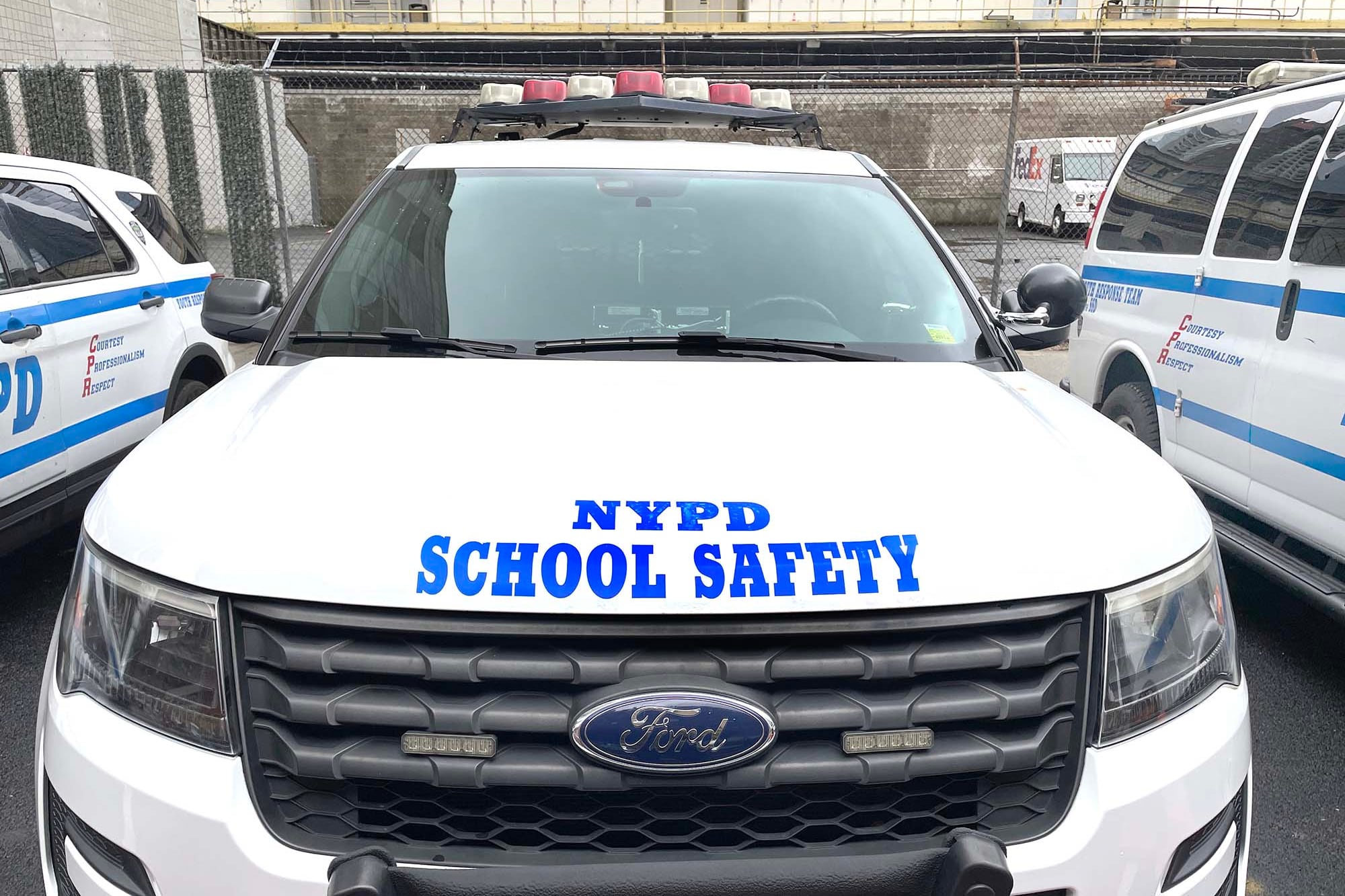
The NYPD, which oversees school safety, confirmed there were no changes in their arrest policy. A spokesperson said about 1,700 weapons have been confiscated in schools so far this school year, a 5% decline compared with the same period last year.
The episode represents a significant miscommunication with school leaders. Multiple principals said that the policy would have been a major change, as arrests have often been made on a case-by-case basis and the Education Department has encouraged less punitive approaches to student misconduct in recent years.
Millenium Brooklyn High School Principal Kevin Conway informed families of the assumed policy shift.
“If you have a pocketknife, razor, scalpel, or any other contraband item in your bag at scanning — regardless of your reason for having the item — you will be arrested as per DOE policy,” he wrote to families in a Monday letter obtained by Chalkbeat. “Students, please make sure to double-check your belongings every morning and adhere to this policy!”
Educators and families were concerned that the communication did not clarify whether all weapons listed in the discipline code would have immediately triggered an arrest. Box cutters and scissors are considered weapons under Education Department policy, though some students might use those for jobs or school projects. Students often carry pepper spray for protection on their commutes, even as it is considered a weapon under school rules.
Corinthia A. Carter, the parent of a junior at Park Slope Collegiate in Brooklyn who heard about the policy through a conversation with the school’s principal, worried that the erroneous policy would have had a disproportionate effect on Black and Latino children. She wondered how the city would explain the mistake to families.
Other school discipline reform advocates were frustrated by the mixed messages but were relieved the student arrest policy was not altered, noting that arrests of city students have declined substantially. In the first three quarters of 2025, police made 485 student arrests — a nearly 52% decline from the same period in 2016, NYPD data show.
“It’s very alarming to allow for any confusion on something like this,” said Johanna Miller, director of the education policy center at the New York Civil Liberties Union.
“Arrests in New York City are very low and that’s something we should be proud of.”
Alex Zimmerman is a reporter for Chalkbeat New York, covering NYC public schools. Contact Alex at azimmerman@chalkbeat.org.