This story originally appeared on WHYY
Philadelphia City Council will hold joint hearings on how the city can fund a remediation and modernization plan to address troubling facilities issues at hundreds of public schools around the city, including issues with asbestos, lead paint, and mold.
The hearings, approved by Council on Friday, will be held sometime in the fall and will focus on how the city government can help to solve a multibillion-dollar problem they say the School District of Philadelphia hasn’t been able to adequately handle.
“There is no question the School District of Philadelphia has put forth hundreds of millions of dollars, has invested in and expanded their facilities in the last several years. But what we know is that this work at the margins is simply not good enough,” said Councilmember Helen Gym, who authored the resolution.
Councilmember Derek Green, one of 10 co-sponsors, was more blunt during Friday’s session of Council, its first since the legislative body broke for summer recess in late June.
“We’ve tried to put our trust in the school district, but time and time and time again that trust has not been there,” said Green, whose son attends a Philadelphia public school.
Also signing the resolution were Councilmembers Cindy Bass, Kendra Brooks, Allan Domb, Jamie Gauthier, Katherine Gilmore-Richardson, Bobby Henon, Kenyatta Johnson, Mark Squilla and Isaiah Thomas.
District spokesperson Christina Clark said Friday that the district “supports any action focused on gaining much-needed facilities funding in support of creating the healthy, welcoming, and 21st-century learning environments our students and staff deserve.”
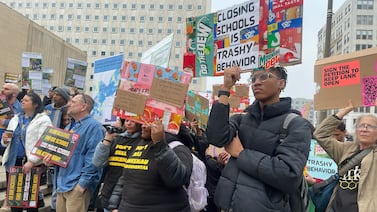
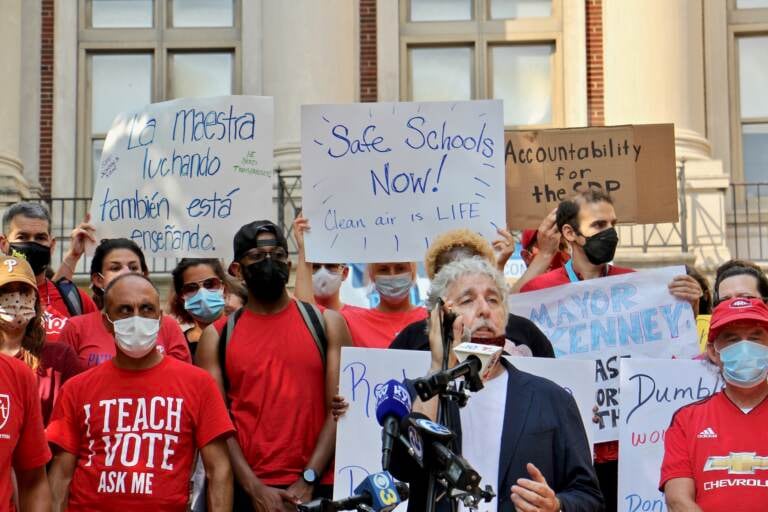
Across the city, the condition of public school buildings has driven outcry among parents, teachers, education advocates, and elected officials.
The day before students returned to classrooms for the first time since the start of the pandemic, teachers and parents at Julia R. Masterman said the district was stonewalling their efforts to double-check asbestos remediation projects inside the building. The same week, educators, students, and parents held an emergency rally outside of The Science Leadership Academy at Beeber to decry the “deplorable” conditions inside the West Philly building, the site of an ongoing construction project.
Jerry Roseman, an environmental expert hired as a consultant by the Philadelphia Federation of Teachers, said Friday he supports the effort to develop a comprehensive plan to address both capital improvement and facility maintenance needs. But he said those two tracks need to move concurrently so that both of them are a priority.
“So while you’re waiting your turn [for capital improvements], your school is not left in a substandard condition,” said Roseman.
Any new plan would likely take decades to fully implement. Other cities that have modernized schools have relied on new taxing mechanisms championed by mayors and other local leaders.