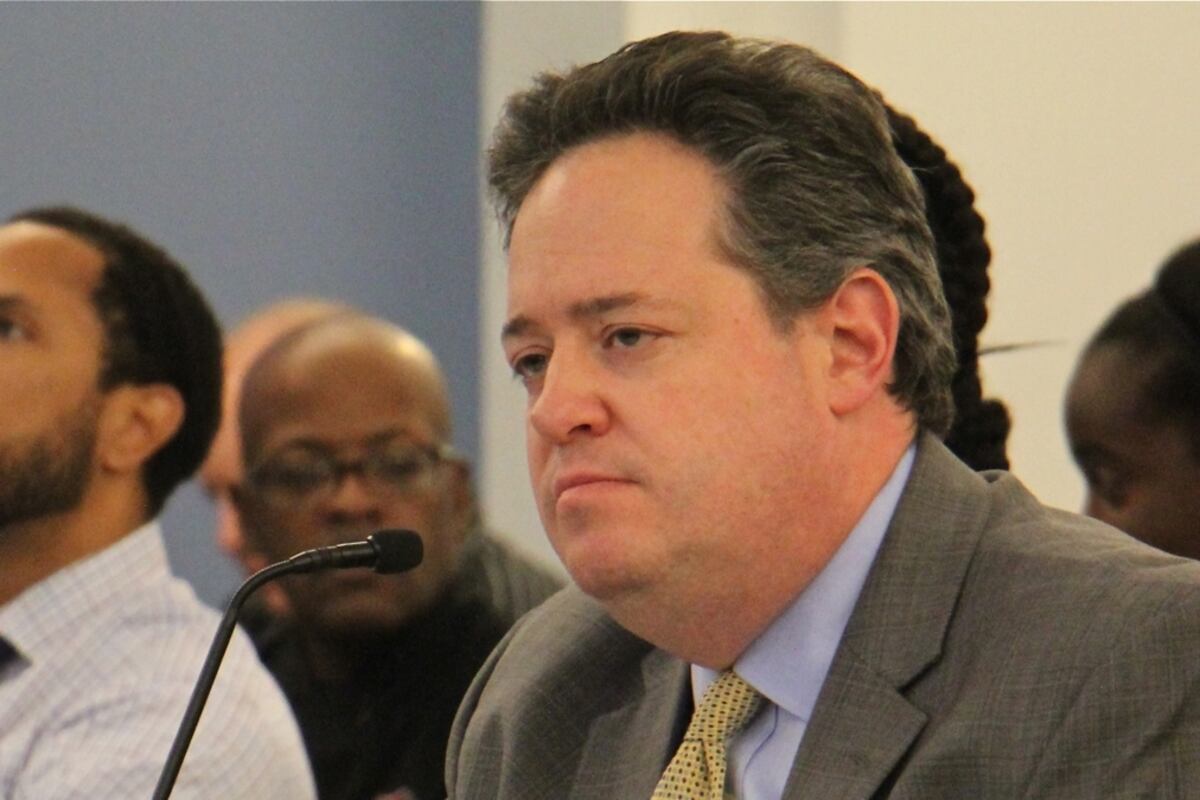
Uri Monson, the Philadelphia school district’s chief financial officer who just two months ago earned a promotion to deputy superintendent overseeing operations, is leaving to become budget secretary in the administration of governor-elect Josh Shapiro.
Shapiro announced the move in a statement Tuesday morning, calling Monson “one of the sharpest minds in Pennsylvania.”
The two men worked together between 2012 and 2016, when Shapiro was chair of the Montgomery County Commission and Monson was its chief financial officer.
Monson will stay at the district until taking up his new duties, he said. Shapiro, a Democrat who won the gubernatorial election last month after a campaign in which he called for increasing school funding, will be inaugurated on Jan. 17.
Monson arrived at the district in 2016, not long after it had slashed 1,000 positions. The federal government had ended recession-era federal aid and the state, instead of trying to replace it, slashed state aid as well.
During Monson’s tenure with the district, it maintained financial stability with the help of federal COVID relief dollars. The district also improved its teacher-to-student ratio, reduced its class size in the early grades, and embarked on a major project to modernize its aging buildings.
But in January testimony in a landmark education case now in Commonwealth Court, Monson painted a dire picture of the district’s financial future post-pandemic if the state doesn’t substantially reform its school funding system.
“We spend almost the least in the state having almost the highest need in the state,” he told Judge Renée Cohn Jubelirer. Philadelphia is one of the nation’s poorest big cities, and the school district is the only one in the state that doesn’t have taxing power of its own, making it entirely reliant on City Council and the state for its operating revenue.
In his testimony, he had to walk a fine line — touting the district’s financial responsibility while at the same time making a plea that it needs more money to fulfill its mission.
Philadelphia ranks 473 out of 500 districts in the state when it comes to weighted per-student funding that accounts for factors like the concentration of students who come from low-income backgrounds, Monson told the court. He said that the Philadelphia residents tax themselves heavily compared to wealthier districts to pay for schools. He said this was due to an education funding formula that does not keep up with student needs regarding both equity and adequacy.
He also told Jubelirer that the district still normally receives less revenue than it spends each year. If school funding in the state isn’t substantially reformed, the district will run budget shortfalls beginning in 2025, he said.
Superintendent Tony Watlington issued a statement Tuesday praising Monson, calling him a “valuable leader” who helped the district maintain seven years of positive fund balances.
“Under this leadership, the district exited the state’s financial distress program and saw our bond rating upgraded to investment grade for the first time since 1977,” Watlington said. “He is a great colleague and friend, and I am looking forward to working with him in his new role.”
Dale Mezzacappa is a senior writer for Chalkbeat Philadelphia, where she covers K-12 schools and early childhood education in Philadelphia. Contact Dale at dmezzacappa@chalkbeat.org.