Sign up for Chalkbeat Philadelphia’s free newsletter to keep up with news on the city’s public school system.
Gun violence is on the decline in Philadelphia, but for students, educators, families, and neighbors who’ve been affected by shootings in the city, every incident is life-altering.
That’s why Chalkbeat Philadelphia is launching a new project to report on gun violence through the prism of schools and education. Over the next year, we’ll cover the impact of gun violence on Philly’s students and efforts to find solutions to the public health crisis.
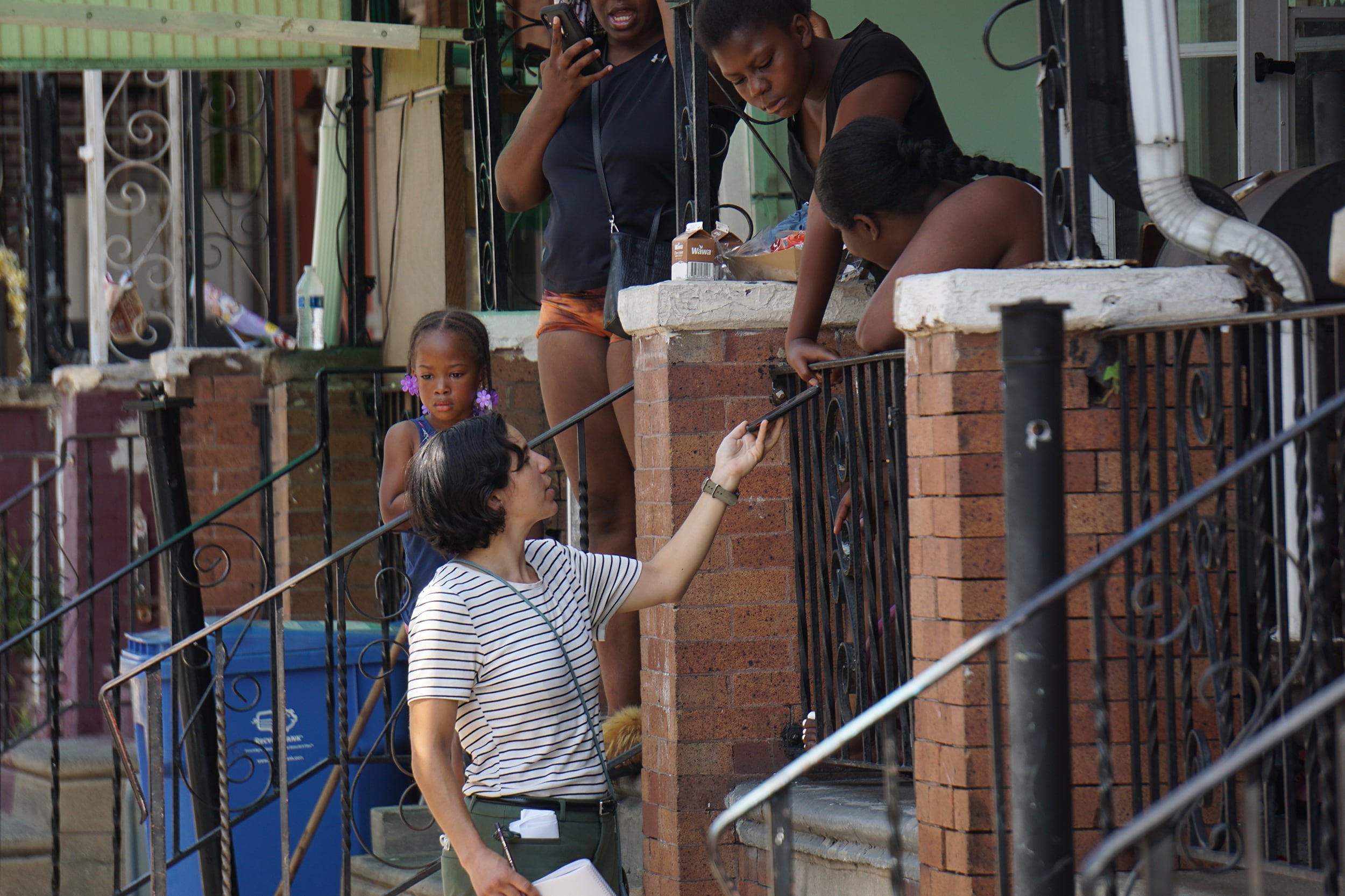
We’re excited to announce West Philadelphia resident Sammy Caiola will spearhead this coverage. Sammy is an award-winning text and audio journalist with a decade of experience telling stories about trauma.
She previously served as the first gun-violence prevention reporter at WHYY, where she undertook a two-month community listening tour that informed her reporting in Philly. She has also been a special projects reporter and an interim editor for Kensington Voice, a hyperlocal news site focused on covering the Kensington neighborhood, which has experienced a disproportionate number of shootings in recent years.
Sammy is also the co-director of the Association of Gun Violence Reporters, a new networking organization designed to support journalists who cover firearms and their impact. She’s held multiple fellowships at the Global Center for Journalism and Trauma and the USC Annenberg Center for Health Journalism, and is currently a mentor with the Association of Health Care Journalists’ firearms reporting fellowship.
Sammy’s coverage will focus on several key questions: How do schools support students who are the victims or perpetrators of gun violence? How should schools address the risk of suicide? How do educators work to teach students trying to live amid the threat of shootings? How does this environment impact attendance, teaching, and learning? What is working to prevent violence or support young people? What could schools and officials be doing better?
This yearlong project was developed with The New York Times’s Headway initiative, which covers progress on societal challenges.
We’re still shaping this beat and we can’t do it without you, our readers and fellow Philadelphians. You can follow our work by signing up for our newsletter and please reach out to our tips email philly.tips@chalkbeat.org if you have story ideas. You can also send a secure message via the Signal app to our tipline: (908) 827-1448.
Carly Sitrin is the bureau chief for Chalkbeat Philadelphia. Contact Carly at csitrin@chalkbeat.org.