Sign up for Chalkbeat Philadelphia’s free newsletter to keep up with the city’s public school system.
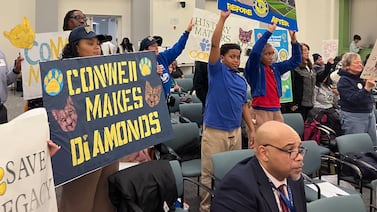
The Philadelphia school district no longer plans to close Russell Conwell Middle School and Motivation High School, Superintendent Tony Watlington announced Thursday.
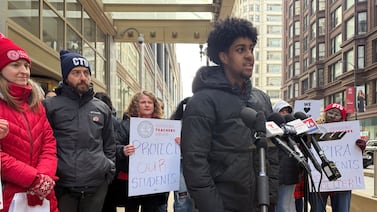
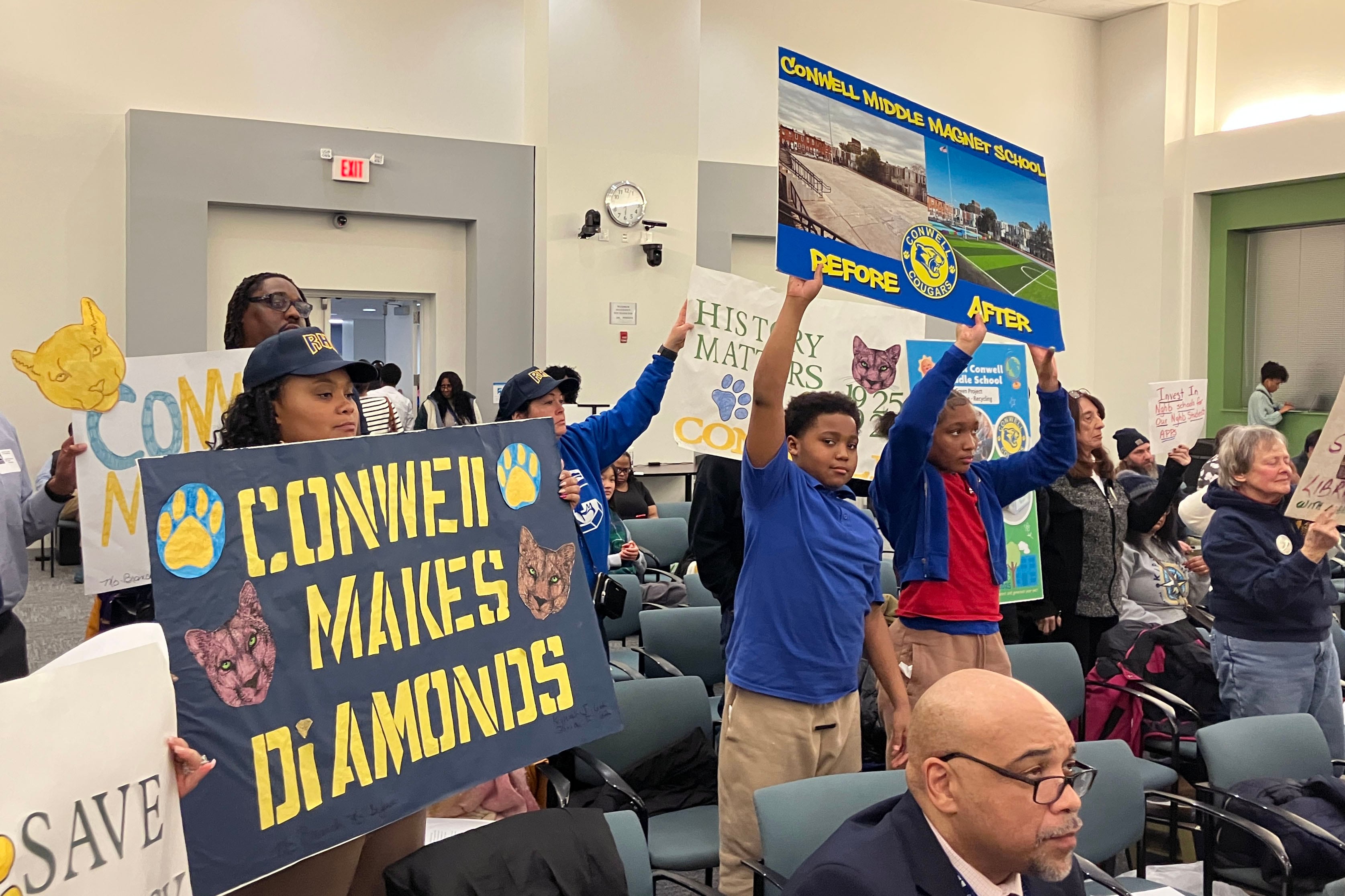
The decision to spare the two schools from proposed closures comes after nearly a month of intense community pushback against the district’s sweeping facilities plan. Watlington has said the plan would help the district provide more resources and opportunities to all students, and would also include investments in schools that remain open.
The changes also follow concerns of some prominent city officials who have so far opposed the plan. The district has also altered the plan to switch the schools some students would relocate to.
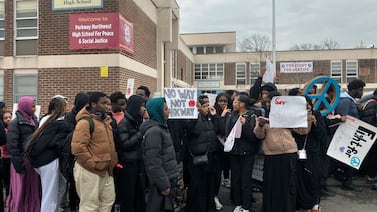
But 18 schools — most of which have mounted strong protests against the closure plan — would still close beginning in 2027.
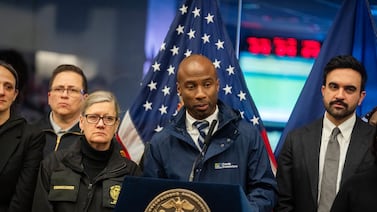
Watlington presented the updated plan to the Board of Education Thursday afternoon. The board will ultimately decide whether that plan goes through, but it’s unclear when members will vote on it.
Watlington said at a press briefing before the board meeting that the changes represent the district’s commitment to listening to community feedback.
“Our community, quite frankly, made some suggestions that had merit,” Watlington said. “The fact that we can’t make all the changes that people across this great city recommended should never mean that we can’t make some of the changes.”
In addition, under the revised plan, Lankenau Environmental Science High School would merge into Walter B. Saul High School as a career and technical education program. That’s a shift from the initial proposal to merge Lankenau into Roxborough High School as an honors program as officials initially proposed. However, the Lankenau building would still close.
Meanwhile, students from Paul Robeson High School would relocate to Motivation, rather than Sayre High School. That means rather than joining a neighborhood high school, current Robeson students would remain at a small, criteria-based school.
Lastly, Lewis Elkin Elementary School would no longer add grades to become a K-8 school. Instead, it would remain a K-4 school and students would attend Conwell after graduating. Conwell would have an honors program that students could apply for through the district’s school selection process.
In total, more than 4,500 Philadelphia students would still have their schools closed in the coming years. The plan has the same price tag of $2.8 billion, which the district says would require extra philanthropic and public funding on top of district funds.
Philadelphia City Council seeks leverage over school closures
Members of Philadelphia’s City Council don’t have any direct say over the closure plan. But that hasn’t stopped them from speaking out about it.
Last week, council members grilled school leaders over the plan. President Kenyatta Johnson said members would not “rubber stamp” the plan, and some members indicated they could withhold funding from the district in the city budget process to back up their views.
Several prominent members rallied in particular support of Conwell Middle School in Kensington. City Council Education Committee Chair Isaiah Thomas previously said he would “never support” a plan that included closing Conwell, a school he attended. Councilmember Quetcy Lozada, whose district includes Kensington, said Conwell “should not be on that list.”
When asked about political influence over the plan, Watlington said his team listened to all Philadelphians and “took all that feedback together.”
Watlington said his team heard from Conwell alumni and accounted for feedback that the district should invest more in Kensington, which the district categorizes as socially vulnerable. But he denied that the district played favorites.
“We landed on these recommended changes not reflecting any one voice or sector more than the others,” he added.
Fewer students would switch to neighborhood high schools
When he announced the school closure plan last month, Watlington said one of its major goals was to reinvest in neighborhood high schools. The initial proposal would have closed five criteria-based magnet high schools or citywide admissions high schools with low enrollment. Students at four of those schools would instead attend neighborhood high schools.
But at crowded community meetings, many high school families said they chose small schools for a reason. Some said they would leave the district entirely rather than send their children to larger neighborhood high schools.
Many neighborhood high schools have been in a tough position in Philadelphia, juggling hundreds of students with few resources. Some have a reputation for chaos and violence. School leaders said funneling more students into those schools would enable them to create more opportunities. But now, they seem to be walking back that strategy.
Only one closing school — Parkway Northwest — would still merge into a neighborhood high school. It would become an honors program at Martin Luther King High School, even though many families have said they would not want to send their children there.
“All children in all of our schools are important, and we think they all deserve the very best,” Watlington said. “We also won’t hide from the fact that we heard some feedback from individuals who said that they prefer the smaller, boutique high school experience.”
Rebecca Redelmeier is a reporter at Chalkbeat Philadelphia. She writes about public schools, early childhood education, and issues that affect students, families, and educators across Philadelphia. Contact Rebecca at rredelmeier@chalkbeat.org.