Sign up for Chalkbeat Philadelphia’s free newsletter to keep up with news on the city’s public school system.
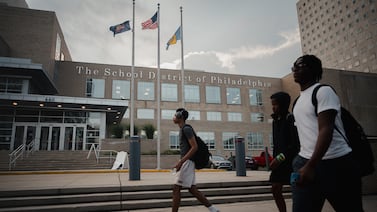
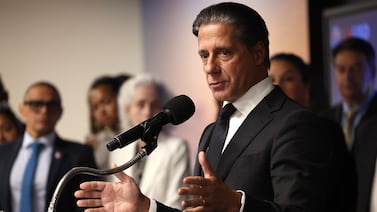
Philadelphia Superintendent Tony Watlington is preparing to defend the district’s school closure and modernization plan at a marathon board meeting Thursday. He’s got his work cut out for him.
The plan would close several schools starting in 2027. Some buildings would be handed to the city, others sold, and many repurposed as district swing space or administrative offices. Officials say the Board of Education won’t vote on the plan Thursday.
Late Wednesday, the district quietly released plans to upgrade some 60 buildings. However, those changes come with a big caveat: Academy at Palumbo, for example, may get new bathrooms “if the district is granted additional government and/or philanthropic funding.” In other words, that funding is far from guaranteed.
Meanwhile, reactions to Philadelphia’s school closure plan underscore the political and policy tightrope district officials are now tiptoeing. The district’s closure plan has been shouted down by community members, teachers, elected officials, public school activists, and union representatives since its introduction. City Council members told district representatives earlier this month that though they don’t get a vote on the plan, they’ll make their feelings known through the budget process.
At community meetings across the city, district officials have been on the receiving end of blistering tirades and passionate pleas from Philadelphians who say the proposed closures and mergers will decimate communities, spur gentrification, crater student achievement, and wipe away any iota of trust and goodwill the district has gathered.
District officials have maintained the plan would be good for Philly. They say it’s necessary to shift students from half-empty, aging buildings into schools more equipped to give them the academic opportunities and staffing support they need. They say there will be a transition year during which district staff will support schools through the challenges of merging and relocating.
Ultimately, students will benefit from these changes, Watlington has said.
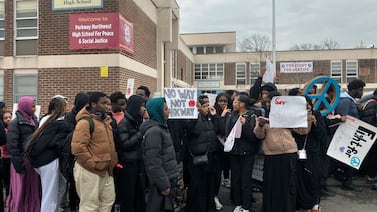
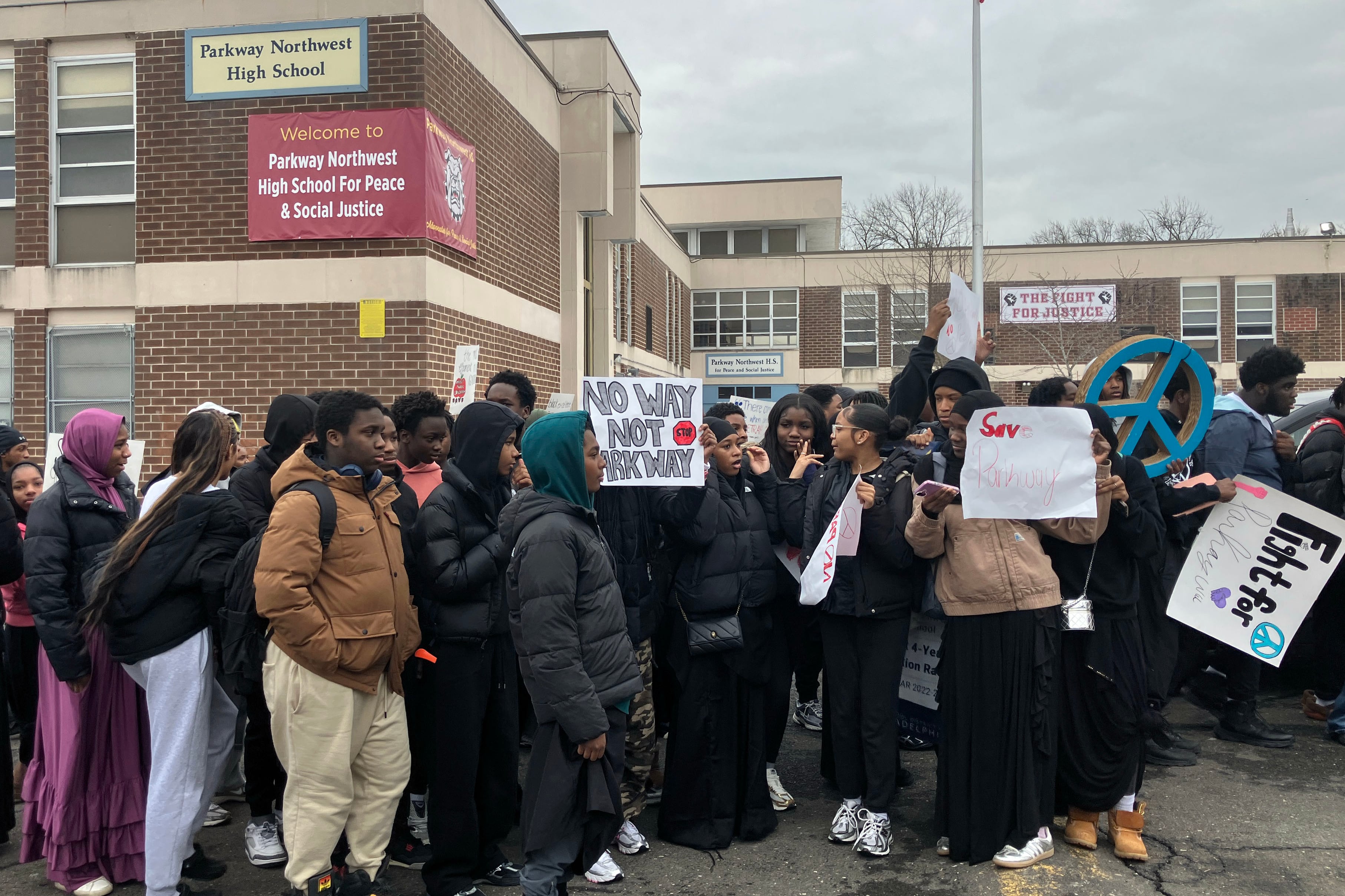
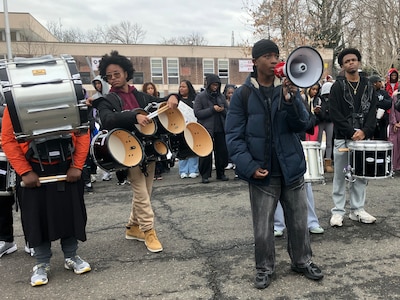
The students of Parkway Northwest High School for Peace and Social Justice, one of the schools targeted for closure, don’t feel the same. They walked out of their classrooms on Wednesday singing “we shall not be moved” and carrying signs that highlight their high graduation rate and their commitment to public service.
State representatives have shown up to community gatherings and protests to voice their support for the schools in their neighborhoods.
“I’m concerned. I’m annoyed because it’s too fast,” State Rep. Darisha Parker said at a recent community meeting at Fitler Academics Plus in Germantown. She told district representatives “if you’re going to disrupt, uproot, and destroy our community then we need to tell you what we ain’t going to do for y’all.”
Parker said the district was being “unfair” and should have convened meetings with local and state representatives to walk them through the plan and give the community time to raise funds before putting closure on the table.
Watlington has said the plan will cost $2.8 billion, using $1 billion in district funds and $1.8 billion in new public and philanthropic dollars.
But getting the political support for that funding will be an uphill battle.
“I know we at war,” Parker said. “They never convened a meeting with the Representatives who’ve gotta pay for these bills.” People at the district “just come up with a number and say, ‘find the money and make it work,’” Parker said.
State Rep. Morgan Cephas said on Instagram that in her nine years as a state representative, “a school has never closed in my district and it will not start now!” She rallied to protect Overbrook Elementary School, another school the district plans to close. At a packed community meeting at Overbrook recently, students sobbed into microphones begging district staff not to close their building.
School staff and the unions that represent them also aren’t sold on the plan.
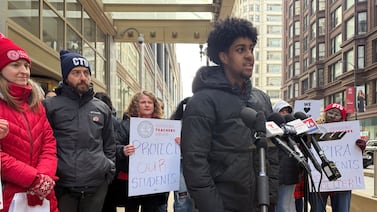
Ahead of tonight’s board meeting, the five unions representing district employees are planning to hold a “save our schools” rally to protest the closures and are demanding to see the data underlying the district’s decisionmaking.
“Our schools need fixing and funding — not closure,” Philadelphia Federation of Teachers Chief of Staff LeShawna Coleman told the City Council earlier this month. The union conducted its own review of the plan and said they are “gravely concerned” that the plan will “provoke distrust and anxiety among beloved, established educators in schools designated for closure.”
But the community opposition to the plan has also revealed something more fundamental about Philadelphia neighborhoods: Residents want the chance to turn things around.
Ala Stanford, a congressional candidate who graduated from Fitler, said at a recent community meeting that if the district was serious about investing in schools, district officials could start by having more of a presence in the communities they serve.
“Come show up so we can show you who we are and what we’re doing,” Stanford said. “Maybe there could be a philanthropic effort where we can donate. The state can give some, y’all can give some. The community gives what they can.”
Parker and others who spoke at Fitler said they want to host a fish fry, raise money, “and do what we can” to keep their school open.
Carly Sitrin is the bureau chief for Chalkbeat Philadelphia. Contact Carly at csitrin@chalkbeat.org.