Gov. Bill Lee asked Memphis school leaders last week to offer an in-person learning option by Feb. 15 but sidestepped questions Wednesday about what would happen if they don’t.
“We’ve only talked about what we can do to support them,” Lee said of his conversations with Shelby County Schools Superintendent Joris Ray. He added that he wants to “keep communications open” with Ray.
The remarks appeared to defuse a possible showdown between the state and its largest school system over the best way to educate Memphis students during the deadly pandemic, which has been hardest on people of color and those from low-income communities. Meanwhile, several local Shelby County health officials said a return to classrooms could be managed safely.
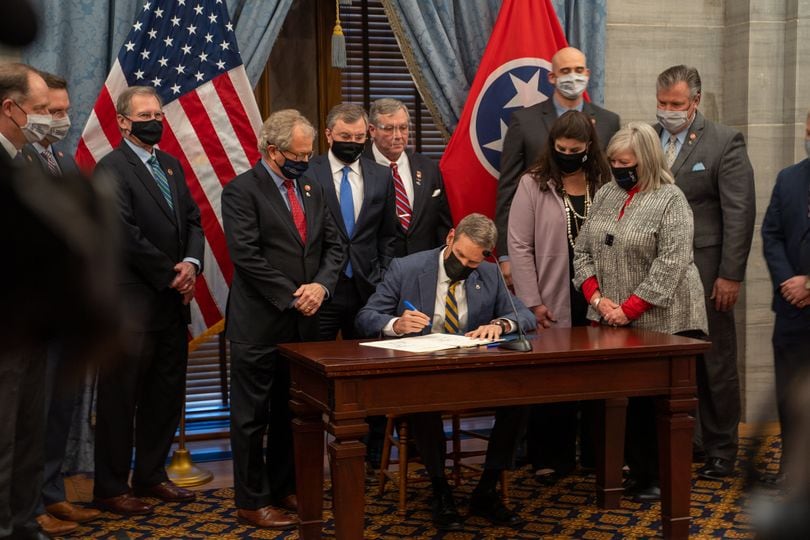
The governor spoke during an exchange with reporters after signing a handful of education bills into law from the recent special legislative session on education.
Ray announced last Friday that he was delaying students’ return to Memphis classrooms for a third time, despite the governor’s call for a mid-February in-person option and a threat from legislators to reduce or cut state funding for districts that don’t comply. The superintendent said state and local officials need to work together first to further reduce the infection rate in his mostly Black community.
Metropolitan Nashville Public Schools, the only other Tennessee district meeting completely virtually, is scheduled to begin returning to in-person learning on Thursday under a transition plan Director Adrienne Battle announced on Monday.
Lee said he was grateful to Battle and hopes the Memphis district “moves in that direction soon.” He said he has offered Ray an unlimited supply of rapid COVID-19 tests and emphasized that the state health department will prioritize teachers for vaccinations after elderly Tennesseans get their shots.
Earlier this week, Tennessee opened vaccinations to people ages 70 to 74 after prioritizing health care workers and Tennesseans over 75. Health Commissioner Dr. Lisa Piercey said the approximately 300,000 people in the new age group could take the rest of February to vaccinate. Teachers are in the next statewide group on the priority list.
“Supply is still very limited,” Piercey said Tuesday of the vaccine, but she expects it to increase each week.
On Wednesday, Tennessee reached a somber milestone: More than 10,000 residents have died during the global pandemic since the first case was reported in the state last March.
The newly signed laws were passed during a four-day special session last month to respond to pandemic-related school disruptions. They will:
- Hold teachers, schools, and districts harmless from the results of state tests scheduled for this spring, as long as at least 80% of each district’s students take the assessment.
- Require school systems to adopt phonics-based reading instruction and revise what aspiring teachers must learn in their college training programs about how to teach reading.
- Authorize new summer school and after-school tutoring programs to begin this summer and fall to help students catch up from learning they may have lost.
The learning recovery law includes a controversial provision that, beginning in 2022-23, will increase the likelihood of schools holding back more students who aren’t considered proficient in reading by the end of third grade. Those students could also retest or take advantage of the new summer and tutoring programs to get promoted to the fourth grade.
Lee called the legislation “historic” as he prepared to sign the bills in a large room on Capitol Hill filled with legislative leaders, school superintendents, and some teachers, as well as his education chief, Penny Schwinn.
Because the governor convened lawmakers early to focus on education, Tennessee took a national lead in addressing pandemic-related learning challenges.
“I think Gov. Lee is right to boast about Tennessee’s aggressive actions here,” said Michael J. Petrilli, president of the Thomas B. Fordham Institute. “As far as I know, the Volunteer State is out front of its peers when it comes to addressing learning loss.”
Patricia Levesque, chief executive officer of ExcelinEd, a school reform group launched in 2008 by former Florida Gov. Jeb Bush, agreed.
“They called a special session and dealt with a variety of issues — reading, assessments, tutoring, summer camps, teacher pay — all within one week,” Levesque said. “This will give their state agency more time to focus on implementation.”