Sign up for Chalkbeat Tennessee’s free newsletter to keep up with statewide education policy and Memphis-Shelby County Schools.
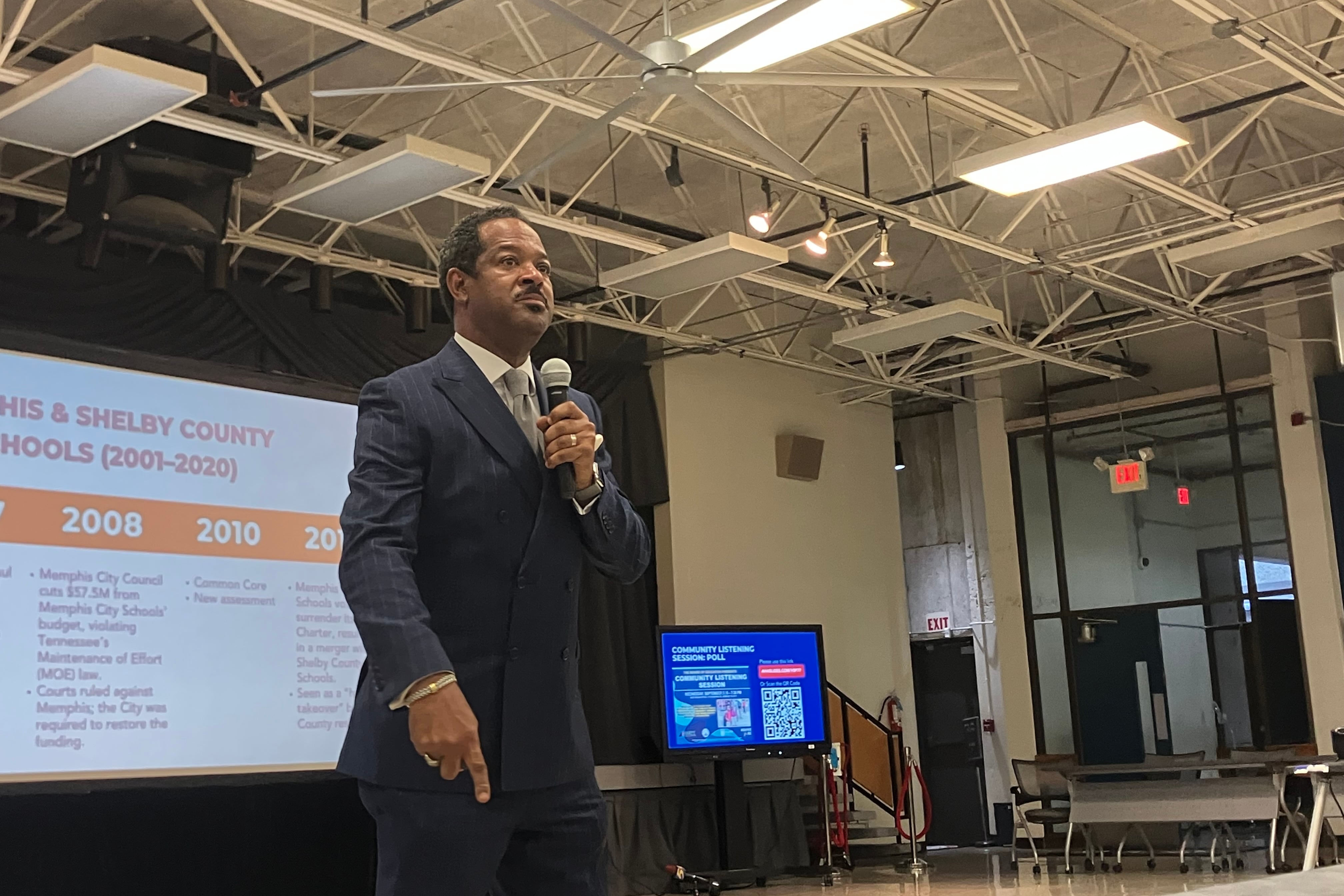
Memphis schools interim leader Roderick Richmond says he wants the permanent superintendent role once his term expires in July to continue his work on “stabilizing the district.”
Richmond has worked in Memphis-Shelby County Schools for over 30 years. In an interview with Chalkbeat Tennessee, he said he knows the school board will make the final decision.
“I have a great relationship with the board, so I would hope that they will consider me long-term,” Richmond said. “But I try to live in the moment and try not to look too far into the future and deal with hypotheticals.”
The MSCS board appointed Richmond as temporary district leader in January, shortly after firing former Superintendent Marie Feagins. Feagins’ ouster sparked criticism from elected officials and some local parents, amplifying pushes for a state takeover of MSCS. All nine board members will also have to run for reelection in 2026, but a lawsuit from the board could be on the horizon.
It’s unclear whether the board will independently appoint a new superintendent or conduct a national search in which Richmond could apply for the job. The last search, which ended with Feagins’ appointment, took over a year due to board infighting and controversies.
In the past 11 months as MSCS leader, Richmond says he’s most proud of his work to rebuild trust in the district.
“I can see where the morale in employees and people is starting to get back to a point of normalcy,” he said. “It’s not like I would want it to be exactly, but I think my team and I have been able to steady the water.”
MSCS board members are conducting an informal review of Richmond’s performance this month, surveying district staff and teachers. They’re expected to review results in early January.
In the meantime, Richmond said he’s focused on finalizing his long-term facilities plan to address growing maintenance needs in school buildings. He’s expected to present a first draft to the school board by Dec. 16.
Richmond said the district has sold around 12 properties since he began his interim term, generating $27 million in revenue, and bought five new buildings to repurpose. He’s also proposed closing four schools by the end of the school year and transferring a fifth to a neighboring school district.
“When I think about what we’ve done in those 11 months, it’s more than we’ve seen in a decade in regards to facilities improvement,” Richmond said. “And those things are only going to get better.”
If he continues as superintendent past July, Richmond said he also hopes to reduce the district’s number of teacher vacancies to fewer than 50 by the start of the next school year. Currently, he said, that number is around 165, a significant reduction from over 300 vacancies last year.
Bri Hatch covers Memphis-Shelby County Schools for Chalkbeat Tennessee. Reach Bri at bhatch@chalkbeat.org.