Sign up for Chalkbeat Tennessee’s free newsletter to keep up with statewide education policy and Memphis-Shelby County Schools.
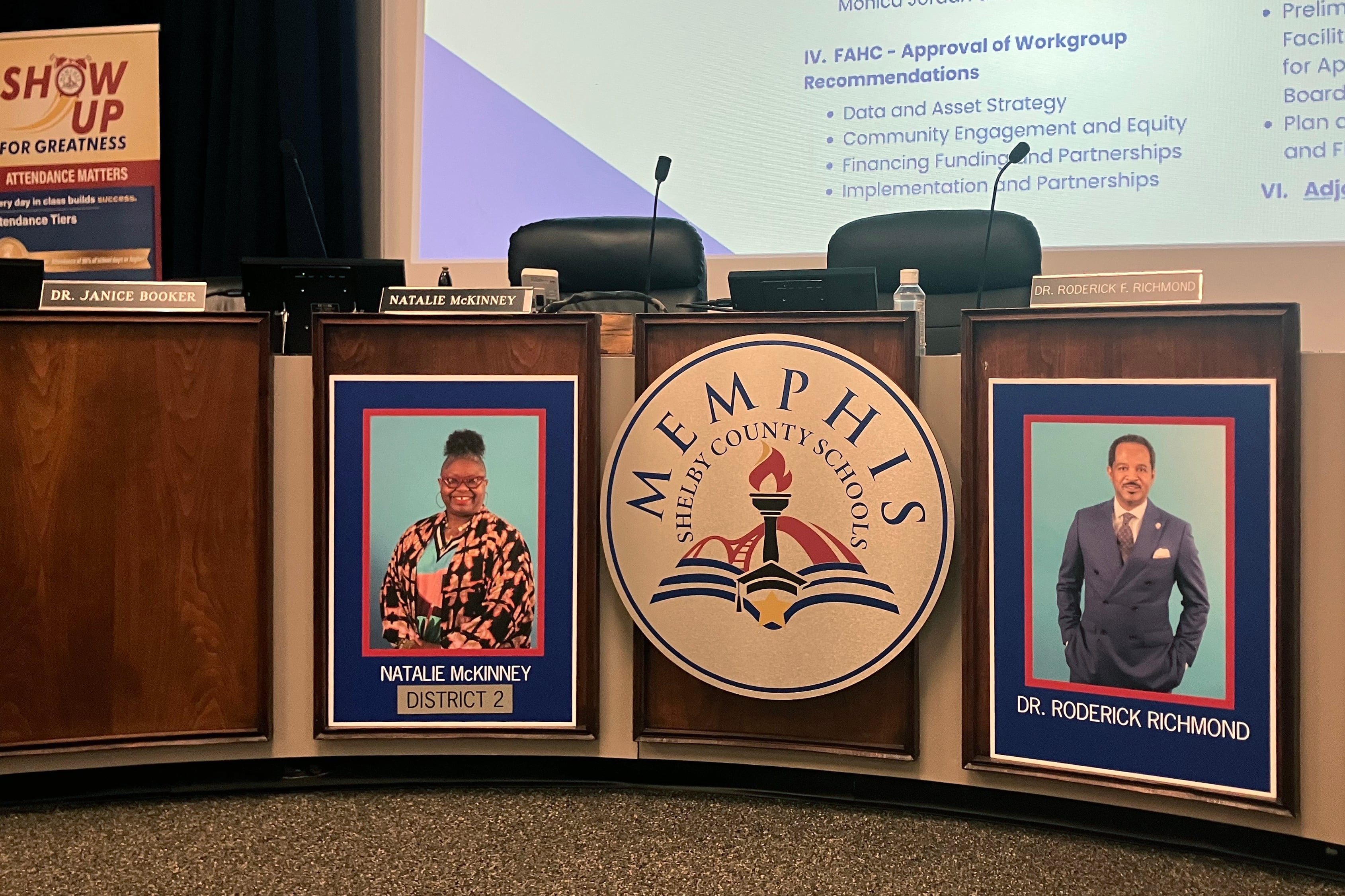
The Memphis-Shelby County School District board is one step closer to filing a lawsuit over the 2026 reset election that would cut short five newly elected members’ terms.
In a meeting Tuesday, board members voted unanimously to hire a lawyer who will “promptly assess the legality and constitutionality” of putting all nine seats on the ballot in May, according to the resolution. Those findings could trigger a future lawsuit, though it’s unclear who it would be against.
Board Chair Natalie McKinney said Tuesday that the election reset is “blatantly, patently and clearly unconstitutional.”
“This is not about individual positions,” she added. “This is about the integrity of this body.”
The Shelby County Commission adopted the realignment of MSCS board elections in September, a move made possible by a state law passed earlier this year. That vote came after months of debate and community pushback, including a veto by Mayor Lee Harris.
County commissioners overrode his veto in late October. Now, candidates can start filing for a seat in any of the nine school board districts on Dec. 22.
Board members say in the resolution that these election changes are an “imminent threat to the lawful function and democratic integrity” of the district. The board has compelling interests, the resolution says, including:
- “Protecting the integrity of its governance structure;
- Upholding the democratic process by preserving the full terms of office as established at the time of elections; and
- Maintaining the decision-making authority vested in the body by law.”
State lawmakers and some Memphis parents have been calling for more accountability since the MSCS board fired former Superintendent Marie Feagins in January. But board members Tuesday said that decision doesn’t give the county or state permission to nullify voters’ choice in 2024.
“Being angry doesn’t mean you take the votes away from the people who put us here,” Towanna Murphy said.
Murphy is one of five board members who would have their terms abridged by the 2026 election, along with McKinney, Stephanie Love, Sable Otey, and Tamarques Porter.
Board members Michelle McKissack and Amber Huett-Garcia, who opposed the Feagins ouster, were not present for Tuesday’s vote. Keith Williams was also not present.
The 2026 board election is already set up to be different than in years past, with MSCS candidates running in partisan primaries for the first time in May.
Plus, Republican legislators say they’re once again sponsoring bills to establish a state-run “board of managers” to oversee the district. And Rep. Torrey Harris, a Memphis Democrat, plans to introduce legislation that would allow Tennessee residents to recall local elected officials, including school board members.
Bri Hatch covers Memphis-Shelby County Schools for Chalkbeat Tennessee. Reach Bri at bhatch@chalkbeat.org.