Sign up for Chalkbeat Tennessee’s free newsletter to keep up with statewide education policy and Memphis-Shelby County Schools.
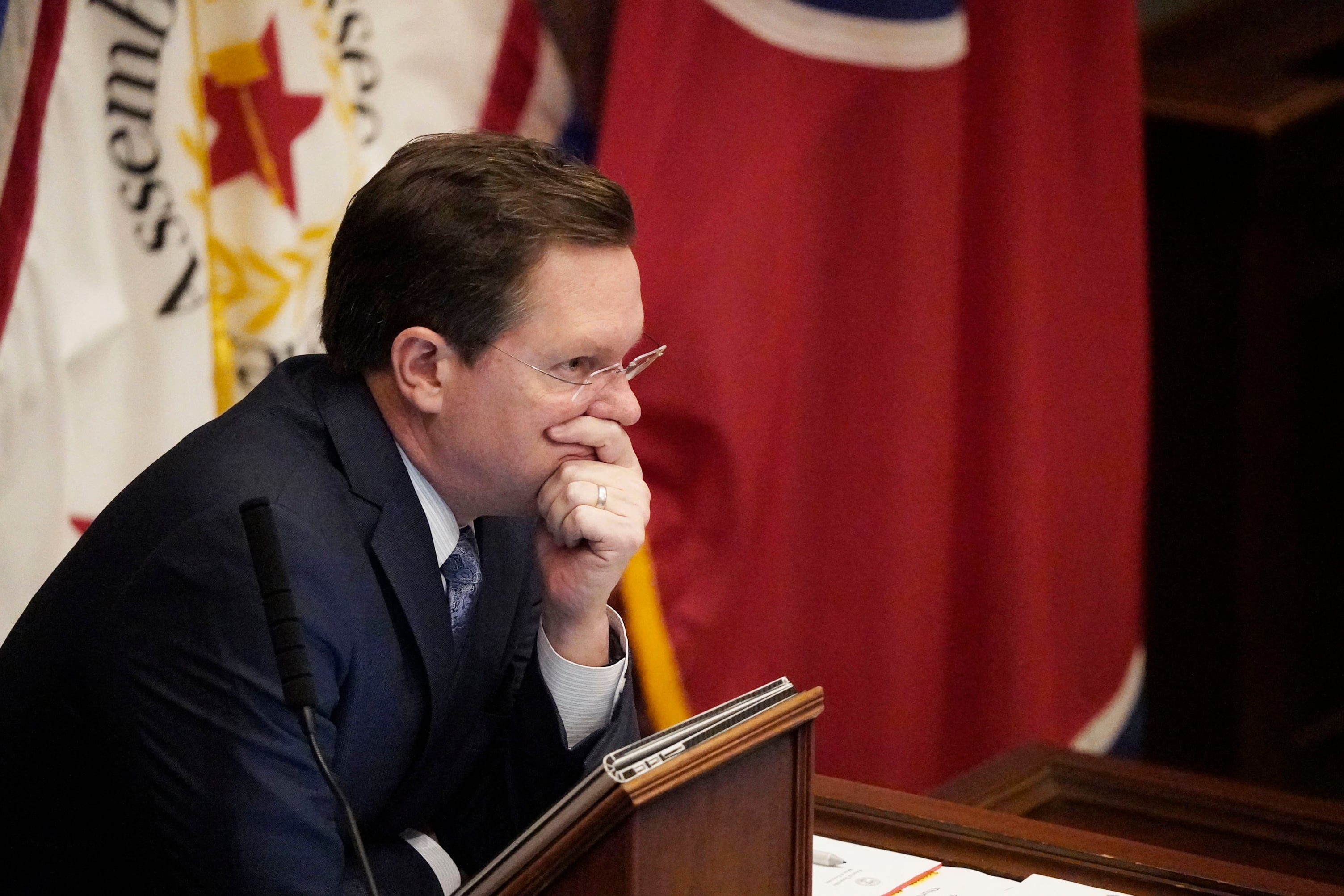
A top Tennessee Republican lawmaker wants to drop the enrollment cap and income limit in the state’s Education Savings Account voucher program.
House Speaker Cameron Sexton’s proposal could significantly expand voucher access to families in three of Tennessee’s largest counties.
“Whether you’re making $30,000 or $140,000, you should have the opportunity” for school choice, Sexton said of removing what he called “arbitrary” income caps in the ESA program.
Sexton has already said he wants to at least double the capacity of the Education Freedom Scholarships program, which launched this year with 20,000 seats.
Dropping the enrollment cap on the ESA program — launched in 2022 after an extended court battle in Davidson, Shelby, and Hamilton counties — alongside EFS expansion could significantly expand Tennessee’s taxpayer-funded voucher offerings in two programs that have widely varying requirements and accountability measures.
The ESA program is limited to 12,500 enrollees under state law this school year, with a maximum cap of 15,000 set to kick in next year. But the program has never been fully utilized, with under 5,000 students enrolled in the current school year.
State Democrats, historically opposed to school voucher programs like the ESA and EFS, sharply criticized Sexton’s proposal.
“We cannot afford a more expensive voucher program that drains resources directly from classrooms that are stretched to the breaking point,” Senate Minority Leader Raumesh Akbari, a Memphis Democrat, said. “Removing income restrictions from the 2019 voucher law would divert even more taxpayer dollars away from neighborhood schools to subsidize tuition at private schools.”
It’s not clear if the speaker’s plan will gain traction with other Republicans amid what is expected to be a tight budget year. Majority Leader Jack Johnson, a Republican from Franklin, was noncommittal on the proposal, though he said he supported “empowering parents with more freedom and flexibility” while advancing “responsible, sustainable school choice policies.”
The ESA program was first opened in Shelby and Davidson counties and later grew to Hamilton County. It currently provides just under $9,800 to students this year from lower income families. This income cap is defined as 200% or less of the federal income eligibility to receive free school lunch, which would be $83,590 this year for a family of four. Around 76% of families in ESA-eligible counties are already eligible for the program, according to an EdChoice analysis.
In a Chalkbeat Tennessee interview this month, Sexton argued this income cap is arbitrary and could penalize families working overtime or two jobs to bring in more family income.
“I see it as their tax money, and they should have the opportunity to put it where they want to go, whether they want to send their kid to a public school or a public charter school or to a private school,” he said.
Increased enrollment in the education savings voucher program could lead to dueling voucher systems within Tennessee unless lawmakers realign enrollment and accountability measures between the two.
First-time ESA applicants must either be entering kindergarten or be moving from a public school to a private school. Students already enrolled at private schools aren’t eligible for the program, unlike the new EFS program, which isn’t tracking how many vouchers are going to previously enrolled private school students.
ESA participants are also required to take the Tennessee Comprehensive Assessment Program tests for math and English language arts, aligning them with peers in the public school system. ESA students showed a slight gain in math and a slight loss in ELA proficiency per state data released this fall, though participating students still lag significantly behind statewide averages of public school students.
In Shelby County, math proficiency was slightly higher in ESA students compared to the overall public student population.
Republican voucher supporters balked at similar test requirements for the broader statewide EFS program, in part due to pushback from private school operators who did not want to change their testing standards.
EFS opponents have argued that without cohesive testing requirements, it will be impossible to measure achievement and student progress for accountability measures.
Sexton has not filed legislation to codify his proposal. Lawmakers return to the General Assembly on Jan. 12 for the 2026 session.
Melissa Brown is the bureau chief for Chalkbeat Tennessee. Contact Melissa at mbrown@chalkbeat.org.