Sign up for Chalkbeat Tennessee’s free newsletter to keep up with statewide education policy and Memphis-Shelby County Schools.
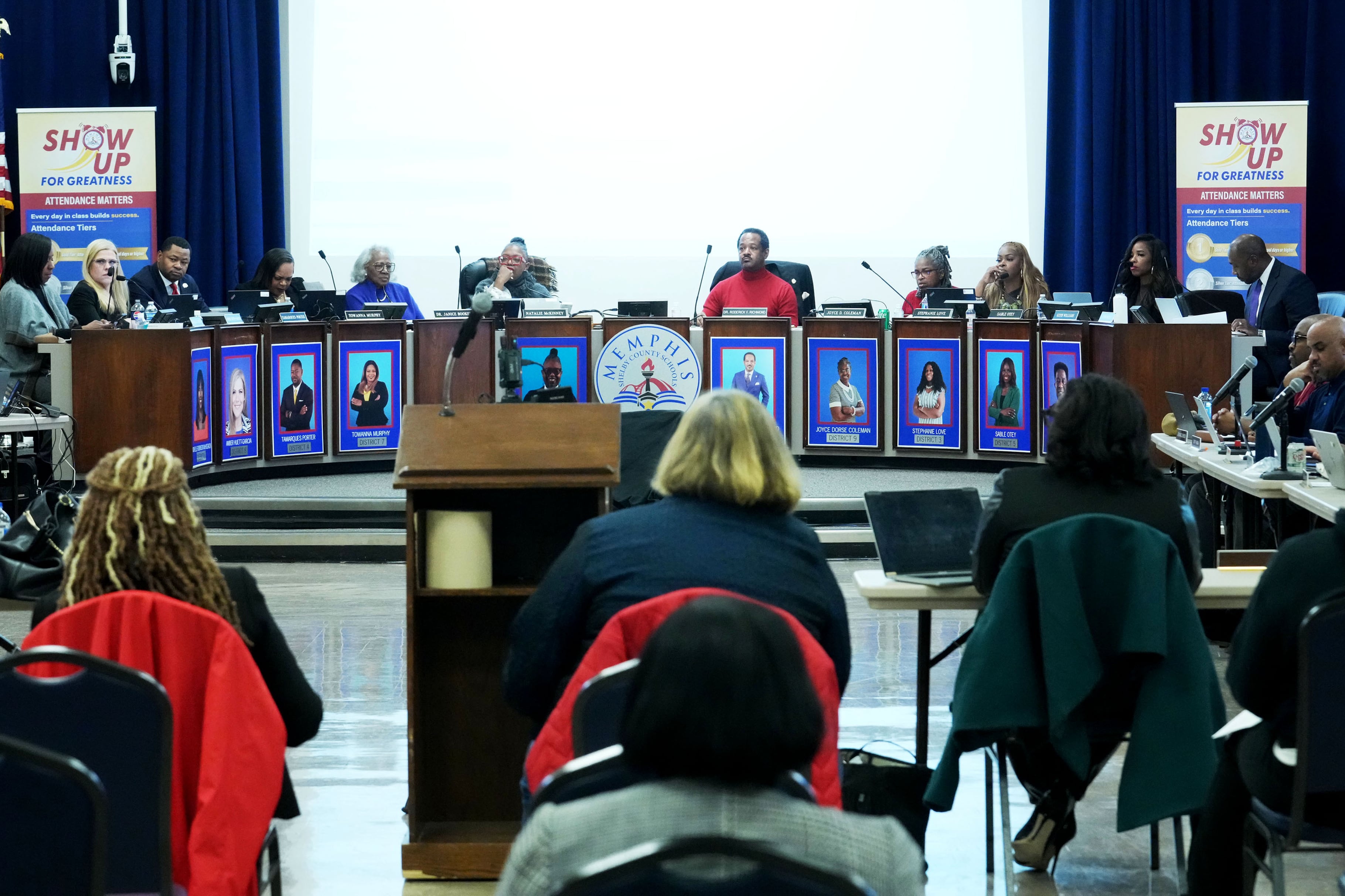
Memphis-Shelby County Schools board members are suing the Shelby County Election Commission over 2026 election changes that would cut short more than half of the board’s terms.
Those five members — chair Natalie McKinney, Stephanie Love, Towanna Murphy, Tamarques Porter, and Sable Otey — filed the lawsuit with Shelby County Chancery Court on Dec. 15. The district board as a whole is also listed as a plaintiff.
The lawsuit argues that abridging board members’ terms is unconstitutional and against state code. It also calls the changes “legislative punishment masquerading as election reform.” All but one of the affected board members — Porter — voted to oust former Superintendent Marie Feagins in January.
“Their terms have been legislatively shortened by two years, not because of any finding of misconduct, incompetence, or malfeasance, but solely because they exercised their statutory authority to terminate an employee for documented cause,” the lawsuit says.
MSCS board members are also seeking a preliminary injunction to stop the commission from holding the reset election, which is set to kick off with partisan primaries in May.
In an emailed statement Tuesday, Administrator of Elections Linda Phillips said she is “aware of and disappointed” that the school board is suing the Shelby County Election Commission.
“The Shelby County Election Commission works to ensure elections are properly administered, but does not decide which elections are placed on the ballot,” Phillips said.
But the board’s lawsuit alleges the election commission bears responsibility for placing all nine school board seats on the 2026 ballot, not the county commission that voted to reset election cycles under a new state law.
The state law allows local governing bodies to make the changes, but does not mandate it.
And after months of debating whether to restart the cycle in 2026 or 2030, the Shelby County Commission approved a final resolution in September that does not name a specific start year but does direct the changes to begin in the next election cycle.
Commissioner Michael Whaley, who sponsored the resolution, said then that he hoped vague language would prevent the commission from being sued.
Supporters of the reset argued aligning all board elections with other county elections could reduce administrative costs and boost voter turnout, which has historically been low for school board elections. But the state law and commission decision came amid ongoing calls for greater accountability for the MSCS board following the ouster of former Superintendent Marie Feagins.
MSCS officials and affected board members did not respond to requests for comment. But this fall, board members argued the 2026 reset was a retaliatory effort for the Feagins decision that essentially nullified local voters’ decisions. Monday’s lawsuit alleges the ouster was “no doubt” a targeted motivation for lawmakers.
Board members unanimously voted in November to hire a lawyer to determine the legality and constitutionality of putting all nine seats on the ballot in 2026. The lawsuit was filed just a week before school board candidates can formally pull petitions for 2026 candidacy ahead of the May party primaries.
This story has been updated to include information from the lawsuit.
Bri Hatch covers Memphis-Shelby County Schools for Chalkbeat Tennessee. Reach Bri at bhatch@chalkbeat.org.