As Chicago opened its high school buildings Monday for the first time in a year, schools chief Janice Jackson made clear that her goal is to open all schools to all students five days a week.
Jackson didn’t say when that might be possible, but many parents already are looking to the fall.
“I have been fighting to get our kids back since the beginning of the school year,” Jackson said at a press conference Monday heralding the return of some in-person learning for Chicago’s high school students. “My goal is to have every kid back in school full time.”
With reopening plans in motion at many large school districts across the country, parents have now started to wonder: How long until schools reopen five days a week?
A group of Latino parents in Chicago have begun to organize around the issue in hopes of pressuring the district to commit to a full-time option this fall. Until now, they say they haven’t felt represented in the reopening debate.
“Four months from now, we expect to have full school, five days a week in person,” said Nolberto Casas, parent of a kindergarten student and co-organizer of the new Hispanic Community Collaborative, which wrote a letter to city and union officials last week calling reopening conversations “toxic” and asking for parent input in decision-making. Four months may seem like a long time away, he said, but pre-kindergarten registration starts this week and families who’ve spent a year struggling to manage child care and work are long past due for relief.
Vanessa Chavez said the return to in-person learning made a marked difference in her sixth grader, while her older daughter, a college freshman, continues to struggle remotely.
“Obviously we want to follow the science and (heed the advice of) public officials and do what’s right and safe, but if the science is pointing one way, the district needs to give parents the ability to attend school full time,” she said, emphasizing that families who want the option to continue remote learning should be accommodated.
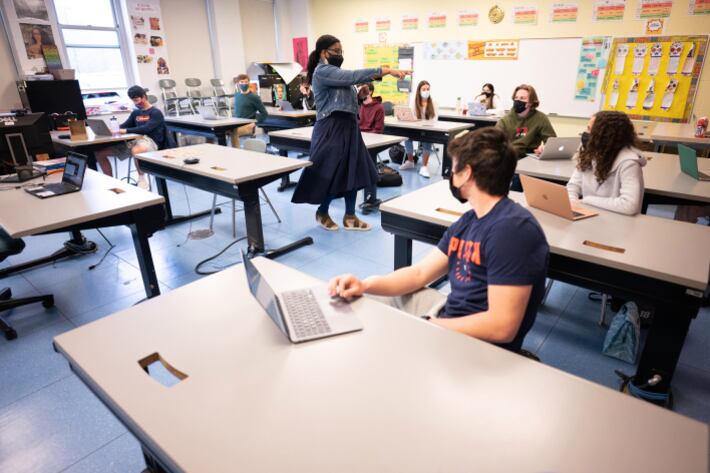
Nearly 26,000 Chicago students were expected to return to high school buildings for the first time in more than a year Monday, but what that experience looks like on the ground will vary school by school.
Walter Payton, a selective-enrollment high school where Monday’s press conference was held, had one of the highest numbers of students returning to in-person learning. Students who elected to return to classrooms can attend Walter Payton at most two days a week. At some smaller schools, students have the option of returning up to four days a week, while some of the city’s largest high schools can only offer in-person learning one day a week, according to the agreement district officials reached with the teachers union.
Although the district has not met its goal of full-time in-person learning, it’s important to celebrate the victories of the partial reopening, Jackson said.
“We are going to celebrate today — we got our students back in school,” she said.