As this school year winds down, Illinois superintendents are looking ahead and trying to make crucial budget decisions as they prepare staff and students to head back to classrooms in late summer and early fall.
That requires clear guidance for the 2021-22 academic year from both the Illinois State Board of Education and the state’s Department of Public Health, several district leaders told the board Wednesday.
At a five-hour-long meeting of the state board, superintendents from several school districts across Illinois pressed for updated guidelines on everything from contact tracing and social distancing to close contact protocols and lunch service.
Adrian Talley, superintendent of Indian Prairie School District 204 — the fourth largest school district in the state — said contract tracing requirements should be changed to fit current public health guidelines.
During the spring, the state allowed schools to place students three feet apart instead of six feet as coronavirus cases decreased. That meant more students could return to school but it also required sending home “hundreds of our children” when a COVID case was suspected in their classrooms, said Talley, whose district in Aurora, Illinois serves more than 26,000 students.
“If it was deemed appropriate to reduce the social distance from six feet to three feet,” Tally said, “then it should be appropriate to change contact tracing.”
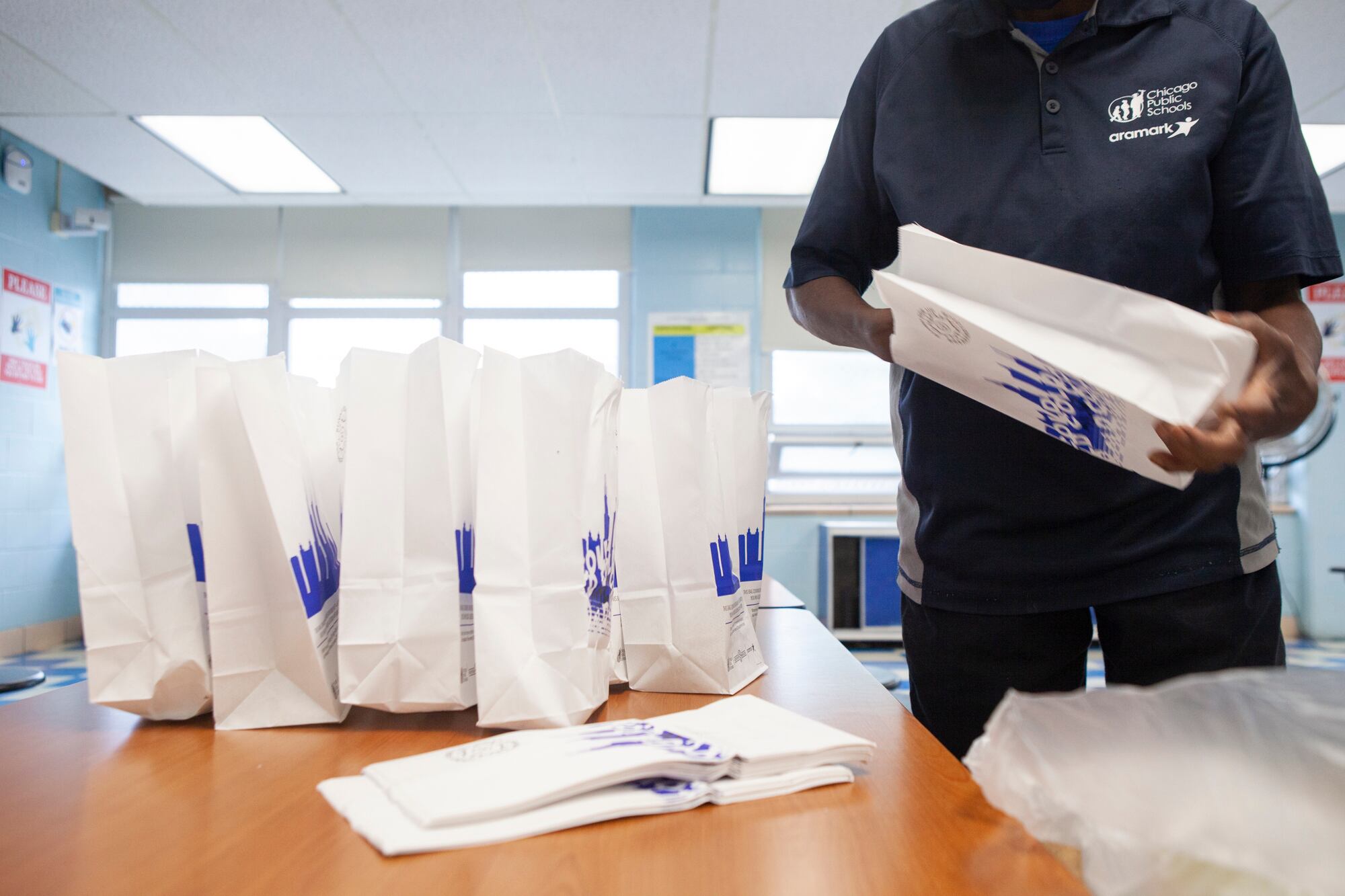
Talley also described his struggles with planning for lunch. This school year, his district paid $200,000 to rent tents in which to serve lunch for elementary school students. However, space constraints meant they could not safely serve lunch to high school or middle school students.
In the coming year, Talley plans to serve lunch from 9 a.m. to 1:30 p.m. for younger students. But he might need to find new spaces for older students to eat, Talley said. “We may have to repurpose the use of our gyms, because they are bigger than our cafeterias.”
Tents will not be an option for Talley’s school district this year, he said, because they do not provide heat. Instead, the district is looking to purchase 3,000 chairs to make seating available at schools.
Tammy Prentiss, superintendent of Hinsdale High School District 86, which serves about 4,000 students 20 miles west of Chicago, also said social distancing rules should match close contact protocols so schools don’t have to send home students who are in a classroom with a child who might test positive for COVID-19.
As of now, Prentiss says the only way to limit the number of students who will need to quarantine is by testing unvaccinated students and staff weekly, costing an initial payment of $5,000 and an additional $10 per student and staff member for each test.
State schools chief Carmen Ayala said she is working closely with the state department of health to create guidance as quickly as possible.
Last school year, superintendents across the state had to scramble to put together learning plans, buy personal protective equipment and other items, and negotiate with teachers unions to safely reopen classrooms after Ayala and Gov. J.B. Pritzker announced school could reopen in late June when many school districts were closed for the summer.
Districts partially opened classrooms to young learners at the beginning of the 2020-21 school year but went back to remote learning as coronavirus cases surged statewide in the fall. In the spring, districts brought more students into classrooms, including older students, as the state pushed to reopen schools and districts worked to get teachers vaccinated.