Did you know search engines like Google are changing the way you see news? Keep Chalkbeat’s valuable education coverage at the top of your feeds by clicking here and checking the box next to our name.
The Chicago Board of Education on Thursday celebrated a new contract with one union while being accused by another of not doing enough to secure additional state funding.
After more than a year of negotiations, the board voted unanimously to approve a new four-year, $64.8 million contract with Unite Here Local 1, the union that represents more than 1,800 Chicago Public Schools lunchroom workers.
But before the board adopted the new contract, the Chicago Teachers Union accused CPS of a lack of advocacy for more funding as the district potentially faces mid-year budget cuts. Those cuts could come after the school board passed a $10 billion budget in July that relies on getting $150 million more from the state — an assumption made at the urging of CTU to help reverse layoffs and against the advice of CPS leaders.
Both issues highlight the costs ahead for CPS and its new, fully elected school board that will take office in January. Thursday’s meeting was the board’s last one scheduled before Election Day; 17 of 21 members are running.
Unite Here’s contract will raise minimum hourly pay from about $17 to $21 an hour for lunchroom workers and include more raises based on years of service, according to CPS and union officials.
The new contract, which is retroactive to June 2025, will also provide Unite Here members with a 4% cost-of-living raise next July, followed by a 2.5% increase in 2028, a district spokesperson said in a statement. The district’s current budget, which runs through June 30, 2027, accounts for the cost of the contract this year, a district spokesperson said.
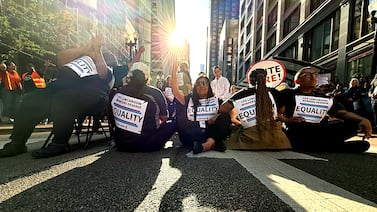
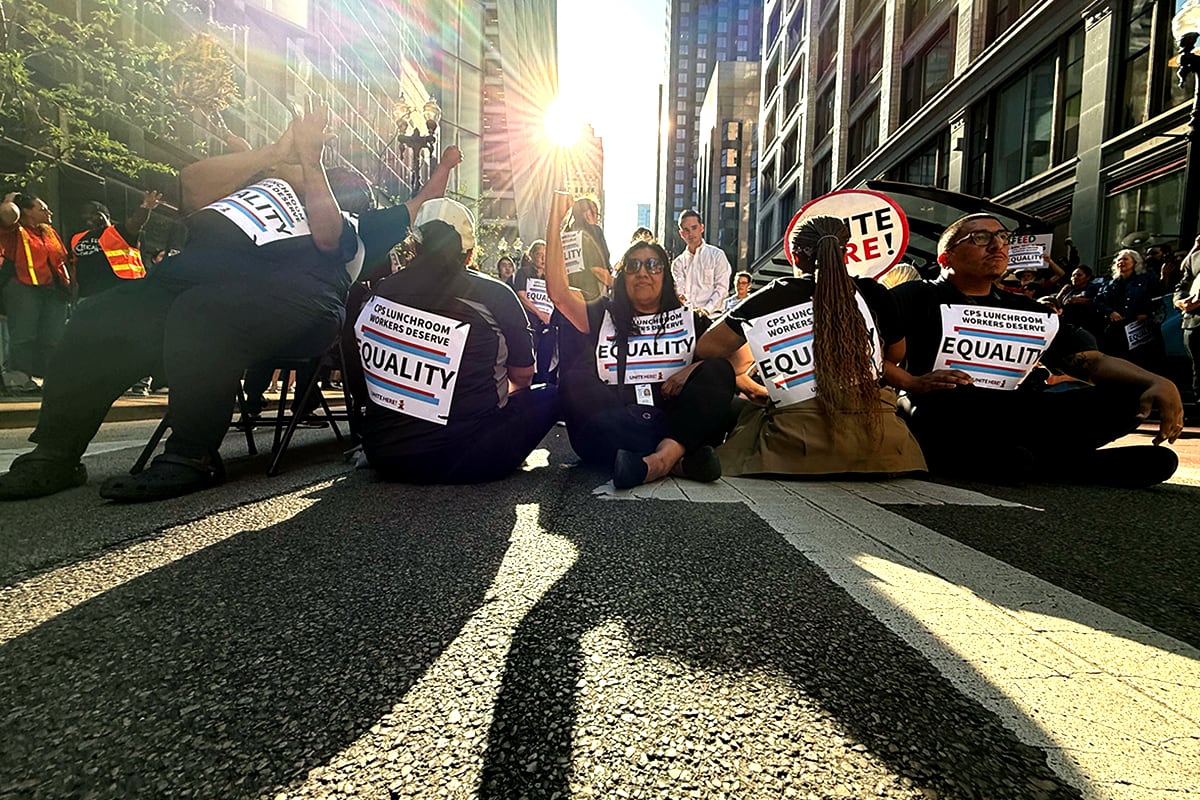
CPS and Unite Here reached a tentative deal on Oct. 1, two months after the union asked to start the fact-finding process, which is one of the last steps before a possible strike. The union held rallies and once blocked part of Madison Avenue outside of board headquarters to raise public pressure over its contract fight.
Letia Downing Lowe, who was on the union’s bargaining team, said the wage increases are a significant win and a sign of respect for her colleagues, even if the union’s original goal for minimum hourly pay was $24.
Irma Garcia, a cook who has worked in CPS lunch rooms for 24 years, said her current pay is so low that she volunteers at food pantries in order to take home donations and has struggled to pay her bills. She’ll now see her pay rise from $22 to $29 an hour.
“When I saw that we won this contract, I cried,” Garcia said while fighting back tears.
King applauded the agreement in her remarks to the board, saying that these “employees arrive early, prepare and serve nutritious meals, keep our kitchens running, and make sure our students have the very much needed fuel to learn.”
CTU accuses CPS of no movement on more state funding
Earlier in the meeting and at a rally before the meeting started, the Chicago Teachers Union blasted CPS for not doing enough to push for more state funding ahead of the legislature’s veto session, which begins in November.
Union officials said CPS denied their request to let members attend lobby days in Springfield to advocate for more state funding. The union had requested representatives from 50 to 70 school communities “most impacted by layoffs” to be allowed to lobby in Springfield, according to a CTU letter to the district that described “an imperative to band together” to push for more funding.
CPS did not respond to questions about its denial of the union’s request.
Gov. JB Pritzker has not signaled support for boosting state education funding for CPS or other districts beyond the $350 million increase state lawmakers already approved in May for this school year. Despite that increase, CPS is funded at 70% of what the state considers as adequately funded. The union has also pointed to state surplus funding and a major settlement with tech company Meta as possible sources of revenue, though Pritzker has said one-time revenue sources can’t fund districts annually.
In a statement, CPS spokesperson Mary Fergus said King will testify at an upcoming state budget hearing to push for more funding for all Illinois schools, including CPS. CPS is “planning to develop advocacy efforts” for the upcoming veto session on Nov. 17 and Dec. 1, Fergus said.
The district has not outlined where it might make cuts if they’re necessary. As of mid-September CPS had rehired about 350 of the roughly 1,000 employees it said were eligible to return as a result of the board’s budget mandate.
Earlier in the meeting, King also announced she’s creating a financial working group that she hopes will “break the cycle of recurring budget crises and establish a sustainable financial future.” The group will include representatives from local and state government, as well as civic and labor groups, she said.
“CPS Superintendent/CEO Dr. Macquline King and her team consistently engages with state legislators in Springfield, emphasizing the need for adequate funding to support District schools,” Fergus said.
Reema Amin is a reporter covering Chicago Public Schools. Contact Reema at ramin@chalkbeat.org.