Did you know search engines like Google are changing the way you see news? Keep Chalkbeat’s valuable education coverage at the top of your feeds by clicking here and checking the box next to our name.
Extra pay for Chicago Public Schools employees nearly tripled during the pandemic, reaching $150 million in 2024, according to a new internal watchdog report that raises concerns about how the district monitors the spending.
The district’s Office of the Inspector General first flagged a surge in extended day pay for educators and overtime pay for support staff in its fiscal year 2022 annual report, noting it was likely fueled by federal COVID aid. Spending dipped to $97 million in fiscal year 2025, the most recent for which data is available, but remained well above pre-pandemic levels even after COVID relief expired. The watchdog says CPS has been slow to adopt its recommendations to better track spending and impose overtime limits similar to those in other large urban districts.
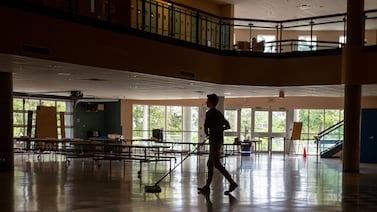
The report zeroes in on spending for custodian overtime, noting that of the 10 CPS employees who earned the most in extra pay in 2025, nine were custodians. One custodian worked 77 days in a row, including weekends. Another racked up almost 100 hours of overtime in a two-week period, earning $7,000 along with $4,400 in base pay.
Some employees earned “exorbitant, potentially questionable amounts,” the report said. During a four-year period ending in 2025, six staffers each made more than $200,000 in extra pay on top of their salaries, including one custodian who made $275,000. Another 21 employees earned more than $150,000, and 147 made $100,000 or more. Sixteen staffers more than doubled their base salaries through extra pay in fiscal year 2025.
Overall, the pandemic uptick in spending is not entirely surprising: The district poured more dollars into afterschool and other enrichment programs in a bid to address COVID learning loss, paying teachers and others to staff these programs. Even before CPS cut custodial positions last year amid intensifying budgetary pressures, school leaders had decried relatively lean staffing and persistent cleanliness issues.
But the report released Monday said the watchdog flagged notable instances of overtime spending, including suspected cases of fraud its team is still investigating. With little oversight or formal tracking of extra pay, the watchdog said it is hard to determine what portion is justified as CPS grapples with growing deficits.
“With Covid relief funding over, and the district facing difficult budget decisions, controlling and reducing extra pay spending is crucial,” the report said.
CPS has made some changes this year to address the watchdog’s findings and is considering more, the report said. The district imposed a cap on extended day pay for teachers, though it is still reviewing policies on support staff overtime, according to the report.
The district did not respond to a request for comment.
Extra pay and calls for more scrutiny of that spending have been a focus of the inspector general’s office for years. In one high-profile case, the watchdog found a CPS principal engaged in a scheme with employees to collect and divvy up extra pay, leading to a federal conviction. The principal died by suicide on the day of her sentencing last year.
There are three main kinds of CPS extra pay: extended day pay for Chicago Teachers Union members (44%), overtime for support staff (38%), and stipends, or lump-sum payments for coaching and other work (18%).
In 2022, the watchdog strongly urged the district to set overtime spending limits for schools and individual employees that would trigger extra scrutiny, warning of an unchecked rise in that spending.
The report notes that a surge in extra pay raises concerns about unsustainable workloads, burnout, and staff turnover. In some cases, the district might save by hiring additional employees instead of paying excessive overtime at 1.5 times the regular rate. In others, runaway spending could signal waste or fraud.
“We are trying to encourage CPS to take a more deliberate, intentional role on this issue,” said CPS Inspector General Phil Wagenknacht. “That means that when managers identify extra work that needs to be done, they must approve it beforehand, and it means that the district should be tracking the spending in an effort to ensure these expenditures are financially prudent.”
Only about 25% of overtime requests in fiscal year 2025 were logged as approved by supervisors, the report said, though others likely received verbal approval.
The watchdog’s data reflects only overtime by custodians employed directly by CPS, rather than by private contractors. In fiscal year 2025, the district cut 160 full-time private custodial positions, leaving almost 1,200 private custodians alongside 1,225 district-employed custodians. Last year, the district brought all custodial services in house as it further slashed positions.
The watchdog said the district still hasn’t adopted some of what it considers key recommendations, including issuing automatic warnings when overtime skyrockets. But the report says more changes might be on the way: CPS is modernizing and integrating its technology system through an initiative called Program BRIDGE, which could make it easier to track and audit extra pay spending districtwide.
Mila Koumpilova is Chalkbeat Chicago’s senior reporter covering Chicago Public Schools. Contact Mila at mkoumpilova@chalkbeat.org.