A Betsy DeVos-backed proposal to help Michigan families use taxpayer funds to cover private school tuition and other education-related expenses appears finished after organizers withdrew petitions they’d submitted to the Secretary of State.
The proposal — which critics have likened to private school vouchers — doesn’t have a clear political path after Democrats won full control of the state Legislature in November.
“This is an acknowledgement that it failed,” said Joshua Cowen, a professor of education policy at Michigan State University who has been critical of the proposal and of vouchers.
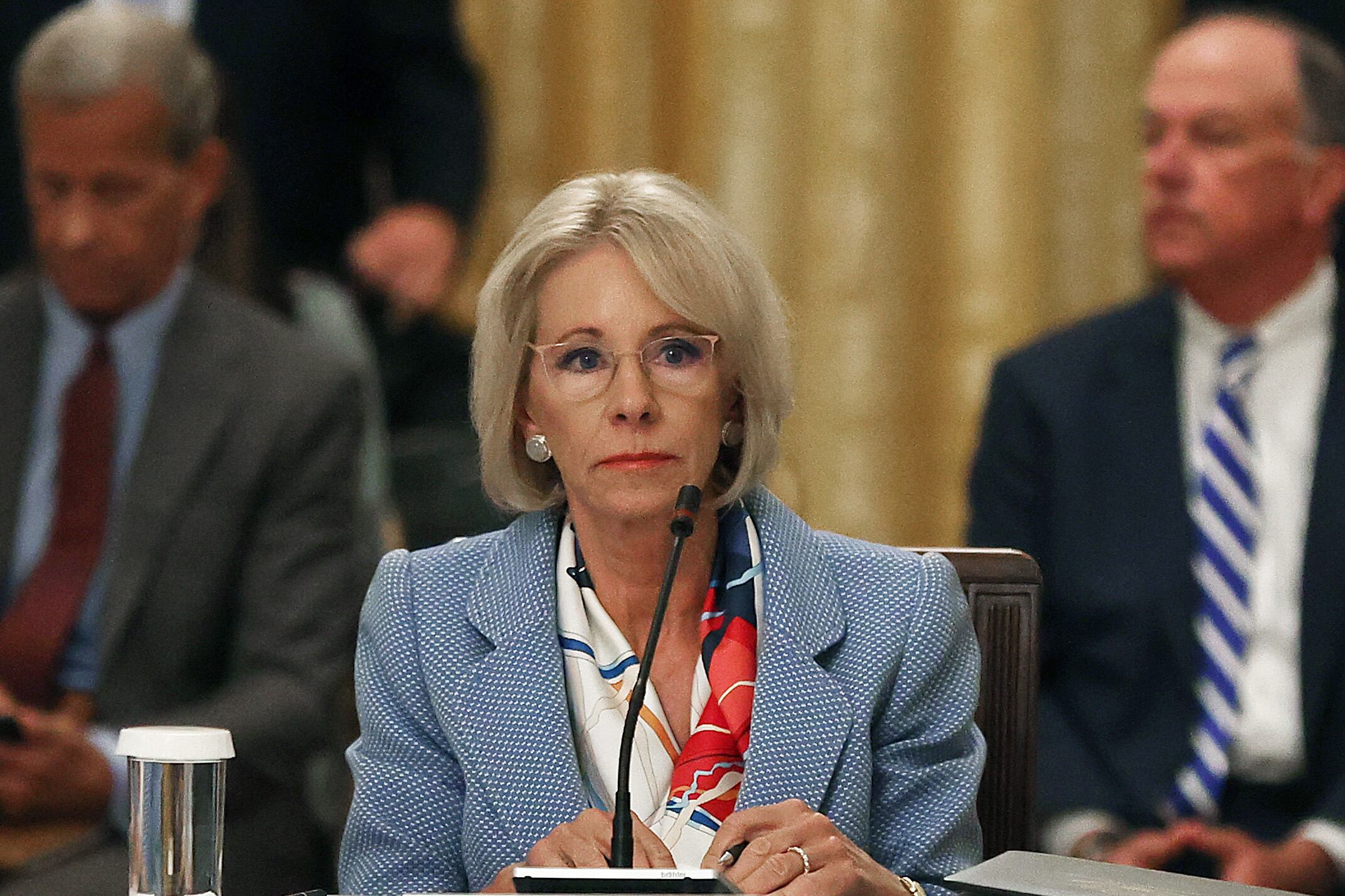
Let MI Kids Learn, the group behind the proposal, gathered hundreds of thousands of signatures and spent $11.4 million on its campaign, most of which was donated by former U.S. Secretary Betsy DeVos and her family.
Proposal would have created a tax credit
The initiative was part of a decades-long effort by the DeVos family to direct taxpayer dollars to private schools, in the face of a provision in the Michigan Constitution that broadly bars using public funds for private schools.
Voters overwhelmingly rejected a 2000 ballot proposal funded by DeVos to create a voucher system that allowed students to use public school funds for private school tuition.
Let MI Kids Learn took a different tack. It would have provided tax credits to individual taxpayers who funded scholarships for private schools or other educational services, such as tutoring. Each dollar contributed to the scholarship accounts would be credited back to donors on their state tax bill.
The proposal would have cost the state an estimated $500 million in the first year, of which roughly $50 million would come directly out of the state school aid fund.
Supporters of the proposal said kids would benefit from being enrolled in private school.
“Michigan students already suffered through two years of unnecessary COVID learning disruption, and as the most recent data show, the results have been devastating,” said Fred Wszolek, spokesman for Let MI Kids Learn.
Recent studies of voucher programs in other states show broadly negative academic results, especially in math. They also show that in many cases, students who benefit from the programs were already enrolled in private school. Some older studies tended to show neutral or modest positive effects of vouchers on academic performance.
Campaign hit snags on the way to November
The November election results weren’t the only bump in the road for Let MI Kids Learn. In May, signature gatherers for the campaign were found to be misleading Detroiters about the proposal. In June 2022, the campaign missed a deadline to submit signatures to the state, precluding the proposal from going before the Republican-controlled Legislature before new lawmakers took power in January.
While ballot initiatives generally go to a vote by the public in a general election, Let MI Kids Learn had aimed to have its proposal enacted directly by the Legislature through a provision in the Michigan Constitution that allows a ballot proposal to become law without the governor’s signature. Gov. Gretchen Whitmer, a Democrat, vetoed a similar proposal in 2021.
But after the Let MI Kids Learn campaign missed the June signature filing deadline and Democrats won control of both chambers of the Legislature, the proposal’s prospects dimmed.
“With the new Legislature in place, I’m sure they felt it was going to be an undoable task to move things forward,” said Pamela Pugh, a Democrat on the State Board of Education.
In withdrawing the petitions, organizers of the proposal apparently decided against putting the issue to a statewide vote.
“If they thought voters were going to vote for this, they would have gone that route immediately,” Cowen said.
Wszolek, the Let MI Kids Learn spokesman, said “we’ll continue to join with the hundreds of thousands of Michiganders who signed these petitions to advocate for immediate help for students across the state.”
Koby Levin is a reporter for Chalkbeat Detroit covering K-12 schools and early childhood education. Contact Koby at klevin@chalkbeat.org.
Tracie Mauriello covers state education policy for Chalkbeat Detroit and Bridge Michigan. Reach her at tmauriello@chalkbeat.org.