Timeline: How 2016 was a critical year for the future of Detroit schools

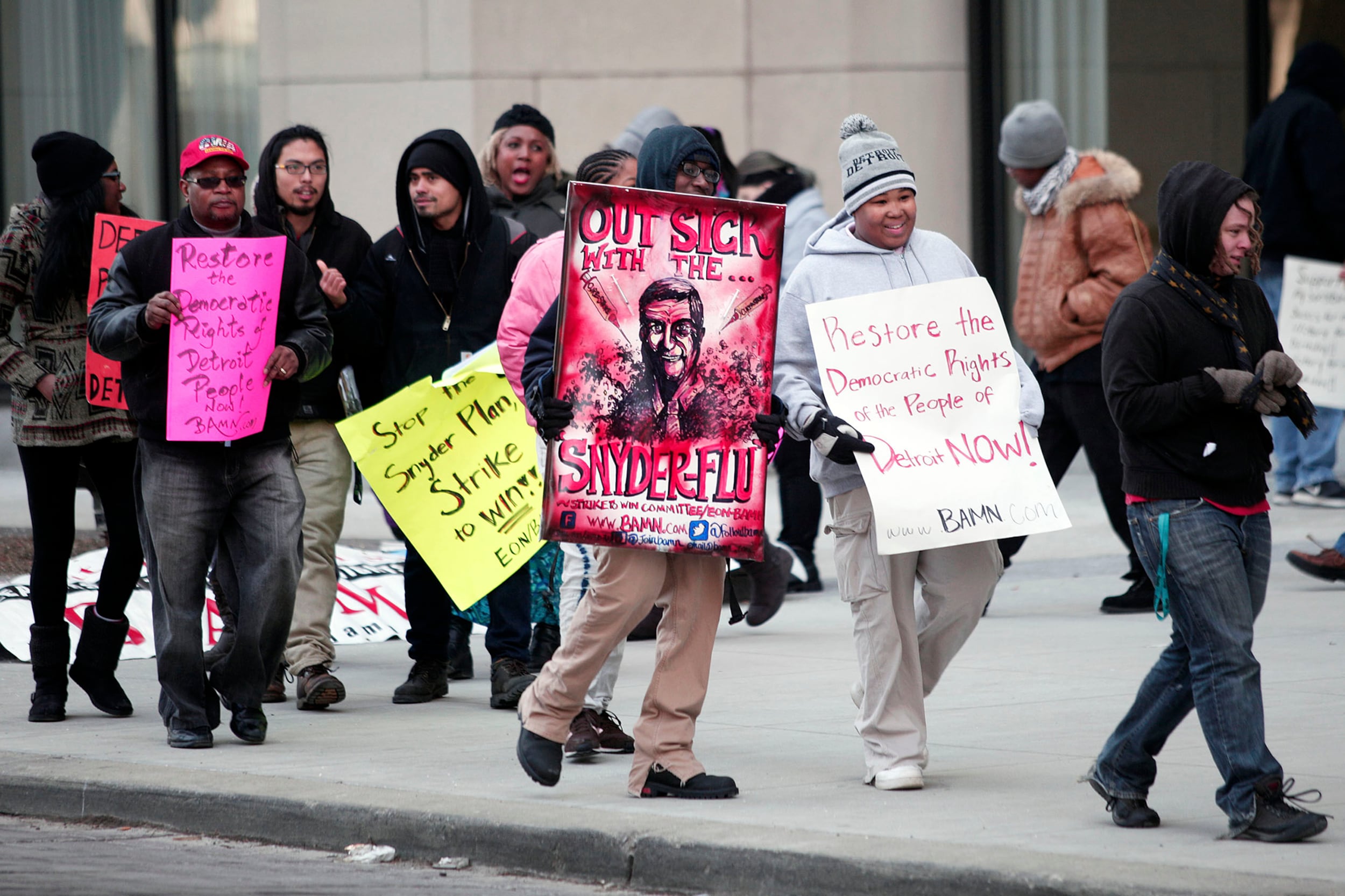
A photograph of adults with signs protesting outside of a large building.
Protesters demonstrate outside a court hearing in Detroit on Jan. 25, 2016, that was part of a lawsuit from Detroit Public Schools that sought to end a series of teacher sick-outs that closed school buildings. (Bill Pugliano / Getty Images)

Sign up for Chalkbeat Detroit’s free newsletter to keep up with the city’s public school system and Michigan education policy.

The year 2016 was a pivotal one for the Detroit school district, beginning when teachers staged sick-outs to draw attention to what they repeatedly described as deplorable school building conditions. It ended with the launch of a new district to educate city students, part of a legislative initiative that kept the old Detroit Public Schools intact to collect tax revenue and pay off the crushing debt that almost led to bankruptcy.

Here’s a quick timeline of what happened 10 years ago that had lasting implications in Detroit:

Lori Higgins is the bureau chief for Chalkbeat Detroit. You can reach her at lhiggins@chalkbeat.org.


The Latest

For six years, city officials propped up school budgets despite steep enrollment declines. It’s now up to Mayor Zohran Mamdani to decide whether to keep the policy or wind it down.

The day ICE agents detained Liam Conejo Ramos was ‘sad and infuriating,’ his school district superintendent said. She’d hoped her students wouldn’t be targeted.

Indiana legislators are advancing a bill banning phones from schools and another to cut low-earning degrees at state universities.

The district’s school closure proposal includes shuttering five magnet or citywide admissions high schools.

Colorado lawmakers want to help prospective teachers who have run into legal trouble. A bill under consideration would only require licensure applicants to disclose misdemeanors that happened within the last seven years.

The end of Alma’s work no the search is the latest twist in a search process that began last spring and hasn’t yet produced a permanent CEO. Six elected board members are blaming the mayor’s office and its allies for ‘sabotaging’ the process.